What makes a tent truly 4-season above treeline
Top Picks
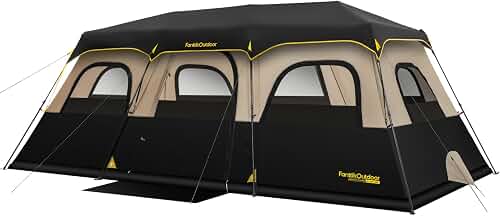
Choosing the best 4-season tent for windy ridge camping above treeline is one of the most consequential gear calls a high-altitude camper will make in 2026. Once you push above the krummholz and pitch on an exposed ridge, conventional 3-season shelters become liabilities — DAC Featherlite poles snap at the ferrules, sil-poly flies tear at the grommets, and shock-corded segments separate under cyclic gust loading. A real expedition shelter has to absorb 60–80 mph sustained wind, wind-driven graupel, and overnight rime accretion without losing structural integrity. This guide breaks down what to look for, what to avoid, and how to actually pitch the thing when the forecast goes sideways at 11,500 feet.
The non-negotiable design features for ridgeline survival
Marketing copy lumps anything with a full-coverage fly into the "4-season" bucket, but above treeline that label is meaningless. The shelters that actually survive a windy night on an exposed col share a tight cluster of design traits. If your candidate tent is missing any of these, keep shopping.
Geodesic or modified-geodesic pole geometry
Tunnel tents are lighter and roomier, but they need to be aligned perfectly with the wind to survive — and wind on a ridge rotates constantly as it spills over the lee side. A true geodesic (three or more poles crossing at multiple points, like the Hilleberg Jannu, Mountain Hardwear Trango, or The North Face Mountain 25) creates a self-bracing dome that holds shape no matter which direction the gust hits. Look for at least four crossing points and DAC NSL or Easton Syclone aluminum poles rated to 9 mm or thicker.
Low, aerodynamic profile
Peak height matters less than frontal area. A 38-inch peak height tent with steep walls will catch dramatically less wind than a 48-inch "livable" model. Above treeline you are trading interior comfort for survivability — accept it. The lowest-profile expedition tents (Black Diamond Eldorado, Hilleberg Soulo) deliberately sacrifice headroom for a wind-shedding dome.
Heavy-denier fly fabric with taped seams
Look for 40D ripstop nylon or polyester at minimum, with a silicone/PU dual coating and a hydrostatic head rating of 3,000 mm or higher. Lightweight 15D fabrics found on ultralight 3-season tents will pinhole under sustained wind-driven snow loading. Factory taped seams are non-negotiable — DIY seam-sealing fails in cold conditions.
At least eight reinforced guyout points
This is where most "4-season" tents fail in real conditions. You need guy points along every pole sleeve, plus mid-panel guys, all backed by bartacked webbing reinforcements that distribute load into the fly seams rather than tearing through them. Reflective 2 mm Dyneema guylines with line-lock tensioners are standard for serious shelters.
Snow flaps or a continuous bathtub floor
Spindrift is the silent killer above treeline. A tent without snow flaps or a fully sewn-in floor will fill with sugar snow in hours. The Hilleberg Black Label series and the Mountain Hardwear Trango 2 both use continuous bathtub floors with optional snow valance attachments.
Single-wall versus double-wall in 2026
This debate is largely settled for ridgeline use. Single-wall shelters (Black Diamond Firstlight, Bibler Eldorado, Samaya 2.0) save 1–2 pounds and pitch faster in gloved hands, but they trap interior moisture that freezes to the walls and rains down on your bag every time you shift. They make sense for fast-and-light alpine pushes where you are inside for six hours max.
For any trip where you may be tent-bound for 24+ hours waiting out weather, a true double-wall expedition tent is worth the weight. The inner mesh-and-fabric tent manages condensation, the fly takes the structural load, and a vestibule large enough to cook in (carefully, with the door cracked) becomes a livable space rather than a coffin. For the best 4-season tent for windy ridge camping above treeline, most experienced alpinists land on a double-wall geodesic in the 7–9 lb range.
Solo, two-person, or three-person — sizing for the ridge
Above treeline, downsize by one. A "2-person" expedition tent is realistically a roomy solo shelter once you account for boots, packs, and a pee bottle inside the vestibule. A "3-person" is a comfortable two. Trying to squeeze a third body into a nominal 3-person geodesic in a storm leads to condensation overload and shorter pole life from people leaning on the walls. If you are routinely camping above treeline as a pair, get the 3-person model and accept the half-pound penalty per person.
For deep context on pairing your shelter with the right sleep system, see our companion guide on choosing a winter sleeping bag temperature rating for high altitude, plus our breakdown of closed-cell foam pads for snow camping — both decisions affect whether your tent investment actually pays off in warmth.
What to skip — gear that will not work above treeline
Plenty of popular camping shelters get marketed for use cases they cannot survive. Below are categories worth understanding so you do not waste money buying the wrong tool. Note: these are useful in the contexts they were designed for, just not on an exposed ridge.
3-season dome tents
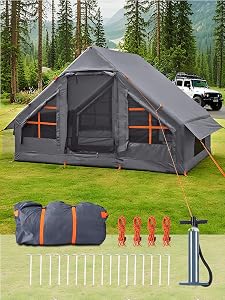
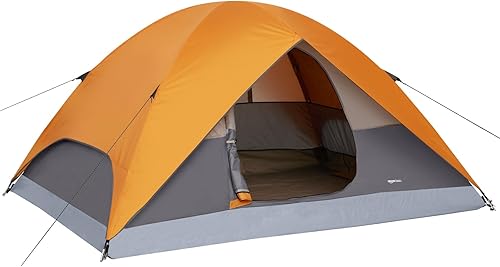
Even well-built 3-season domes like the Amazon Basics Camping Tent are engineered for car-camping in mild weather — fairground campouts, summer lakeshores, low-elevation state parks. The fly coverage, pole diameter, and guyout count are not specced for ridgeline gusts, and the manufacturer is explicit about the 3-season rating. Save this category for your basecar-camping kit, not the alpine.
Pop-up canopies and shade structures
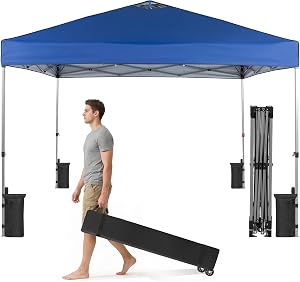
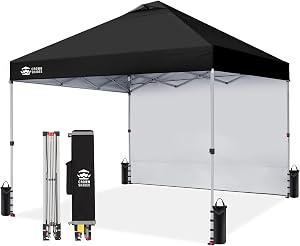
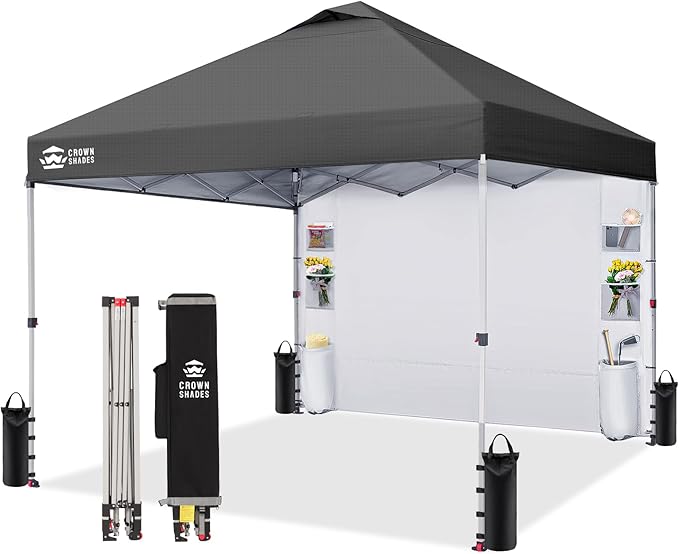
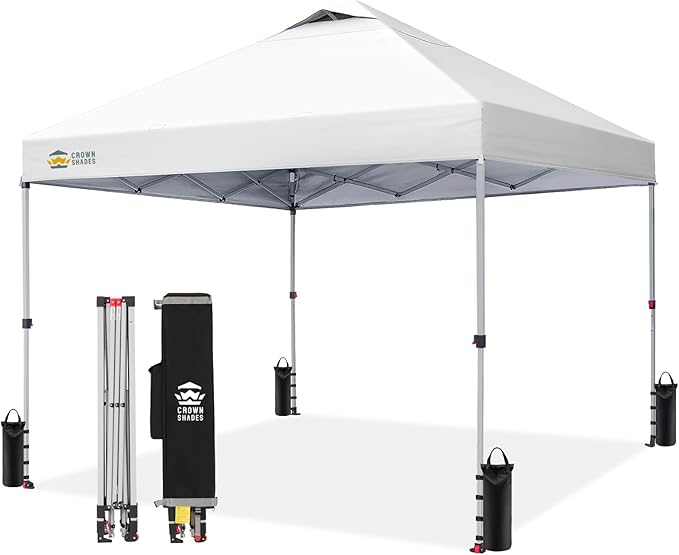
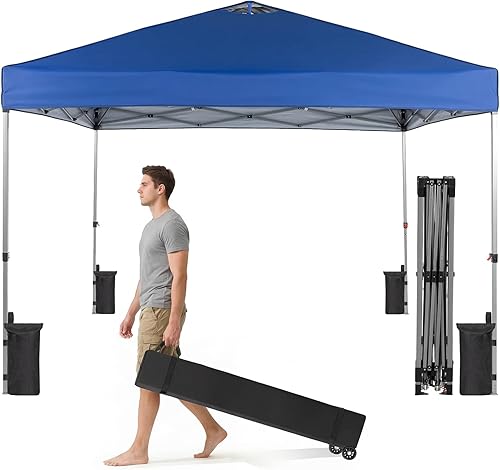
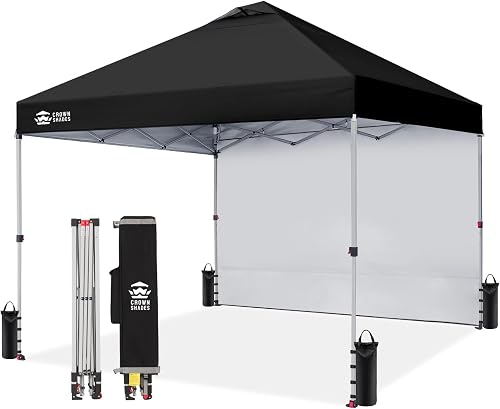
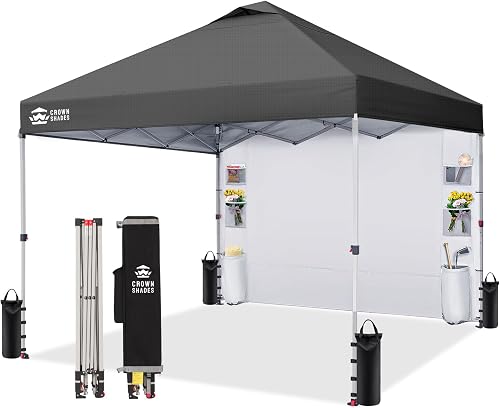
Products like the CROWN SHADES Canopy Tent 10x10 Pop Up Canopy Outdoor Shade with Pockets or the CROWN SHADES 10x10 Pop Up Canopy are excellent at the trailhead for tailgate basecamps, beach days, or backyard parties — but they are sail-area maximizers and will rip free or invert in 25 mph wind, let alone 60. They have no place above treeline.
Shower and changing tents
Privacy shelters like the Wolfwise Pop Up Shower Tent for Camping Essentials are great for festival camping, family car-camping showers, and as a paddleboard changing room — but they have a single fiberglass hoop and no real wind resistance. Don't bring one above treeline expecting privacy; bring it to your roadside basecamp instead.
Hammocks
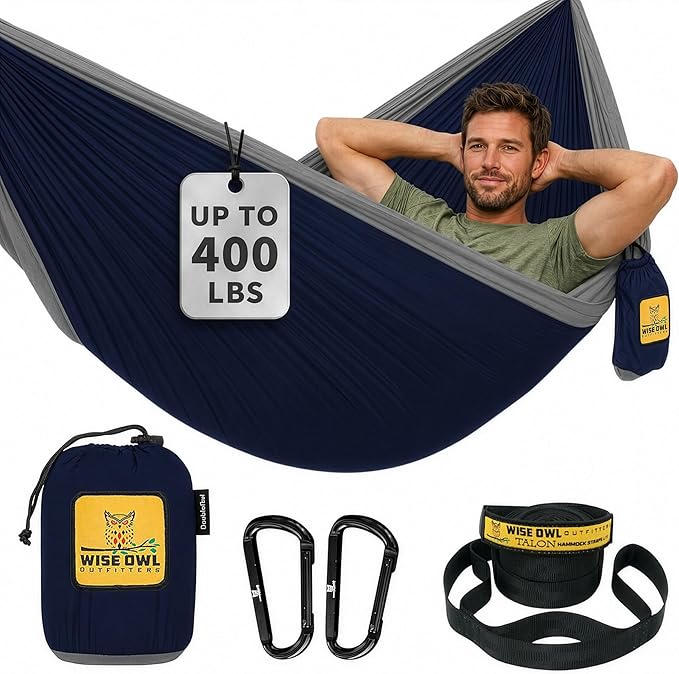
Tree-strap systems like the Wise Owl Outfitters Camping Hammock are fantastic in the woods — but "above treeline" by definition means no anchors. Even with trekking-pole stand kits, hammocks cannot handle the wind exposure. Save the hammock for forested approaches and dropdown camps.
How to pitch a 4-season tent on a windy ridge
The tent is only half the battle — pitch craft is the other half. Even the best 4-season tent for windy ridge camping above treeline will fail if you pitch it poorly.
- Find the smallest possible windshadow. A 12-inch rock band, a slight depression, or the lee side of a krummholz mat all cut surface wind by 30–50%. Walk an extra 200 yards to find it.
- Build a snow wall. Two feet high, two feet from the tent, on the windward side. Stomp blocks with the shovel and stack them. This is the single highest-leverage thing you can do.
- Pitch nose-first into the prevailing wind — the narrow end of the dome takes load best.
- Use every guy line. Bury aluminum snow stakes or deadman anchors (a stuff sack full of snow buried sideways works) at 45 degrees away from the tent.
- Tension everything once, then re-tension after 30 minutes as snow stakes settle and ropes stretch.
- Vent aggressively. Even in a storm, crack both vestibule zippers an inch. Condensation freezing inside the fly is what makes the next night miserable.
Budget tiers in 2026
Expect to spend real money for shelter that will actually survive above treeline. Here is what each tier buys you this year.
- $400–600: Single-wall ultralight options like the Black Diamond Firstlight or Samaya Assault. Light and fast, condensation-prone, fine for sub-24-hour pushes.
- $700–1,000: Mid-tier double-wall geodesics like the Mountain Hardwear Trango 2 or MSR Remote 2. The sweet spot for most ridge campers.
- $1,200–1,800: Hilleberg Black Label (Jannu, Soulo, Nammatj). Lifetime tents. Heavy by ultralight standards but bombproof in 80 mph wind.
- $2,000+: Custom expedition shelters and the Hilleberg Atlas Pro. Overkill for anything short of polar work.
For ridgeline weekends in the Rockies, Cascades, or Sierra, the $700–1,200 band is where 90% of serious campers should shop. For more on layering this purchase with the rest of your high-altitude kit, see our guide to canister stoves that actually work in cold weather.
Frequently Asked Questions
How much wind can a 4-season tent actually handle above treeline?
A well-pitched expedition geodesic like a Hilleberg Soulo or Mountain Hardwear Trango can survive sustained 60–70 mph wind and gusts to 90+, provided every guy line is anchored and a snow wall is built. Without guylines deployed and stakes properly buried, the same tent may fail at 40 mph. Pitch craft matters more than the brand on the door.
Do I need a 4-season tent for summer ridgeline camping?
Yes, if you are above 10,000 feet on an exposed ridge in any season. Summer thunderstorms above treeline routinely produce 50+ mph gusts, hail, and graupel, plus surprise snowfall as late as August in the Rockies and Sierra. A 3-season tent will be a wet, flapping mess at best and structurally compromised at worst. Anywhere you cannot retreat to forest within 30 minutes, bring a 4-season shelter.
What is the lightest true 4-season tent for solo ridge camping?
As of 2026, the Samaya Assault 2 Ultra hits 2 lb 14 oz with a true single-wall geodesic design rated to 80+ mph. The Black Diamond Firstlight 2P at 3 lb 1 oz is the more budget-friendly equivalent. Both sacrifice condensation management for weight — fine for single-night ridge bivys, miserable for multi-day storm holds.
Are tunnel tents safe for windy ridges?
Only if you can guarantee wind direction. Hilleberg tunnel models like the Nallo and Nammatj are extraordinarily strong when pitched dead nose-into the wind, but ridgeline wind rotates unpredictably as air spills over the col. A rotating gust hitting a tunnel broadside can collapse poles. For unpredictable wind directions — the norm above treeline — a self-supporting geodesic is the safer choice.
How do I anchor a tent above treeline where the ground is rock or hard ice?
Carry six MSR Cyclone or aluminum snow/sand stakes plus six lengths of accessory cord and aluminum carabiners. On rock, build rock-pile deadman anchors — wrap each guyline around a 15+ pound rock and stack two more on top. On bulletproof ice, use 13 cm ice screws as guy anchors. Pre-cut Dyneema runners (60 cm) make rigging fast in gloves.
Is it worth getting a vestibule large enough to cook in?
Yes, but treat vestibule cooking as a survival technique, not routine practice. Carbon monoxide buildup is real. Pitch a stove board (a sheet of closed-cell foam works), keep both vestibule zippers cracked at least 4 inches, never run a liquid-fuel stove without active pumping attention, and prefer canister stoves with a remote pre-heat loop for cold conditions. Large vestibules also store wet gear, boots, and packs out of the spindrift.
What is the difference between a mountaineering 4-season tent and a basecamp 4-season tent?
Mountaineering tents (Black Diamond Eldorado, Hilleberg Jannu) prioritize low weight, fast pitching, and small footprints — they are meant to be carried high and pitched on tiny ledges. Basecamp tents (Hilleberg Atlas, MSR Stormking) prioritize interior volume, durability over many seasons, and comfort for storm holds, at a significant weight penalty. For ridge camping where you are hiking in with the tent on your back, a mountaineering model is almost always the right choice.
How long should a quality 4-season tent last?
A Hilleberg Black Label tent with proper care (clean, fully dry storage; UV protection; periodic re-impregnation of the fly) will last 15–20 years of regular use. Mid-tier models from Mountain Hardwear or MSR typically deliver 8–12 years. Single-wall ultralight shelters with thinner fabrics may need fly replacement at the 5–7 year mark. The poles, almost always, outlast the fabric — and replacement pole sections are available from every reputable manufacturer.
Key Takeaways
- Choosing the right best 4-season tent for windy ridge camping above treeline means matching the key features to your specific needs and budget
- Read real customer reviews and check the return policy before you commit
- Also covers: alpine tent for exposed ridgelines
- Also covers: high wind mountaineering tent above treeline
- Also covers: best tent for ridge camping in gusts
- Compare value across models — the priciest option is not always the best fit