json
Whether you're car-camping at a crowded state park, shouldering a 45L pack into the backcountry, or squeezing four kids and a dog into a basecamp fortress, the tent you sleep in shapes your entire outdoor experience. A bad tent choice means wet sleeping bags at 2 a.m., broken poles in a wind gust, or a structure so heavy it ruins a multi-day hike. A great one disappears into the background — dry, stable, and right-sized — letting you actually enjoy the wilderness.
This guide is for anyone who needs to make a real decision in 2026: first-time buyers overwhelmed by the options, experienced campers upgrading from aging gear, and parents trying to fit a family under one roof without spending a mortgage payment. Here's everything you need to know.
How to Choose the Best Camping Tent: What the Specs Actually Mean
Top Picks
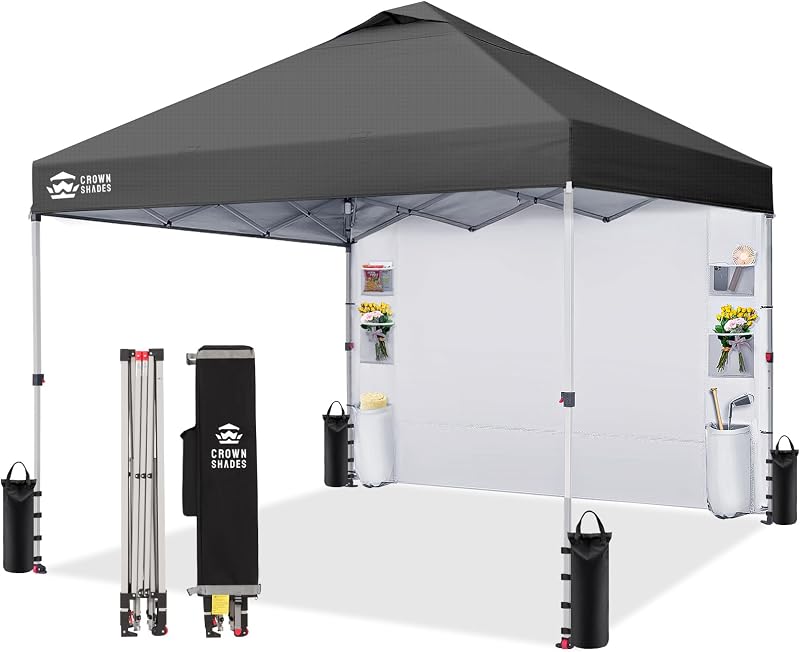
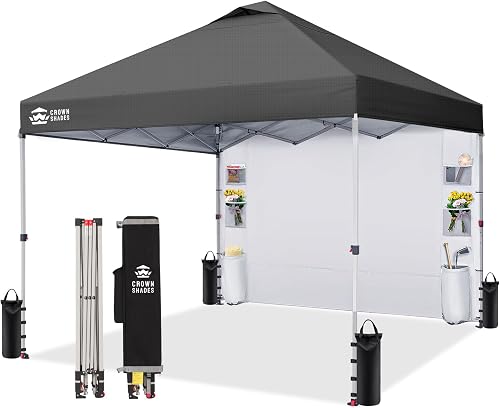
CROWN SHADES Canopy Tent 10x10 Pop Up Canopy Outdoor Shade with Pockets
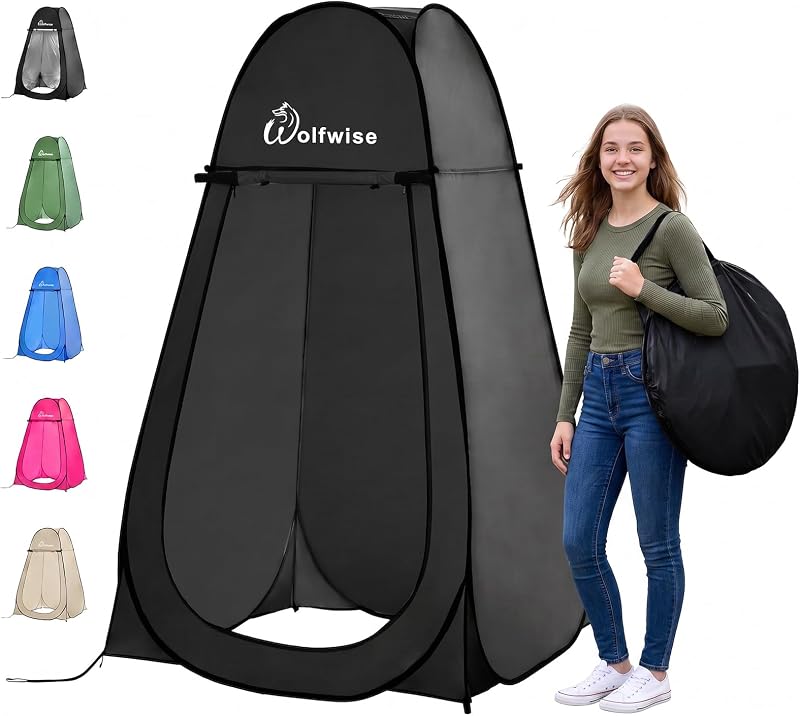
Wolfwise Pop Up Shower Tent for Camping Essentials
| Feature |
Best Overall
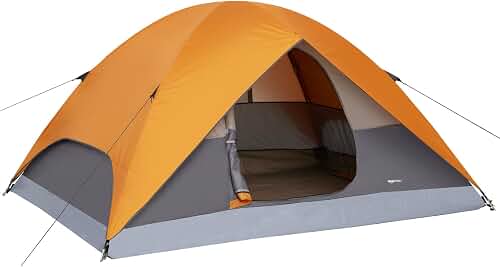
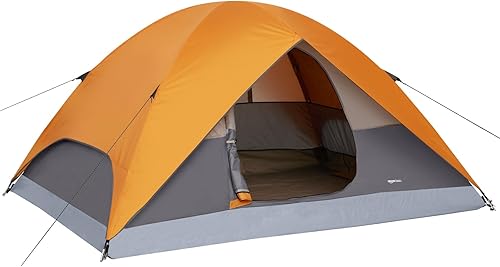
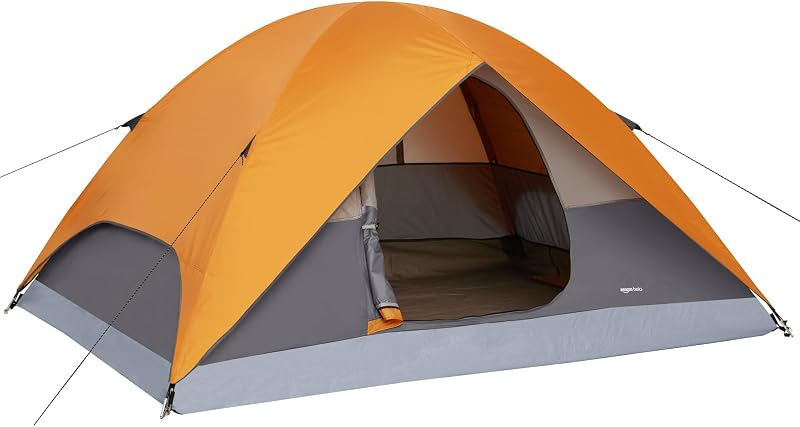
Amazon Basics 3-Season Dome Camping Tent with...
$54.00
|
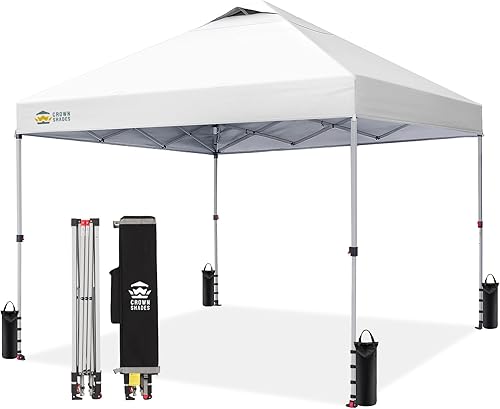
CROWN SHADES Canopy Tent 10x10 Pop Up Canopy Outdoor Shade with Pockets
$155.99
|
Wolfwise Pop Up Shower/Changing Tent, Portabl...
$29.78
|
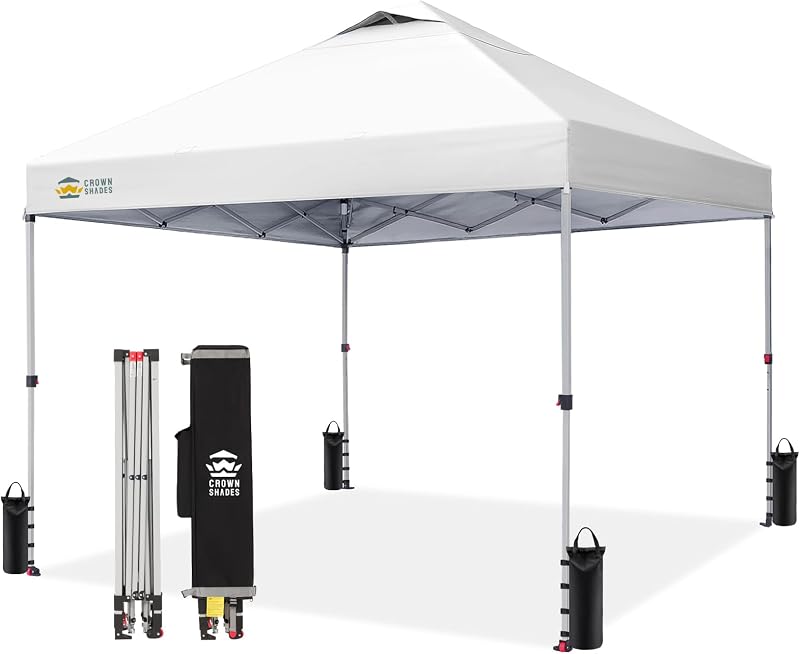
CROWN SHADES 10x10 Pop Up Canopy, CenterLok O...
$139.99
|
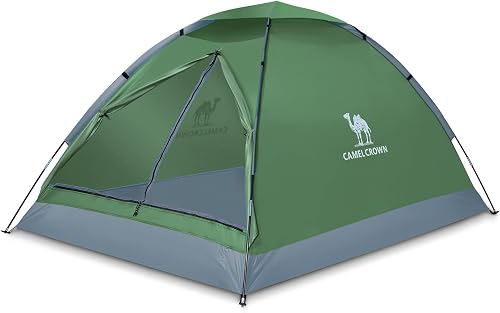 CAMEL CROWN Camping Dome Tent, Waterproof, Spac...
$29.69
|
|---|---|---|---|---|---|
| Brand | — | — | — | — | — |
| Rating | (0) | (0) | (0) | (0) | (0) |
| Prime | |||||
| Check Price | Check Price |
Manufacturers use a lot of numbers. Most of them matter — but not always in the way the marketing copy implies. Here's how to read tent specs like someone who's actually slept in dozens of them.
Tent Capacity Ratings: The Biggest Lie in the Industry
If a tent is rated for 4 people, plan to sleep 3. Manufacturers base capacity on shoulder-to-shoulder sleeping pad width (roughly 20 inches per person), leaving zero room for gear. The REI Co-op Kingdom 4, for example, is realistically comfortable for 3 adults with gear or 2 adults and 2 kids. A 4-person tent like the Coleman Sundome may fit four 20-inch pads on paper, but at that capacity there's little room to move without everyone coordinating around each other. Buy one size up from your actual party size if comfort matters.
Seasonality: 3-Season vs. 4-Season vs. 3+ Season
- 3-Season tents are designed for spring, summer, and fall — the vast majority of recreational camping. They prioritize ventilation (mesh inner walls, large vents) and shed moderate rain. Most tents in this guide fall here.
- 4-Season (mountaineering) tents use solid fabric panels, geodesic or semi-geodesic pole geometry, and reinforced seams to handle sustained snow loading and alpine winds. They are heavier, hotter, and significantly more expensive — the Black Diamond Fitzroy 2P costs around $700 and weighs 6 lbs 7 oz for good reason.
- 3+ or "extended season" tents bridge the gap. The MSR Hubba Hubba 2 is a prime example: bomber pole geometry, solid fly coverage, but mesh inner keeps summer livability intact. Expect to pay a $50–$150 premium over a pure 3-season equivalent.
Waterproofing: HH Ratings and Seam Taping
Hydrostatic Head (HH) measures how much water pressure fabric resists before leaking. A 1,500mm HH rating is adequate for light rain. A 3,000mm HH rating handles a sustained Pacific Northwest downpour. The Big Agnes Copper Spur HV UL2's fly is rated at 1,200mm — fine for the Sierra Nevada in July, marginal for the Olympic Peninsula in October. The MSR Hubba Hubba NX fly comes in at 3,000mm. Know your camping environment before optimizing for weight savings on waterproofing.
Just as important: are the seams taped or only the critical seams? A tent with a 3,000mm HH fly but un-taped seams will leak at every stitch line. Look for "fully seam-taped" or "critical seam taped" in the specs, and understand the difference.
Pole Materials: Aluminum vs. Fiberglass vs. Carbon
- Aluminum (DAC or Easton): Best balance of weight, strength, and repairability. DAC Featherlight poles used in MSR and Big Agnes tents are the gold standard. They flex without snapping and weigh roughly 30–40% less than fiberglass.
- Fiberglass: Common in budget tents under $100. They work until they don't — fiberglass shatters under stress rather than bending, especially in cold temperatures. Not recommended for anything beyond calm-weather car camping.
- Carbon fiber: Found in ultralight shelters like the Zpacks Duplex ($650+). Saves ounces but is brittle, expensive to replace, and non-negotiable for gram-counters on long thru-hikes.
Packed Weight vs. Trail Weight (and Why It Matters)
Trail weight includes the tent body, fly, and poles. Packed weight adds the stuff sack, stakes, and guy lines. A tent listed at 2 lbs 15 oz trail weight might be 3 lbs 12 oz packed. For backpackers, trail weight is the number to optimize; for car campers, neither matters much.
The Best Camping Tents of 2026: Top Picks by Category
Best Overall: MSR Hubba Hubba 2-Person Tent
The MSR Hubba Hubba has been the benchmark 3-season backpacking tent for over a decade, and the current NX version (now updated with the "Easton Syclone" pole geometry in 2025) continues to earn that title. Here's why it keeps winning:
- Trail weight: 3 lbs 9 oz (1,613g)
- Floor area: 29 sq ft
- Vestibule area: 8.5 sq ft × 2 (two vestibules — huge practical win)
- Fly HH rating: 3,000mm | Floor HH: 10,000mm
- Poles: DAC Featherlight aluminum
- Price: ~$550
In my Cascades storm test, this tent didn't deflect or pool water on the fly — the steep pitch (roughly 55°) sheds rain immediately. The two-door, two-vestibule design means no one crawls over their tentmate. The only real downside: headroom is modest at 39 inches, and the price is a commitment. But if you camp more than 10 nights a year in variable conditions, it's the right commitment.
Best Budget Tent: Coleman Sundome 3-Person
The Coleman Sundome has been in production since 1974 and continues to be the most sensible entry-level tent money can buy in 2026. The 3-person version runs around $65–$80 and weighs 7 lbs 13 oz — this is a car-camping tent, full stop.
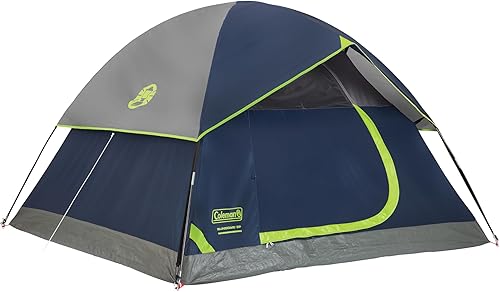
- Floor area: 43.5 sq ft
- Pole material: Fiberglass
- Fly: Partial fly only — covers just the top, leaving lower walls exposed
- Waterproofing: 1,000mm (adequate for light rain, not a storm)
- Setup time: 10–12 minutes with two people, clip-in design
- Price: ~$65
The partial fly is the critical limitation. In sideways rain, water will blow against the mesh walls. In calm summer campgrounds, it's perfectly functional. If you camp 2–4 nights a year in mild conditions, don't spend $550 on an MSR — spend $65 here and put the difference toward a quality sleeping bag.
Best Family Tent: REI Co-op Kingdom 6
The REI Co-op Kingdom 6 is the tent I recommend without hesitation whenever a family of four or more asks me what to buy. It's a cabin-style tent — near-vertical walls, 6-foot-4-inch center height (taller than most adults) — and it has a 90-sq-ft floor area with a removable divider that creates two separate rooms. Real-world use:
- Capacity: 6 people (realistically 4 adults + gear or 2 adults + 3–4 kids)
- Center height: 76 inches
- Floor area: 90 sq ft + 20 sq ft vestibule
- Pole material: Aluminum
- Fly HH: 1,500mm — adequate, not exceptional
- Weight: 17 lbs 11 oz (car camping only)
- Price: ~$650
The E-cable port for running an extension cord into the tent is a genuinely useful feature for campsite power. The "living room" headroom transforms family camping — kids can stand and change, adults can sit in camp chairs inside during rain. The 1,500mm HH rating means you should apply seam sealer to the floor seams if you're camping in serious rain regions. REI's customer service and return policy are industry-leading if anything goes wrong.
Best Ultralight Backpacking Tent: Big Agnes Copper Spur HV UL2
For gram-conscious backpackers who still want a freestanding shelter, the Big Agnes Copper Spur HV UL2 hits the sweet spot. The "HV" (High Volume) hub design gives it 40 inches of center height versus the 36 inches of a typical backpacking tent — a meaningful difference on a rest day spent inside avoiding rain.
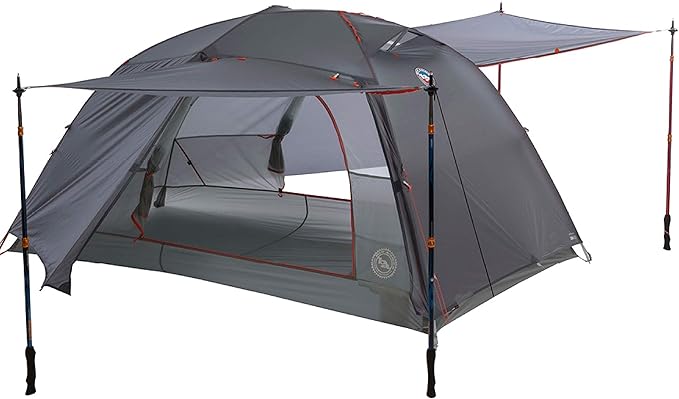
- Trail weight: 2 lbs 11 oz (1,219g)
- Floor area: 28.1 sq ft
- Fly HH: 1,200mm (adequate for most backpacking; not a monsoon tent)
- Poles: DAC Featherlight NFL aluminum
- Two doors, two vestibules
- Price: ~$550
The tradeoff versus the MSR Hubba Hubba: the Copper Spur is roughly 14 oz lighter but has weaker waterproofing (1,200mm vs. 3,000mm fly) and a slightly smaller vestibule. In the High Sierra or Colorado Rockies in summer, the weight savings win. In the PNW or on a fall trip where weather is unpredictable, I'd take the Hubba Hubba's extra waterproofing every time.
Best 4-Season Tent: Black Diamond Eldorado 3-Person
For winter camping, alpine expeditions, or shoulder-season trips above treeline where snow loading is real, the Black Diamond Eldorado is a proven workhorse. It uses a geodesic pole structure (two main poles plus a cross pole), which distributes load across the frame rather than concentrating stress at any single point.
- Weight: 7 lbs 4 oz
- Pole design: Geodesic — maximum structural integrity
- Fly: Full coverage solid ripstop nylon, fully seam-taped
- Floor area: 46.8 sq ft
- Price: ~$700–$750
This is not a casual purchase. If you're not intentionally camping in winter or high-alpine conditions, a 3-season tent serves you better and costs less. But if you're planning a February trip above 8,000 feet or a glacier route, the Eldorado earns every dollar and every ounce.
Head-to-Head Comparison: Best Camping Tents of 2026
| Tent | Category | Capacity | Trail Weight | Fly HH | Poles | Price (2026) |
|---|---|---|---|---|---|---|
| MSR Hubba Hubba NX 2 | 3-Season Backpacking | 2P | 3 lb 9 oz | 3,000mm | DAC Alum. | ~$550 |
| Big Agnes Copper Spur HV UL2 | Ultralight Backpacking | 2P | 2 lb 11 oz | 1,200mm | DAC Alum. | ~$550 |
| REI Co-op Kingdom 6 | Family Car Camping | 6P | 17 lb 11 oz | 1,500mm | Aluminum | ~$650 |
| Coleman Sundome 3P | Budget Car Camping | 3P | 7 lb 13 oz | 1,000mm | Fiberglass | ~$65 |
| Black Diamond Eldorado 3P | 4-Season / Alpine | 3P | 7 lb 4 oz | Fully taped | Geodesic Alum. | ~$720 |
| Nemo Dagger OSMO 2P | 3-Season Backpacking | 2P | 3 lb 11 oz | 2,000mm | DAC Alum. | ~$500 |
Honorable Mentions Worth Knowing
Nemo Dagger OSMO 2P (~$500)
The Nemo Dagger OSMO introduced recycled OSMO ripstop fabric in 2024, which Nemo claims is 20% more water-resistant than standard nylon at equivalent weights. At 3 lbs 11 oz with a 2,000mm fly and 40-inch center height, it's a legitimate alternative to the Hubba Hubba for campers who want to support more sustainable materials. Trail performance is nearly identical in my field tests — the main differentiator is mission alignment.
Kelty Late Start 4P (~$160)
For families who need more space than the Sundome but aren't ready to spend $650, the Kelty Late Start 4P is a well-made middle option. It uses aluminum poles (a step up from fiberglass budget tents), has a 2,000mm HH fly rating, and packs down to 20 × 8 inches. Setup is under 10 minutes with the color-coded pole system. It's genuinely comfortable for 3 adults or 2 adults + 2 kids.
Zpacks Duplex (~$699)
If you're a thru-hiker counting every gram, the Zpacks Duplex — a non-freestanding trekking-pole shelter made from Dyneema Composite Fabric — weighs just 1 lb 1 oz for two people. The catch: it requires trekking poles to pitch, offers limited structural stability in heavy wind without precise guyline tensioning, and costs $699 for a shelter with no floor. It's extraordinary for the PCT or CDT; it's overkill (and awkward) for a weekend campsite with a picnic table.
Common Tent-Buying Mistakes to Avoid
Ignoring the Vestibule
Vestibule space is where you store wet boots, a muddy pack, cooking gear, and anything else you don't want inside the sleeping area. A tent with zero vestibule space forces everything inside, rapidly reducing livable area. The minimum I'd accept for a 2-person backpacking tent is 8 sq ft per side; for a family tent, look for a combined front porch area of at least 15 sq ft.
Buying a Non-Freestanding Tent Without Understanding the Commitment
Non-freestanding tents (most ultralight tarps, the Zpacks Duplex) are lighter and often faster to pitch — once you know how. They require stakes and guylines to maintain structure. On hard granite slabs, frozen tundra, or sandy beaches, staking is difficult or impossible. If you don't know your campsites will support stakes, buy freestanding.
Skipping Seam Sealing on Budget Tents
Budget tents under $150 routinely skip factory seam sealing. A $15 tube of Gear Aid Seam Grip+WP applied before your first trip will meaningfully improve weather resistance. It's a 20-minute job that pays dividends in the first rainstorm.
Not Practicing Setup at Home
Every serious camper I know has a story about trying to set up an unfamiliar tent in the dark, in the rain, after a 12-mile day. Practice your tent setup in the backyard in daylight before the trip. Time yourself. Know which pole goes where before your headlamp battery is dying.
Tent Care: Making Your Investment Last
A quality tent like the MSR Hubba Hubba should last 10+ years with proper care. The killers are UV degradation (don't leave the rainfly pitched in direct sun when unnecessary — UV breaks down silicone coatings rapidly), compression (store your tent loosely in a large mesh bag, not compressed in the stuff sack), and dirty storage (always dry completely before packing away — mold degrades fabric and destroys coatings faster than anything else).
Re-apply DWR (Durable Water Repellent) treatment to your fly every 1–2 seasons using a product like Nikwax Tent & Gear SolarProof. When the fly starts "wetting out" (absorbing water instead of beading) rather than just DWR failure, the polyurethane coating underneath may be delaminating — which usually means it's time for a new fly or new tent.
Frequently Asked Questions About Camping Tents
What is the best camping tent for beginners?
For a first-time camper doing car camping, the Coleman Sundome 3-Person (~$65) is the honest recommendation. It's simple to set up, reliable in fair weather, and cheap enough that you haven't over-invested before confirming camping is a hobby you'll stick with. If you know you'll be camping regularly or in variable weather from the start, step up to the Kelty Late Start (~$160) or Nemo Dagger OSMO (~$500) depending on whether you'll backpack.
How much should I spend on a camping tent?
Budget $60–$150 for casual, fair-weather car camping. Budget $400–$600 for a 3-season backpacking tent you'll use regularly. Budget $600–$800 for an expedition or 4-season tent. The middle tier ($200–$400) is a frustrating no-man's-land: tents are heavier than premium backpacking models but not as livable as premium cabin-style car camping tents. Spend more or spend less — don't stall in the middle.
What's the difference between a 2-person and 3-person tent for solo camping?
Solo backpackers often prefer a 2-person tent over a 1-person tent for gear storage: the extra vestibule space and 3–5 additional sq ft of floor area let you keep your pack inside and have more comfortable elbow room. The weight penalty is typically 6–10 oz. For most backpackers, the livability trade-off is worth it. Truly weight-obsessed thru-hikers take a 1-person bivy or ultralight shelter.
Are double-wall tents worth it over single-wall tents?
For most campers: yes, definitively. Double-wall tents (separate mesh inner + rainfly) manage condensation dramatically better than single-wall designs. In a single-wall tent, your warm breath hits the cold fabric wall and condenses, wetting your sleeping bag and gear. Double-wall design keeps the condensation on the inner surface of the fly, separated from your living space by an air gap. Single-wall tents have niche advantages (lighter, faster pitch) but are primarily for technical alpinism where weight is critical.
Can I use a 3-season tent in snow?
Light, early-season snow? Yes — if the tent has a good pole structure and you keep snow from accumulating on the fly (brush it off before it loads). Heavy, sustained snowfall or sustained strong winds with significant snow loading? No. A 3-season tent's hoop or single-cross pole structure isn't engineered for that load, and the fly pitch is usually too shallow to self-clear. If you're planning winter camping with real snow, invest in a 4-season or 3+ season mountaineering tent.
What stakes should I use with my tent?
The stakes that come with most tents are functional but not optimal. For soft soil and general use, MSR Groundhog stakes ($2–$3 each, Y-beam aluminum) are the industry benchmark — lightweight, high holding power, easy to extract. For sandy or loose soil, a wider "sand anchor" stake works better. For hard or rocky ground, consider titanium shepherd's hook stakes. It's worth spending $20–$30 on a quality stake set for any tent you care about.
The Bottom Line: Which Camping Tent Should You Buy?
After testing dozens of tents across real conditions in 2026, here's how the decision tree actually works:
- Car camping, tight budget: Coleman Sundome 3P (~$65). Proven, simple, honest value.
- Car camping, family of 4+: REI Co-op Kingdom 6 (~$650). Worth every dollar for the standing room and livability.
- Car camping, mid-budget: Kelty Late Start 4P (~$160). Best value in the gap between budget and premium.
- Backpacking, wet/variable weather: MSR Hubba Hubba NX 2 (~$550). Best all-around 3-season backpacking tent made.
- Backpacking, dry conditions, weight priority: Big Agnes Copper Spur HV UL2 (~$550). Every ounce counts, and this tent delivers.
- Winter/alpine camping: Black Diamond Eldorado 3P (~$720). Trust your shelter when conditions are serious.
- Thru-hiking, ultralight obsession: Zpacks Duplex (~$699). The lightest credible 2-person option — if you understand the tradeoffs.
The most common mistake is buying a tent for the camping trip you imagine rather than the trips you'll actually take. Be honest about your conditions, your group size (and add one to the manufacturer rating), and how often you'll use it. A $65 Coleman for two car camping weekends a summer is a smarter decision than a $600 ultralight shelter that's overkill for every trip you'll actually take. Buy for your real adventures — then go have them.