Choosing the best camping headlamp for cave explorers wide flood beam comes down to one defining feature: a true wide-angle floodlight that washes entire cavern walls in even, shadow-free illumination instead of punching a narrow tunnel through the darkness. For cave explorers, route-finders, and recreational spelunkers in 2026, the ideal headlamp delivers 200+ lumens of diffuse flood light, IPX4 or higher water resistance, a tilt-adjustable housing, lockout protection against accidental on-switching inside your pack, and battery life measured in many hours rather than minutes at full brightness. Below is the complete buyer's framework so you pick a lamp that performs underground, not just on the campsite.
Why a Wide Flood Beam Matters Inside Caves
Top Picks
Caves punish narrow spotlight beams. A tight throw beam designed for trail hiking or distance signaling creates a single bright disk on a far wall while everything in your peripheral vision drops into pitch black. Your eyes constantly adjust between bright center and dark surround, fatigue sets in within twenty minutes, and you miss critical hazards: low ceilings, slick mud edges, drop-offs at the lip of a chamber, and the small handholds that route-find a squeeze. A wide flood pattern, by contrast, pours soft even light across an entire scene at one even brightness. Your pupils settle, depth perception returns, and you can read rock texture, water lines, and small ledge transitions the way you'd read a printed page.
The best camping headlamp for cave explorers wide flood beam profile typically uses either a frosted diffuser lens over the LED, a dedicated secondary flood LED next to the main spot LED, or a dual-emitter design where you can switch between spot for crawl-passages and flood for chambers. The latter is the gold standard for mixed cave terrain, where you alternate between tight tunnels and wide rooms many times per outing.
Specs to Prioritize for Underground Use in 2026
Cave environments expose lamps to constant 95-100% humidity, mud abrasion, sudden drops onto rock, and condensation cycles when you exit cold cave air into warm surface air. The 2026 generation of LED headlamps has caught up to these demands, but you still have to read spec sheets carefully. Anything labeled "flashlight headlamp" without an IP rating should be skipped outright.
Lumen Output and Beam Distribution
For genuine caving, target 200-400 lumens on the flood setting and at least 600 lumens on the combined or spot setting. Lower than 200 lumens of flood will leave large chambers looking dim and gray; higher than 500 flood lumens is overkill that just drains batteries faster. The ratio matters more than the headline number: a 1000-lumen headlamp with only 80 lumens of true flood is worse for cave work than a 350-lumen headlamp with 280 lumens dedicated to flood.
Water and Dust Resistance
IPX4 is the practical minimum (splash resistant from any direction). IPX7 (30 minutes submerged at 1 meter) is preferable if you ever wade through cave streams, crawl through wet mud passages, or expect to drop your lamp into a pool. Many premium 2026 models hit IP67, which adds dust sealing that protects against the fine silty grit caves are full of.
Runtime and Regulated Output
Look for regulated output, which holds your chosen brightness steady until the battery is nearly empty rather than slowly dimming throughout a trip. A regulated lamp claiming 8 hours on its medium-flood setting will give you a usable 8 hours; an unregulated lamp claiming the same will be barely functional after hour four. For multi-hour trips, carry two fully charged batteries minimum and a third as your safety reserve.
Tilt, Lockout, and Red Mode
A tilt-able housing lets you angle light downward at your feet during careful footwork without craning your neck. A physical lockout switch (usually a long-press or a hardware slider) prevents your pack from accidentally turning the lamp on between cave trips and draining the battery flat. A red mode preserves night-adapted vision when checking maps inside the cave.
Battery Strategy for Long Underground Trips
Rechargeable lithium-ion is now standard, and 2026 models commonly use USB-C with passthrough charging from a power bank. That said, swappable cells beat sealed internal batteries for serious caving: when one cell dies mid-trip, you swap to a fresh one in seconds rather than waiting an hour for a recharge. Some lamps accept either a proprietary rechargeable pack or standard AA cells as a fallback, which is the most flexible setup for expedition use far from outlets.
For day trips under four hours, a single rechargeable cell is plenty. For full-day cave trips or overnight bivouacs, plan for at least 3x your expected runtime in spare batteries, stored in a dry bag inside your pack. Lithium cells lose roughly 10% capacity per 10°C drop in temperature, so cold caves silently reduce your effective runtime. Read more in our breakdown of rechargeable vs disposable headlamp batteries.
Comfort, Fit, and Helmet Compatibility
Cave explorers wear helmets. Your headlamp must either mount directly to a climbing or caving helmet via integrated clips, or have a headband narrow enough to slip over the helmet shell without sliding. Most serious caving helmets (Petzl Boreo, Black Diamond Half Dome, Edelrid Ultralight) have dedicated headlamp slots; verify your lamp's clip dimensions match before buying. A lamp with a separate battery pack worn on the rear of the helmet improves balance dramatically on multi-hour trips, since the front housing alone can fatigue your neck during long upward-gazing sessions.
The headband itself should be washable. Caves pile mud onto everything, and a non-removable elastic band becomes permanently stained and uncomfortable within a few trips. Look for lamps where the housing pops off the band with a quick-release for cleaning.
Safety Considerations That Go Beyond the Lamp Itself
No matter how good your primary headlamp is, the cardinal rule of caving is three independent light sources per person. Your wide-flood primary handles 90% of your light needs; a compact secondary headlamp lives in a chest pocket as your backup; a small but bright keychain flashlight or pill-bottle backup lives in a separate pocket as your emergency-egress light. If your primary fails halfway through a 6-hour trip, you must be able to safely walk out on either of the other two alone.
Test every light source the morning of your trip. Lock them all out before stuffing them into your pack. Replace or recharge after every outing, not before the next one — a half-discharged battery you forgot about is the most common cause of mid-cave light failures. For broader trip preparation, see our guide on caving versus camping gear essentials.
Setting Up Camp at the Cave Entrance
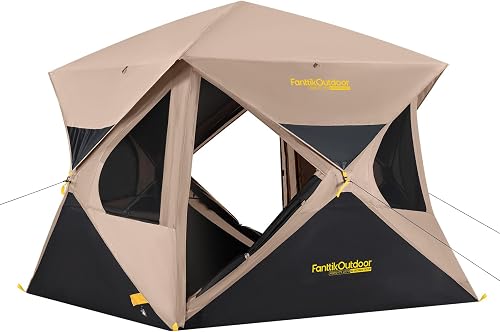
Most cave-exploration weekends start and end at a basecamp pitched near the entrance or trailhead. A reliable shelter that goes up fast after a muddy exit matters as much as the headlamp itself, because you want hot food and dry clothes within fifteen minutes of crawling out, not an hour later. A simple, weatherproof three-season dome handles spring through fall cave seasons in temperate climates.
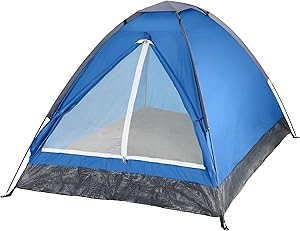
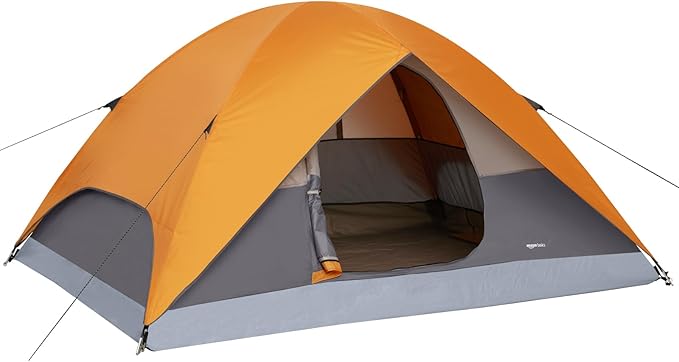
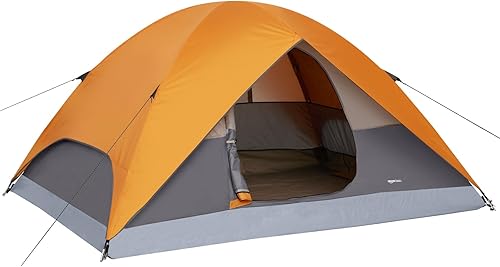
Amazon Basics 3-Season Dome Camping Tent with Rainfly
For a no-frills basecamp at the trailhead, the Amazon Basics 3-Season Dome Tent gives you a fully-enclosed sleeping shelter with a rainfly that handles overnight condensation and surprise spring storms. It pitches in under ten minutes, weighs little enough to carry from a forest-road parking spot to the cave approach, and packs down small enough to stash in the trunk on top of your cave-gear duffels. Available at Amazon Basics Camping Tent, 3-Season Dome Design with Rainfl.
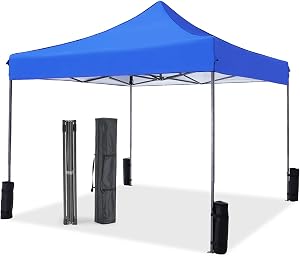
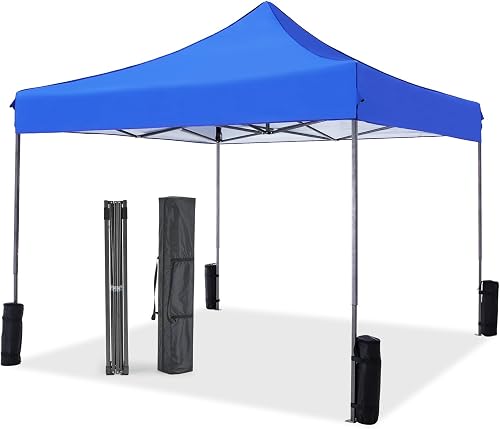
CROWN SHADES 10x10 Pop Up Canopy with Pockets
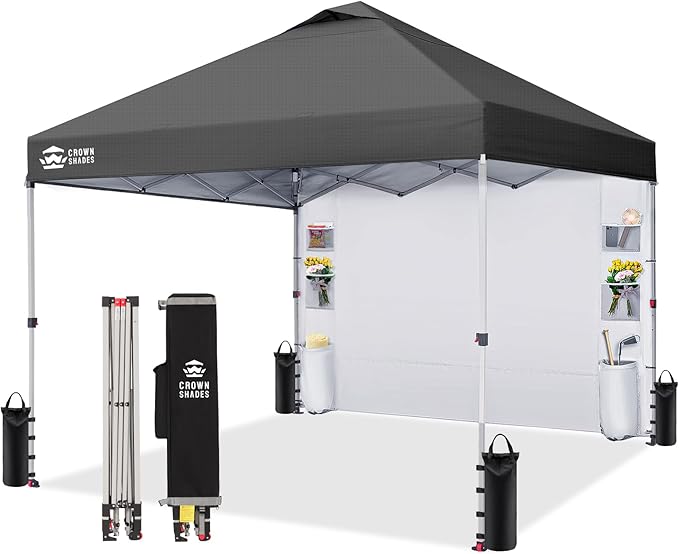
A canopy at the cave mouth is the unsung hero of cave-camping comfort. You need somewhere shaded and dry to sort gear, hang muddy coveralls to drip, eat lunch between trips, and shelter your packs from a sudden rain shower. The CROWN SHADES 10x10 sets up in two minutes by one person and the integrated pockets hold spare batteries, gloves, and snack bars within arm's reach. Available at CROWN SHADES Canopy Tent 10x10 Pop Up Canopy Outdoor Shade w.
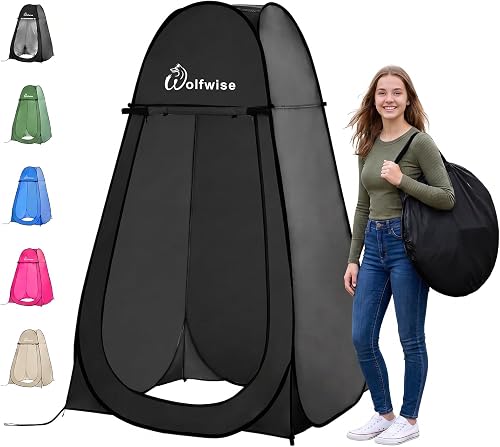
Wolfwise Pop Up Shower/Changing Tent
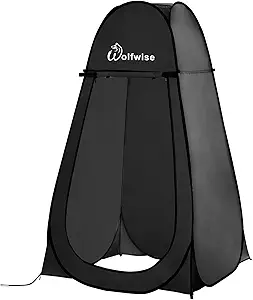
Coming out of a cave covered head-to-toe in mud is the rule, not the exception. A pop-up changing tent gives you a private space at the trailhead to strip out of caving suits, rinse with a solar shower bag, and change into clean dry clothes before the drive home. Five-minute setup, packs flat against your pack frame. Available at Wolfwise Pop Up Shower Tent for Camping Essentials, Portable.
Comparison: Basecamp Shelter Options for Cave Trips
| Product | Best For | Setup Time | Footprint |
|---|---|---|---|
| Amazon Basics 3-Season Dome Tent | Overnight sleeping | ~10 minutes | Compact 2-3 person |
| CROWN SHADES 10x10 Pop Up Canopy | Gear staging + shade | ~2 minutes | 10x10 ft open |
| Wolfwise Changing/Shower Tent | Privacy + decontamination | ~30 seconds (pop up) | ~4x4 ft |
How the Best Camping Headlamp for Cave Explorers Wide Flood Beam Differs From a Standard Camping Headlamp
A standard camping headlamp is optimized for reading inside a tent, finding the latrine at night, and walking a flat campground path. It typically pushes a narrow throw beam between 100-150 lumens, has limited water resistance, and uses a fixed-angle housing. None of that translates to underground use. A cave-oriented lamp prioritizes wide diffuse output, full IP-rated sealing, robust drop resistance, longer regulated runtime, helmet-compatible mounting, and lockout protection. Many serious cavers carry both: a small lightweight camping lamp at the tent, and a dedicated higher-capacity cave lamp for trips below the surface. For tent-interior tasks specifically, see our roundup of camping lanterns for tent interior lighting.
Frequently Asked Questions
What lumen output do I need for wide flood beam cave exploration?
Aim for 200-400 lumens of dedicated flood output, not total maximum lumens. A lamp that hits 1000 lumens with a narrow spot but only puts out 80 lumens of flood will feel dimmer in a cave chamber than a 350-lumen dual-beam lamp that dedicates 280 lumens to its flood emitter. Always read the per-mode breakdown on the spec sheet rather than just the headline number.
Are rechargeable headlamps reliable enough for multi-hour caving trips?
Yes, as long as the lamp accepts swappable cells or has USB-C passthrough charging that works with a small power bank. Sealed-internal-battery lamps are risky for trips longer than three hours because you have no recovery option if the cell runs flat early. Carry at least one spare battery for every two hours of expected runtime, stored in a dry bag, and consider a lamp that also accepts standard AA cells as an emergency fallback.
Is IPX4 water resistance enough for wet caves and stream passages?
IPX4 (splash resistant) handles dripping ceilings, light mud splatter, and brief rain at the entrance. For caves with active stream passages, sumps, or full-body wet crawls, step up to IPX7 (30 minutes submerged at 1 meter) or IP67 (which adds full dust sealing). Caves below freezing or with heavy condensation cycles benefit further from sealed housings because moisture intrusion will fog optics and corrode contacts within a few trips on a non-sealed lamp.
Can I use a regular camping headlamp for occasional cave trips?
For very short walk-in caves (under thirty minutes, no crawls, no water), a quality camping headlamp works as a starter. Once trips extend past an hour, involve any crawling, or pass through wet sections, the limitations of a standard camping lamp become safety issues. The narrow beam fatigues your eyes, the lower water resistance allows water ingress, and battery life under a sustained high setting is usually inadequate. Upgrade to a dedicated caving or industrial-grade headlamp as soon as your trips get serious.
How do I mount a headlamp to a caving helmet?
Most modern caving and climbing helmets have either four headlamp clips molded into the shell or a sliding rail system. Verify your headlamp's elastic band has enough length to wrap around the helmet shell and that the housing footprint fits within the clip spacing (typically 22-25mm wide). Premium caving-specific lamps skip the headband entirely and bolt directly to the helmet mount, which is the most secure option for crawls and squeezes where headbands can snag.
What's the difference between flood beam, spot beam, and combined beam patterns?
A spot beam concentrates light into a tight narrow cone, useful for spotting distant features but tunnel-visioning your peripheral vision. A flood beam spreads light into a wide diffuse circle, ideal for filling a chamber or close-up work like rigging a rope or reading a map. A combined or hybrid beam runs both LEDs simultaneously, giving you central reach plus surrounding wash. For caving, you want either a dedicated flood-only setting or a dual-emitter combined mode where flood dominates.
How long should a cave headlamp battery realistically last on high?
For genuine caving use you want at least four hours of regulated output at your typical working brightness (usually medium or medium-high). Manufacturer-claimed runtimes are typically measured on the lowest setting, so divide by three or four to estimate real working runtime. A lamp claiming 30 hours total will give you roughly 5-8 hours of actually useful brightness. Always pair with spare batteries — never plan a trip around a single battery's full runtime.
Key Takeaways
- Choosing the right best camping headlamp for cave explorers wide flood beam means matching capacity and output ports to your actual devices
- Always check actual watt-hours (Wh), not just watts — runtime depends on Wh, not peak output
- Also covers: caving headlamp flood beam pattern
- Also covers: wide angle headlamp for spelunkers
- Also covers: headlamp for cave camping flood mode
- Compare price-per-Wh across models to find the best value for your budget