Choosing the best sleeping bag lactating mothers nighttime feedings demand comes down to three features: a two-way zipper you can open from the bottom one-handed, a semi-rectangular or rectangular cut that frees your arms for latching, and a temperature rating with a 10°15°F safety margin so you don't have to bury your face when baby cries. Forget classic tapered mummy bags—they pin your arms and force you to sit fully upright. Below, we break down what to look for in a nursing-friendly bag for the 2026 camping season, pair it with the shelter, privacy, and daytime-rest gear you'll actually use alongside it, and answer the questions postpartum parents ask before their first family trip.
What to Look For in a Nursing-Friendly Sleeping Bag
A sleeping bag built for camping with a breastfeeding infant is not a specialty product—it's a standard 3-season bag that happens to have the right combination of features. Here is the short checklist to bring shopping:
- Two-way (dual-slider) zipper: The single most important feature. A two-way zipper lets you unzip from the foot box upward, freeing your hips and chest without exposing your shoulders to cold air. You can nurse side-lying with only the lower half opened.
- Semi-rectangular or rectangular cut: Mummy bags squeeze the shoulders so tightly that side-lying nursing is nearly impossible. Look for at least 62–64 inches of shoulder girth.
- Full-length zipper that opens flat: A bag that opens completely into a quilt doubles as a skin-to-skin blanket on warm nights and packs down the same.
- Temperature rating 10–15°F warmer than expected lows: Postpartum thermoregulation is unpredictable—night sweats one hour, chills the next. Build in margin.
- Synthetic insulation (or hydrophobic down): Leaks happen. Synthetic fills dry faster and still insulate when damp.
- Internal stash pocket: Somewhere to keep a nursing pad, lip balm, or phone for a feeding tracker without fumbling in the dark.
- Zip-together capability: If your bag mates with a partner's, you can build a shared sleep space and let the non-nursing parent reach the baby on the cold side.
None of these features require a premium ultralight bag. A mid-priced rectangular synthetic bag from any major outdoor brand typically checks every box on this list. What matters more than the bag is the system around it: the tent that keeps you dry, the changing space that gives you privacy, and the daytime rest setup that lets you nap when the baby naps.
Building the Full Camp-Nursing Setup
The best sleeping bag lactating mothers nighttime feedings require still depends on a tent that gives you room to sit up and latch, a private space for pumping or changing without an audience, and shade to nurse in during the day. Here are the pieces we recommend pairing with whichever bag you choose.
Amazon Basics 3-Season Dome Camping Tent with Rainfly — Best Shelter for Nursing Inside the Tent
A nursing-friendly bag is useless inside a tent so cramped you can't sit up. The Amazon Basics 3-Season Dome Camping Tent with Rainfly is the budget-friendly pick we recommend most often for postpartum families because it offers enough headroom near the center pole to nurse sitting up cross-legged, a full rainfly for shoulder-season trips where surprise showers are common, and a footprint big enough for a queen-size double sleeping bag setup plus a co-sleeping pad or travel bassinet next to it. The mesh ceiling helps with night-sweat ventilation—something nursing mothers will appreciate within the first hour. Setup runs about 10 minutes, which matters when you arrive at camp with a tired baby. For a first family camping trip in 2026, this tent removes one of the biggest variables.
Wolfwise Pop Up Shower/Changing Tent — Best Privacy for Pumping and Discreet Feeding
If you pump on a schedule, you already know the value of four solid walls. The Wolfwise Pop Up Shower/Changing Tent sets up in seconds and gives you a fully enclosed 4x4-foot space for pumping at a picnic table, a quiet latch with a distractible older baby, or a quick clothing change after a leak. It folds flat into a disc the size of a steering wheel, so it lives easily in a trunk for the entire camping season. Many nursing moms find that even at private campsites the psychological privacy of a closed-door space is the difference between a successful pump session and giving up. Pair it with a battery-powered pump and you have a functional camp-nursing pod.
CROWN SHADES 10x10 Pop Up Canopy Tent with Pockets — Best Daytime Nursing Shade
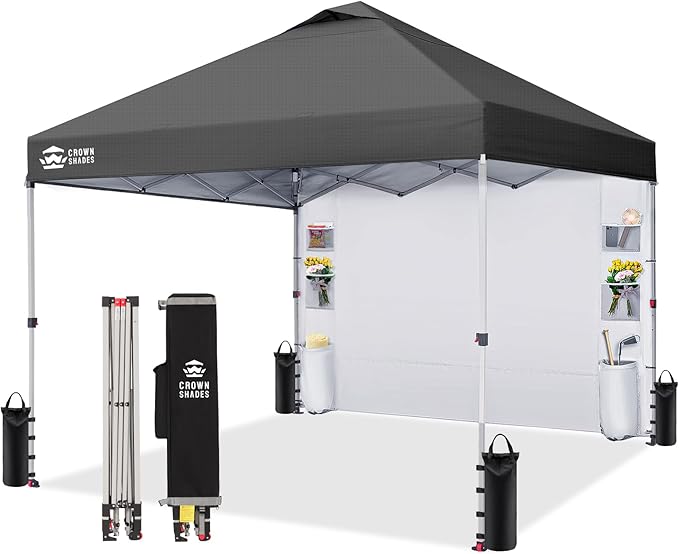
Daytime feeds outdoors in summer 2026 mean either UV exposure or hiding under a heavy nursing cover that overheats both of you. The CROWN SHADES 10x10 Pop Up Canopy Tent with Pockets sets a 100 sq ft shaded zone over your camp chair, picnic blanket, or table—enough room for a nursing chair, a diaper changing station, and a cooler within reach. The built-in pockets are unexpectedly useful for stashing burp cloths, nipple cream, and a feeding-tracker phone. The frame is sturdy enough to anchor a clip-on fan if you're car camping with power. We prefer this version over flimsier beach canopies because the leg height is generous enough to stand under, which matters when you're holding a baby.
CROWN SHADES 10x10 Pop Up Canopy, CenterLok One-Push — Best Solo Setup for One Adult
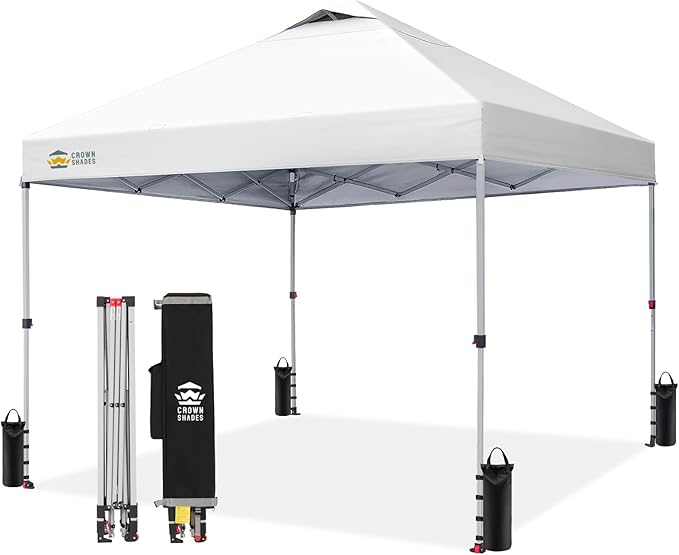
Postpartum bodies should not be wrestling a canopy alone. The CROWN SHADES 10x10 Pop Up Canopy with CenterLok One-Push is the version to choose if you're often arriving at camp first or going solo to a park while a partner stays with older kids. The center-push mechanism lets one adult lock the canopy open in roughly 60 seconds without overhead arm strain—important if you're still healing from a c-section or pelvic floor issues. Same 10x10 footprint as the pocket version, so you get the same shade for nursing during day three of a weekend trip.
Wise Owl Outfitters Camping Hammock — Best for Daytime Recovery Naps
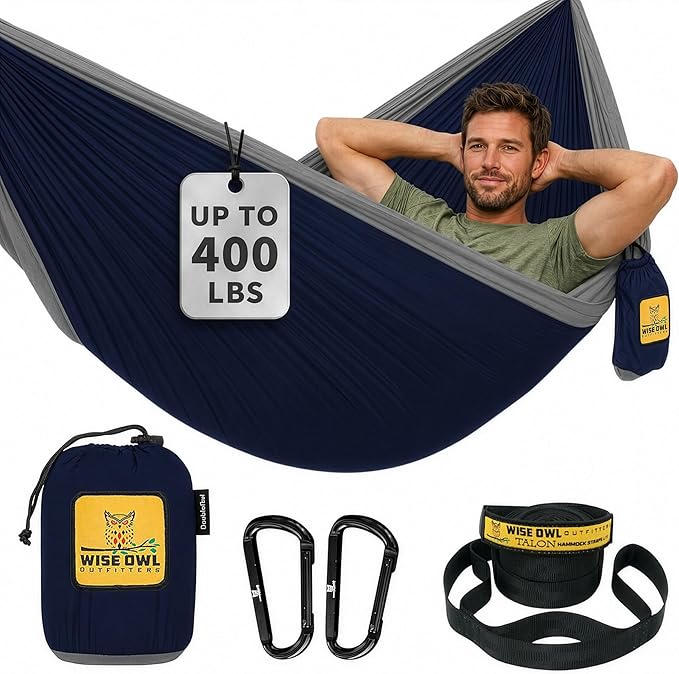
Sleep deprivation is the headline reality of life with a newborn, and the cure at a campsite is the nap. The Wise Owl Outfitters Camping Hammock holds up to 500 pounds, which means you can safely co-nap with baby in arms (always while awake) or pass the baby to a partner and stretch out solo. Included tree straps mean no extra purchases and no knot-tying with one hand. The gentle sway often soothes a fussy baby faster than walking does. Hang it under your canopy and you've built an outdoor day-nest that doubles as a comfortable nursing spot when sitting in a camp chair starts hurting your back.
Comparison Table: Camp-Nursing Companion Gear for 2026
| Product | Best Use | Setup Time | Solo-Friendly? |
|---|---|---|---|
| Amazon Basics 3-Season Dome Tent | Overnight shelter, in-tent nursing | ~10 min | Yes, with care |
| Wolfwise Pop Up Changing Tent | Pumping, discreet feeding, changing | Under 1 min | Yes |
| CROWN SHADES Canopy w/ Pockets | Daytime nursing shade | 3–5 min | Two people easier |
| CROWN SHADES CenterLok Canopy | Solo daytime shade setup | ~1 min | Yes |
| Wise Owl Hammock | Recovery naps, soothing baby | ~3 min | Yes |
How to Use a Two-Way Zipper for Side-Lying Feeds
Once you have a bag with the right features, the technique is straightforward. Lie on your side facing baby's bassinet or co-sleeper. Reach to the foot box, pull the lower zipper slider upward to roughly hip height, and slip your arm and chest out while keeping your legs covered. The unzipped portion forms a flap you can drape over baby for warmth during the feed. When done, slide the lower slider back down—you never had to touch the top zipper, and your face stayed warm the whole time. Practice this at home a few times before the trip so your hands know the motion in the dark.
Related Reading
For more on building out a postpartum-friendly camp kit in 2026, see our guides on the best camping tents for families with newborns, portable pumping stations for car camping, and the quietest canopies for outdoor baby naps. If you're new to outdoor sleep systems, our sleeping bag temperature rating guide walks through how to read the EN/ISO numbers on the tag.
Frequently Asked Questions
What temperature sleeping bag do I need for nighttime breastfeeding at a campground?
Pick a bag rated 10–15°F below the lowest temperature you expect. Nursing mothers experience unpredictable night sweats and chills, and a bag rated exactly at the expected low will feel too cold during sweats (you can't easily vent a mummy bag) and too warm during chills (you can't easily layer). A 30°F bag covers most 3-season family camping in the lower 48; a 20°F bag adds shoulder-season margin without much weight penalty for car camping.
Can I use a double sleeping bag instead of two singles when camping with a nursing infant?
Yes, and many parents prefer it. A double bag gives a non-nursing partner room to help with baby on the cold side, and the shared body heat is genuinely useful in spring or fall. Just confirm the double bag has two separate zippers (one per side) so each person can vent independently—a single zipper means waking your partner every time you nurse. Never bring baby into the adult sleeping bag itself due to suffocation risk; use a separate firm sleep surface like a travel bassinet or pack-and-play.
How do I keep pumped milk cold while camping overnight?
A hard-sided cooler with block ice (not cubes) and a separate insulated milk bag inside it will hold pumped milk safely for 24 hours. Pre-freeze the milk bag's gel packs at home and rotate them each morning if you have cooler ice available, or use a campground freezer if one is on site. Mark each bottle with the pump time. For trips longer than two nights, a small 12V cooler that plugs into your car is worth the investment.
Do I need a special nursing pillow for camping?
No. A rolled fleece jacket inside a stuff sack works as a nursing wedge, and a camp chair with armrests gives you the elbow support a nursing pillow normally provides. Save the cargo space. If you co-sleep at home with a wedge pillow, bringing it is fine—but it's not a separate gear purchase.
Is it safe to camp with a breastfed newborn under three months old?
Talk to your pediatrician, but many families camp with healthy term newborns once breastfeeding is established (usually 4–6 weeks) and the infant has had at least their two-month checkup. Choose drive-up campsites within 30 minutes of a hospital, stay in shoulder seasons to avoid extreme temperatures, and bring a thermometer. Keep baby's sleep surface flat, firm, and separate from adult bedding—the same safe-sleep rules apply outdoors as at home.
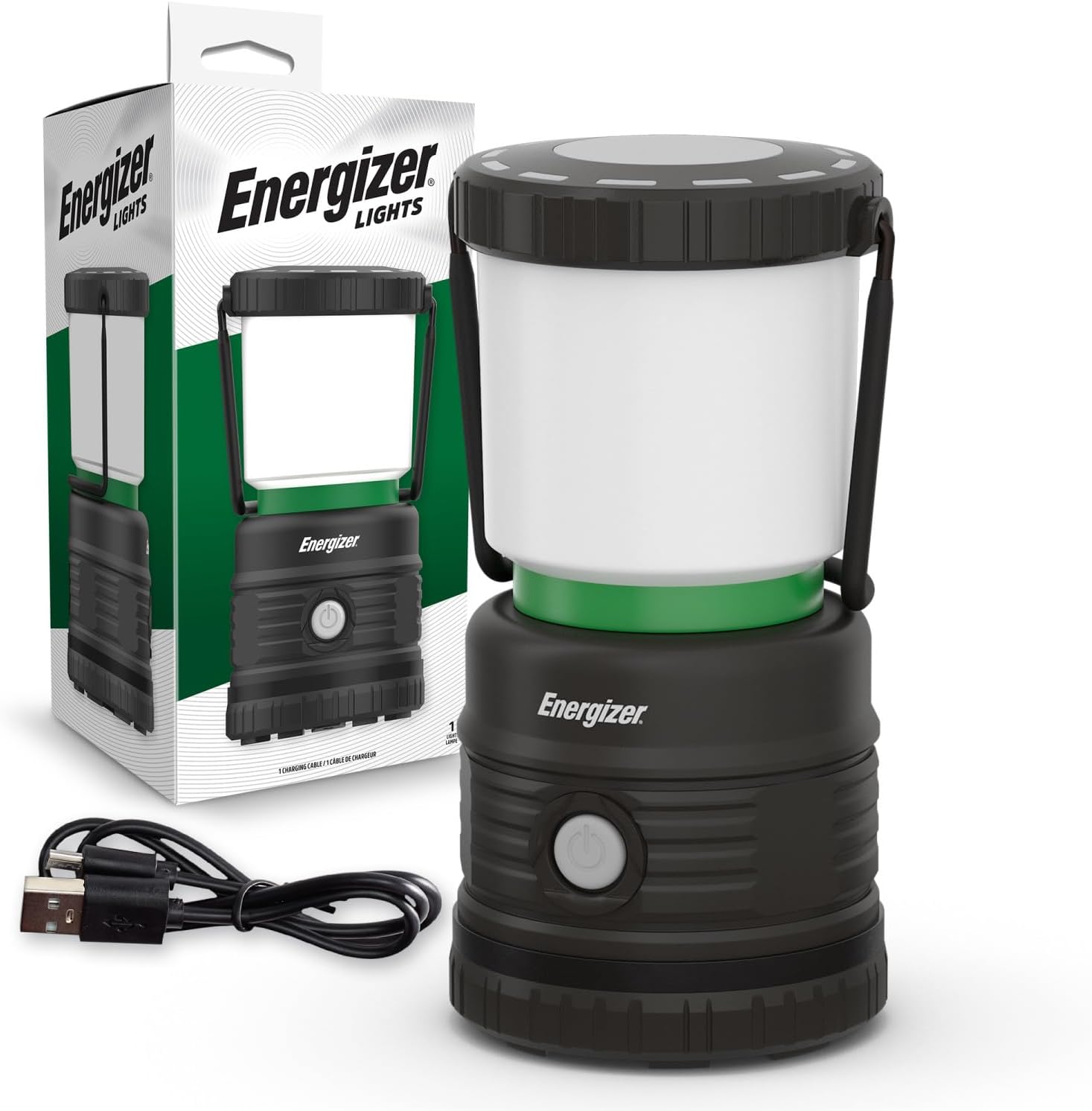
How do I find the best sleeping bag lactating mothers nighttime feedings can actually use one-handed?
Test the zipper in the store with one hand. Hold an imaginary baby in the crook of one arm and try to open the bag from foot to hip with the other. Bags with chunky, glove-friendly zipper pulls and a stiff anti-snag flap along the zipper track are dramatically easier than fashion-oriented bags with tiny pulls. If you're shopping online, look for product photos that show the zipper pulls clearly and read reviews from side sleepers—they have the same one-handed venting needs.
What's the most overlooked piece of camp-nursing gear?
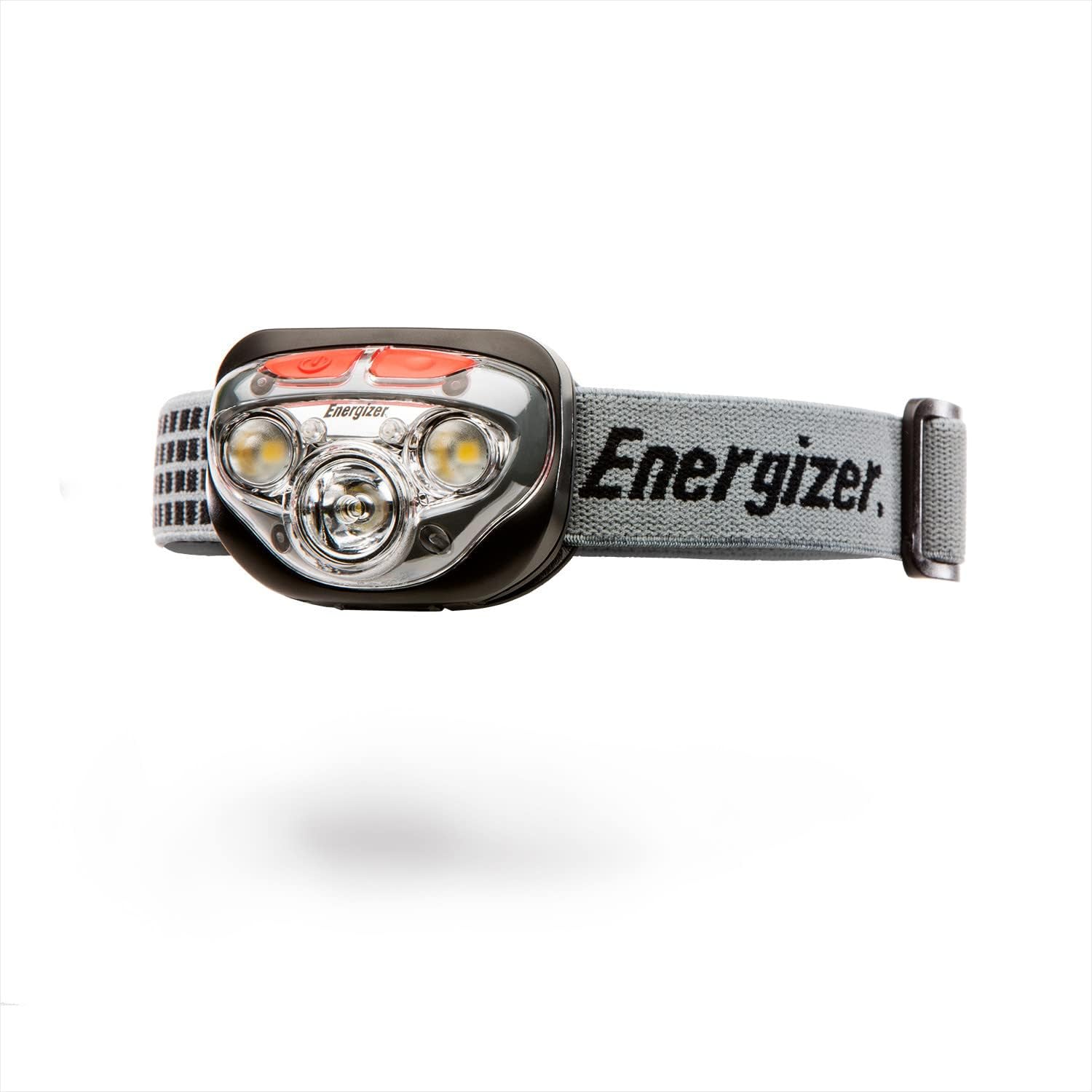
A headlamp with a red-light mode. White light wakes baby (and your partner) instantly; red light gives you enough vision to latch, burp, and re-swaddle without resetting anyone's melatonin. Combined with a two-way-zip sleeping bag and a private changing tent for daytime pumping, a red-mode headlamp is the third leg of a comfortable camp-nursing setup for the 2026 season.
Key Takeaways
- Choosing the right best sleeping bag lactating mothers nighttime feedings means matching capacity and output ports to your actual devices
- Always check actual watt-hours (Wh), not just watts — runtime depends on Wh, not peak output
- Also covers: nursing mother sleeping bag
- Also covers: breastfeeding camping sleeping bag
- Also covers: double zip sleeping bag for moms
- Compare price-per-Wh across models to find the best value for your budget