If you're shopping for the best 2-person tent for tall couples over 6 feet backpacking in 2026, you need three non-negotiables: a floor length of at least 88 inches (90+ is better), near-vertical sidewalls so heads and feet don't smear condensation onto the fly, and a packed trail weight under four pounds so neither partner ends up carrying a brick. Most shelters marketed as "2P" are sized for 5'8" hikers — anyone 6'2" or taller wakes up with wet sleeping-bag corners, cramped shoulders, and a grumpy partner. Below are the dimensions, layout tricks, and field-tested picks that actually work for big-and-tall couples on the trail.
What "fits two tall people" actually means in 2026
Top Picks
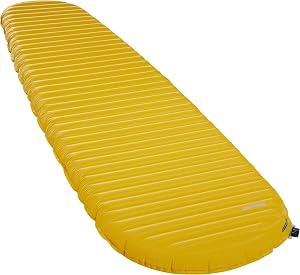
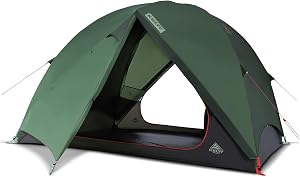
Comparison: tent vs. car-camp shelter vs. alternative sleep system
The trail tents that actually fit tall couples (Big Agnes Copper Spur HV UL2 Long, NEMO Dagger OSMO 2P, REI Half Dome SL 2+ Long, Sea to Summit Telos TR2 Plus) are specialty-shop purchases. The Amazon-available shelters below cover adjacent use cases — trailhead car camping and one-person hammock setups — and pair well with a real backpacking tent in your kit.
When shopping for best 2-person tent for tall couples over 6 feet backpacking, it pays to compare specs, capacity, and real-world runtime before committing.
| Shelter | Best for | Floor length | Packed weight | Capacity |
|---|---|---|---|---|
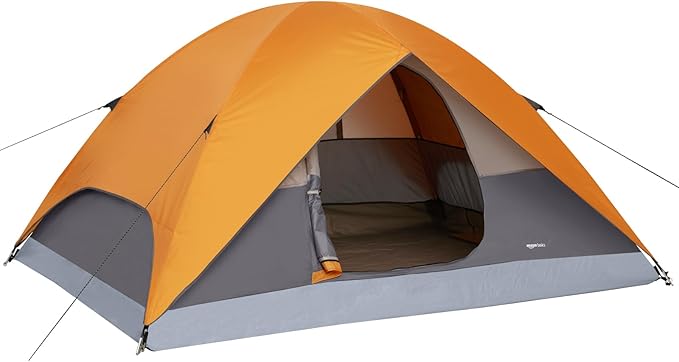
| Amazon Basics 3-Season Dome | Trailhead / car-camp basecamp | ~84 in | ~6 lb | 2 (tight for tall) |
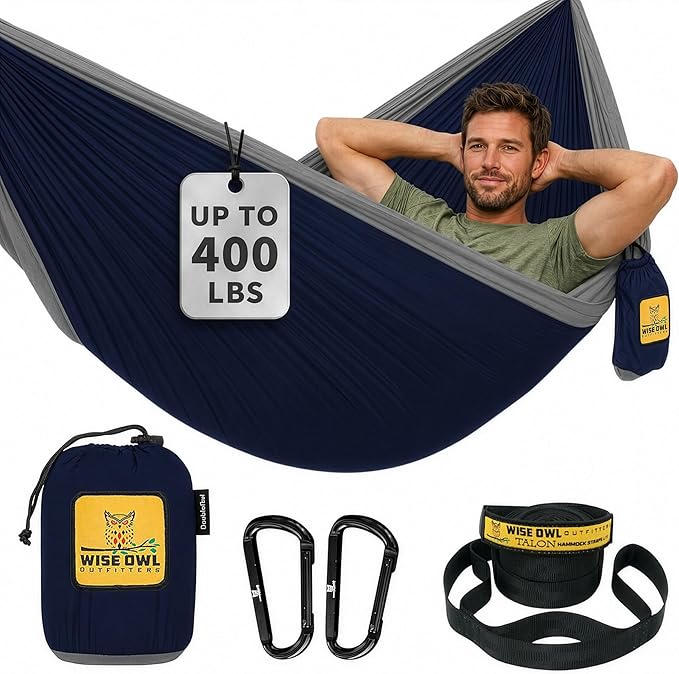
| Wise Owl Camping Hammock | Warm-weather solo sleep, 6'+ stretch | 108 in (hammock length) | ~1.3 lb | 1 (500 lb rated) |
| Specialty trail tent (e.g., Copper Spur HV UL2 Long) | Actual backpacking | 90–92 in | 3 lb 5 oz | 2 tall |
Tent manufacturers play loose with the word "2-person." A 2P rating usually assumes two 20-inch-wide sleeping pads laid edge-to-edge with zero gear inside and 6-foot occupants. For a couple where both partners are over six feet, you need to translate spec sheets into honest numbers.
The interior floor length is the single most important measurement. A 6'2" sleeper on a 78-inch pad already touches both ends of a typical 84-inch tent floor. Add a pillow and the rainfly is rubbing your scalp. Aim for 88 to 92 inches of usable floor length, and check whether the manufacturer measures floor or peak-to-peak (peak measurements lie). Width matters too: 50 inches is the published baseline for two pads, but tall sleepers tend to be broader-shouldered, so 52 to 54 inches removes the elbow war.
Peak height of 40+ inches lets one person sit up and change layers without elbowing their partner in the face. And vestibule volume — combined across both sides — should hit at least 17 square feet so two 65L packs, boots, and a wet shell can sit out of the weather.
Why most ultralight tents fail tall couples
The sub-three-pound semi-freestanding category dominates marketing, but those tents taper aggressively at the foot end. A trapezoidal floor with 42-inch head width and 30-inch foot width works fine for two 5'10" hikers. For tall couples, those tapered feet press down on the toes inside a quilt, dragging cold condensation onto down insulation by morning. If you're going ultralight, look for a true rectangular floor or a near-rectangular trapezoid (foot end at least 45 inches).
Single-wall trekking-pole shelters can work — Zpacks Duplex Zip and Durston X-Mid Pro 2+ both come in 90-inch floor lengths — but they require disciplined pitching and dry climates. For most couples doing 3-season trips across mixed weather, a freestanding or semi-freestanding double-wall is the practical answer. Pair it with a lightweight footprint cut to size and the system stays under five pounds split between two packs.
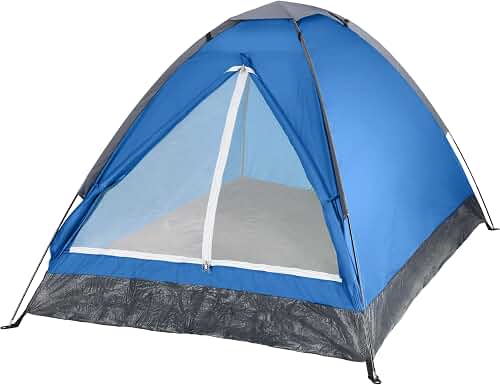
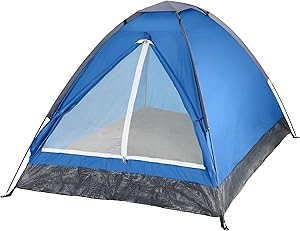
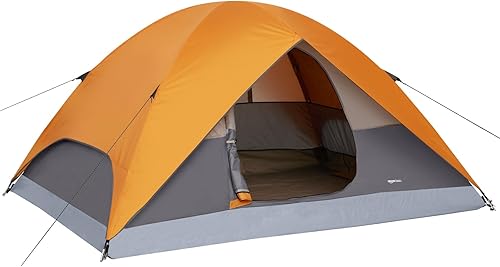
Amazon Basics 3-Season Dome Camping Tent with Rainfly — trailhead and basecamp use
This is not a backpacking tent. The packed weight (around six pounds) and the bulk of the fiberglass poles make it a non-starter for any trip where you actually carry the shelter more than a quarter mile. But for tall couples who drive to a trailhead, sleep there the night before a multi-day push, then return to the same spot at the end, it's a useful basecamp piece. The dome geometry gives more usable head-end volume than budget A-frames, the included rainfly handles light to moderate rain, and the 84-inch floor is just barely workable for two 6-footers if you both sleep on standard 72-inch pads with the heads at opposite ends. At its price point, it costs less than one night at most trailhead motels.
Wise Owl Outfitters Camping Hammock — the tall sleeper's secret weapon
Tall backpackers often discover that hammocks fit them better than tents. The Wise Owl is 108 inches long when hung — a full nine feet — which lets a 6'4" sleeper lie on the diagonal (the comfortable position) without their feet dropping over the foot end. At 500 pounds rated capacity and roughly 1.3 pounds packed including tree straps, it's a viable warm-weather solo sleep system that one partner can carry while the other carries a 2P tent for cold or buggy nights. The included tree straps protect bark and set up in under a minute. Pair it with a 3/4-length closed-cell pad slid inside for insulation below 60°F. This is the cheapest way to test whether your tall body actually prefers hanging to lying flat — many over-six-foot hikers never go back to a tent for solo summer trips after trying it.
Wise Owl Outfitters Camping Hammock
Sleeping pad and bag pairing for tall couples
The tent is only half the system. A 90-inch tent floor is wasted if you're sleeping on a 72-inch pad and a too-short mummy bag. Tall couples should plan their full sleep stack together:
- Pads: Go long (77–78 inches) and wide (25 inches each) if your tent floor allows. Two 25-inch pads need 50 inches of floor width minimum.
- Bags or quilts: Look for the "Long" or "Tall" SKU — typically rated to 6'6" inseam. Quilts are more forgiving than mummy bags because they don't have a foot box that traps your toes against the tent wall.
- Pillows: An inflatable pillow adds 4–6 inches to your effective body length inside the bag. Subtract that from your tent's usable floor.
For a deeper breakdown of pad-and-bag pairings, see our companion guide on choosing a sleeping bag for tall hikers over 6 feet and our notes on wide sleeping pads for couples backpacking.
Pitching technique: getting more length from any tent
Even with a 90-inch floor, sloppy pitching robs you of usable space. Three field tricks:
Tension the foot end first. Most couples pitch the door end first, which leaves the foot corners droopy. Reverse the order: stake the rear two corners taut, then walk the poles toward the head, then stake the door corners. You'll gain 2–3 inches of floor length back from a sagging foot.
Pad placement matters. Slide both pads all the way to the foot end of the tent and let your pillows fill the head-end air gap. This puts your toes in the most-vertical part of the tent wall and your head where the peak is highest.
Use guy lines even in calm weather. A taut fly pulls the wall away from your sleeping bag. Without guying, the fly can sag 3 inches inward overnight and soak the foot of your quilt with condensation.
Site selection for two tall sleepers
Tent footprint dimensions get tighter as you go up in size. A 90 × 54 inch trail tent needs a flat clear pad of 105 × 70 inches once you account for vestibules and guy-out points. In dense forests or rocky alpine zones, that's a non-trivial constraint. Scout your campsite for length first, width second — a slope under your head will dump you toward the foot, while a side-slope just rolls you together (often welcome).
If you camp above tree line, see our walk-through on alpine tent anchoring without trees for rock-and-snow stake alternatives.
What to skip
Two categories of tent get marketed to tall couples but rarely deliver:
"3P" tents used by 2 people. The logic seems sound — buy a 3P, get more length — but most 3P tents widen rather than lengthen. You end up carrying an extra pound for floor width you don't need while the floor length stays at 88 inches. Only a true "long" or "+" variant of a 2P actually adds inches where you need them.
Bivy + tarp combos. Some ultralight content recommends a tarp-and-bivy setup for couples to save weight. For tall sleepers this is a trap: most bivies cap out at 84 inches inside, and tarps drip condensation onto your face when pitched low. Skip unless you've used the system at your height in three-season conditions before.
Frequently Asked Questions
What is the minimum tent floor length for a 6'4" backpacker?
Plan for 90 inches of usable floor length. A 6'4" sleeper occupies roughly 76 inches end-to-end on a pad, then you add 4–6 inches for a pillow and 4–6 inches of clearance from your toes to the tent's foot wall to keep your sleeping bag dry. Anything under 88 inches will leave bag corners pressed against condensation by morning.
Are semi-freestanding tents okay for tall couples?
Yes, with caveats. Semi-freestanding designs save weight by replacing one pole with a trekking pole or staked corner, but the staked end is almost always the foot end — and tension matters. If you camp on slick granite, sandy desert, or hard-frozen ground where stakes don't bite, the foot floor will sag inward and steal length. Bring at least four reliable stakes (titanium V or Y-beam shapes hold best) and confirm your tent's published floor length is measured pitched, not laid flat.
How much should two tall hikers split the tent weight?
For a 4-pound tent, split the body and fly between partners (body in one pack, fly in the other) and let the heavier hiker carry the poles. Stakes ride with whoever has space. This puts each partner at around 2 pounds of shelter weight, which is reasonable on a 35–45 pound load. If one partner has a significantly lighter base weight, they can take the body plus fly (3.5 lb) while the other handles the poles, stakes, and footprint.
Do double-wall tents make a difference for tall sleepers?
Yes, significantly. Single-wall tents put condensation directly against the same fabric your bag touches. Double-wall designs separate the breathable inner mesh from the waterproof outer fly, so when your toes inevitably touch the tent edge, they touch dry mesh instead of wet nylon. For couples who run warm and exhale a lot of moisture overnight (very common in cold weather), double-wall is the safer choice.
What's the best 2-person tent for tall couples over 6 feet backpacking in cold-weather conditions?
Look for a 4-season convertible like the Big Agnes Copper Spur HV UL2 Long or the Hilleberg Anjan 2 — both have 90+ inch floors, steep walls that shed snow, and the option to swap mesh panels for solid fabric. Add an inflatable pillow under your feet rather than your head if your tent runs short; it keeps your toes off the foot wall where ice can form on the inside of the fly overnight.
Can two tall people use a 1P tent each instead of sharing?
It's a legitimate strategy. Two solo tents weigh more total (typically 5–6 lb combined vs 3–4 lb for a 2P) but each partner gets a full-length floor sized to their body, plus independent ventilation control. Couples who run different sleep temperatures or have different snore tolerances often prefer this. The penalty is shared vestibule cooking and conversation — you lose the social side of the trip. For trips longer than a week, many tall couples we've talked to switch to dual 1P tents.
Will a hammock work for tall backpackers as the primary sleep system?
For one partner in warm weather, yes. An 11-foot hammock lies almost flat on the diagonal even for a 6'4" sleeper. The challenges are insulation (a pad inside the hammock or an underquilt below it) and finding two trees 12–15 feet apart at every campsite. Above tree line or in desert terrain, hammocks don't work — so they're a complement to a tent, not a replacement. The Wise Owl hammock listed above is a cheap way to test the format before committing to a $300+ Dutchware or Warbonnet setup.
How long do backpacking tents last for couples who hike 30+ nights per year?
A quality 3-season double-wall tent treated well lasts 300–500 nights before the silnylon or DCF starts losing waterproofing. Tall couples wear out the foot wall first because shoulders and toes rub the same spot every night. Rotate which end you sleep at every trip to distribute wear, store the tent unstuffed (loose in a mesh bag) at home, and never pack a wet tent for more than 24 hours. Expect to re-seam-seal at year three and replace at year six to eight.
Key Takeaways
- Choosing the right best 2-person tent for tall couples over 6 feet backpacking means matching the key features to your specific needs and budget
- Read real customer reviews and check the return policy before you commit
- Also covers: long 2 person backpacking tent
- Also covers: tent for 6 foot 4 hikers couple
- Also covers: extra length two person tent
- Compare value across models — the priciest option is not always the best fit