For climbers staging at the Kahiltna Glacier basecamp (7,200 ft) or pushing through 11 Camp and 14 Camp, the best 4 season tent for denali base camp with multiple vestibule storage is a true expedition-grade geodesic shelter with two opposed vestibules, a 40D ripstop fly, and at least nine DAC Featherlite NSL poles. You need separate vestibules to isolate dry sleeping gear from wet boots, white-gas stoves, urine bottles, and snow blocks. Below we cover the dome geometry, fly materials, deadman anchor strategy, and storm-tested setup workflow that experienced West Buttress climbers rely on in 2026.
What Denali base camp actually demands from a tent
Top Picks
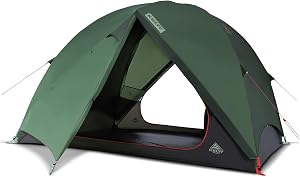
Denali is not a typical alpine objective. The Kahiltna basecamp sits on a moving glacier where temperatures regularly drop to -20°F at night, katabatic winds gust over 60 mph, and storm cycles can pin parties in their tents for four to seven days. Tents that work in the Cascades or Wind River Range will fail here. The shelter has to absorb sustained wind loading, shed wet snow, ventilate cooking vapor, and survive being partially buried overnight.
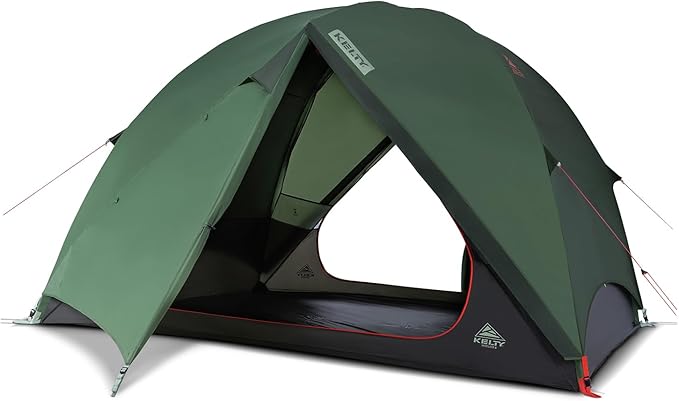
The non-negotiables for a Denali tent are: a true four-season rating with single-wall or hybrid construction, a minimum of eight poles arranged in a dome or modified-geodesic pattern, snow flaps along the entire perimeter, and at least two vestibules with independent zipper systems. Single-vestibule tents force you to choose between cooking access and gear access, which becomes a real problem during multi-day storms when boiling water, melting snow, and managing wet baselayers all happen inside the tent.
Why multiple vestibule storage changes everything at 14 Camp
Two vestibules let you create what guides call a "wet side / dry side" split. The downwind vestibule becomes your kitchen: stove board, fuel bottles, MSR XGK or WhisperLite Universal, pot set, snow-melt bag, and the entry point for boots and crampons. The upwind vestibule is your gear locker for dry-bagged sleeping kit, summit pack, climbing rope coil, and the daily haul-bag contents. By separating these flows, you eliminate the worst hazard inside expedition tents: knocking over a pot of boiling water onto a sleeping bag, or igniting down insulation with stove flare-ups.
The best 4 season tent for denali base camp with multiple vestibule storage also gives you two independent emergency exits. If one zipper freezes shut overnight — a real risk when condensation drips into the coil and refreezes — the second vestibule is your only way out without cutting the fly. Climbers who have spent a week at 14 Camp during a storm will tell you that two vestibules are not a comfort upgrade, they are a safety requirement.
Frame geometry and pole count
Geodesic and modified-geodesic frames distribute wind load across multiple intersecting pole junctions. A standard three-pole crossover dome will collapse under the kind of wind that hits the West Buttress between 11 Camp and 14 Camp. Look for shelters with nine to eleven DAC Featherlite NSL or Easton Syclone poles in a 9.5mm or larger diameter, with at least four pole crossings over the apex of the tent body. The Hilleberg Saivo, the North Face VE 25, the Mountain Hardwear Trango 3, and the Black Diamond Eldorado are the four reference points climbers compare against — though even within those, vestibule volume and number vary significantly.
Reject any tent advertised as four-season that has fewer than six poles or that uses a hub-and-pole "instant" frame. Those frames are designed for ease of setup, not for the wind-loaded fatigue cycling that an expedition tent absorbs over a 20-day climb.
Fabric, fly coatings, and condensation control
For Denali you want a 40D or heavier nylon ripstop fly with a silicone/polyurethane (Sil/PU) coating on the inner face and a silicone-only coating on the outer face. Pure silicone flies (Hilleberg Kerlon 1800/1200) shed snow better but are more expensive; Sil/PU flies (most North Face and Mountain Hardwear expedition models) are more affordable and easier to seam-tape. Avoid 20D or 30D fabrics; they will not survive a season of wind abrasion on the Kahiltna.
Condensation is the silent killer of warmth at altitude. A double-wall tent with a breathable inner panel and a waterproof fly will dump less moisture into your sleeping bag insulation than a single-wall shelter, but the double-wall design adds weight. For base camp use where you fly in via Talkeetna Air Taxi and ferry loads on sleds, the weight penalty (8-12 lbs typical for an expedition double-wall) is acceptable. For summit pushes from 17 Camp, climbers usually switch to a lighter single-wall like the Eldorado.
Anchoring on glacier ice and wind-pack snow
Stake choice matters as much as tent choice. Bring at least sixteen 9-inch aluminum snow stakes (MSR Blizzard or equivalent) plus four full-size snow pickets or deadman anchors for the corner guy lines. The standard Denali anchor technique is a buried deadman: bury a stake or stuff sack filled with snow horizontally about 18 inches deep, perpendicular to the load direction, and let the wind-pack consolidate around it for 30 minutes before tensioning the guy line.
Build a snow wall on the windward side of the tent. The wall should be one tent-height tall and offset about three feet upwind so it deflects wind over the ridge rather than creating a turbulent eddy at the tent door. This is standard practice at 14 Camp and you will see it on every party's setup. Plan to spend 90 minutes on the wall before you even start setting up the tent body.
Setup workflow for a two-vestibule expedition tent
The setup sequence we recommend, refined over multiple guided expeditions, is:
- Probe and stomp out a tent platform slightly larger than the tent footprint. Let it sinter for 20 minutes if you have time.
- Orient the tent with the long axis perpendicular to the prevailing wind, with one vestibule (the kitchen) facing downwind.
- Stake out the four corners before threading poles — on glacier this is critical because a half-erected tent can blow away.
- Thread and tension all poles, then attach the fly.
- Bury all guy line anchors as deadmen, including the two diagonals on each vestibule.
- Build the windward snow wall.
- Establish the wet/dry side convention with everyone in the party before nightfall.
Following this sequence the first time you pitch the tent prevents the kind of mid-storm reorganization that loses gloves, headlamps, and tempers.
What we do not recommend for Denali base camp
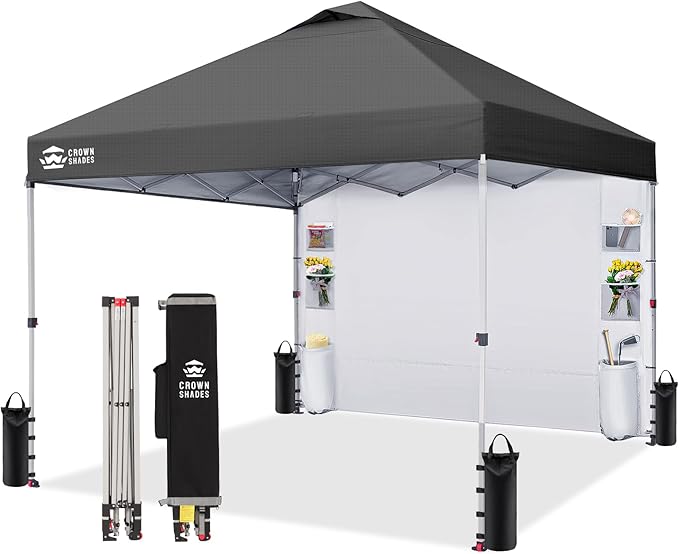
To be direct: most of what Amazon's broad "camping" and "4-season" categories list is not appropriate for Denali. Three-season dome tents are designed for car camping in temperate weather and will not survive a single storm cycle at 7,200 feet on the Kahiltna. Pop-up canopies are summer shade structures and will fail catastrophically under wind or snow load. Pop-up shower or changing tents are privacy enclosures, not shelters. Camping hammocks are obviously irrelevant when there are no trees within 50 miles of the glacier.
For a real Denali shelter, the budget starts around $700 and runs up to $1,500 for tents like the Hilleberg Saivo, North Face VE 25, Mountain Hardwear Trango 3, or Black Diamond Eldorado. Buying a cheap "4-season" tent for Denali is the single most common gear mistake that ends expeditions early. See our expedition tent comparison for Denali vs Vinson and our complete West Buttress gear list for the full picks.
Vestibule layout, gear flow, and storm protocol
Once you have the tent up, the way you use the two vestibules matters more than which tent you bought. The downwind kitchen vestibule should contain: a stove board (a quarter-inch plywood square or a folding stove platform), white gas stove with windscreen, fuel bottle (always closed except when filling), pot set with two 2L pots, snow scoop, and a closed-cell foam square to sit on. Boil snow in the larger pot while you melt in the smaller, and never leave the stove unattended.
The upwind gear vestibule should hold every climber's dry-bag of summit clothing, the day's haul-bag contents in a stuff sack, your climbing rope coiled in a rope bag, ice tools, snow pickets, and a small dry-bag for the first-aid kit. Both vestibules should have a small headlamp or LED puck velcroed to the apex so you can find gear at 3 a.m. without unzipping the inner.
Frequently Asked Questions
How many vestibules do I really need for a Denali base camp tent?
Two is the practical minimum. One vestibule is dedicated to cooking and boot storage (wet side), the other to dry gear and as a backup exit (dry side). Climbers who have used single-vestibule tents at 14 Camp during multi-day storms uniformly switch to two-vestibule designs for their next expedition.
Can I use a 3-season tent for the Kahiltna basecamp if the forecast is clear?
No. Denali weather can shift from clear to a 60 mph storm in under six hours, and a three-season tent will collapse under wet snow load even if winds stay modest. The Kahiltna airstrip itself is at 7,200 feet with overnight temperatures regularly below 0°F. A three-season tent is a safety hazard, not a budget compromise.
What is the difference between the Hilleberg Saivo and the North Face VE 25 for Denali?
The Saivo is a three-person hooped-dome with two vestibules and a Kerlon 1800 fly; it is lighter, packs smaller, and has a more aerodynamic profile in cross-wind. The VE 25 is a four-pole geodesic with two vestibules and a heavier 70D fly; it is more affordable, more durable in pole-fatigue cycling, and has slightly more interior volume. Most guided programs use the VE 25 for client tents and the Saivo for guide tents.
How much should I budget for a Denali base camp tent in 2026?
Expect to spend $700 to $1,500 for a new four-season expedition tent. Used VE 25s and Trango 3s in good condition come up on Mountain Project and Reddit's r/Mountaineering classifieds for $400 to $600, but inspect pole sleeves, fly seams, and zipper coils carefully before buying used.
Should I use a single-wall or double-wall tent at Denali base camp?
Double-wall at base camp (7,200 ft and 11,200 ft), single-wall at high camp (17,200 ft). The double-wall handles condensation from cooking better at base camp where you spend more time inside; the single-wall saves weight and pitches faster at high camp where you may only have an hour before weather closes in.
What is the best 4 season tent for denali base camp with multiple vestibule storage if I am climbing solo or with one partner?
A two-person geodesic with two opposed vestibules is the right call. Climbers heading up the West Buttress in pairs most often choose the Mountain Hardwear Trango 2, the Hilleberg Nammatj 2 GT, or the Mountain Equipment Makalu 2. The Trango 2 has the largest combined vestibule volume of the three; the Nammatj 2 GT has the most weather-resistant fly; the Makalu 2 has the best price-to-performance ratio. See our two-person mountaineering tent buyer's guide for direct comparisons.
How do I anchor a tent on a moving glacier without losing it?
Use buried deadman anchors (snow stakes or stuff sacks filled with snow, buried horizontally about 18 inches deep), build a windward snow wall, and re-tension guy lines every 24 hours. The glacier itself moves only a few inches per day at the Kahiltna basecamp, so the bigger risk is wind, not glacier flow. Read our snow anchor techniques for glacier camping guide for diagrams and load tests.
Key Takeaways
- Choosing the right best 4 season tent for denali base camp with multiple vestibule storage means matching capacity and output ports to your actual devices
- Always check actual watt-hours (Wh), not just watts — runtime depends on Wh, not peak output
- Also covers: denali expedition tent two vestibules
- Also covers: alaska range base camp tent storage
- Also covers: high altitude tent with gear vestibule
- Compare price-per-Wh across models to find the best value for your budget