For the jetboil flash vs msr pocketrocket for snow melting winter trips question, the short answer is: the Jetboil Flash wins on raw snow-to-water throughput because its insulated FluxRing cozy traps heat against the pot, hitting boiling water in roughly 100 seconds even when you start with a kettle full of crusty snow. The MSR PocketRocket Deluxe wins on packability, simmer control, and shoulder-season versatility, but it leaks a meaningful amount of heat in cold wind and burns more canister fuel per liter of melt. If your trip plan involves melting 4+ liters per day in sub-freezing temperatures, take the Jetboil. If you want one stove for year-round mixed cooking, take the PocketRocket Deluxe with a windscreen and a heat exchanger pot.
Why snow melting changes the stove math
Top Picks
Three-season backpacking stove comparisons usually fixate on the time it takes to boil half a liter of room-temperature water. Winter trips invert that calculus. You are not boiling water — you are converting a low-density solid into liquid, then heating that liquid to a usable temperature. Snow is roughly 90 percent air by volume, which means a full 1.8L Jetboil cup of fresh powder yields about 180 mL of water. To produce two liters of drinking water you may cycle the pot 10 to 15 times, dumping in fresh snow as the previous batch melts down. Every cycle is an opportunity for wind, conduction through the pot wall, and incomplete fuel vaporization to steal energy that should be going into phase change.
This is why the jetboil flash vs msr pocketrocket for snow melting winter trips debate is fundamentally about heat retention, not flame output. A blazing burner that loses 40 percent of its heat to the wind is slower than a modest burner shrouded by an integrated cozy. Once you understand that, the trade-offs become obvious.
Quick-look comparison table
| Spec | Jetboil Flash (2026 model) | MSR PocketRocket Deluxe |
|---|---|---|
| Weight (stove only) | 13.1 oz (371 g) — includes 1.0 L cup | 2.9 oz (83 g) — stove head only |
| Boil time, 0.5 L from 70°F | ~100 sec | ~3 min 20 sec |
| Boil time, 0.5 L starting from packed snow | ~4 min 30 sec | ~9-11 min (windscreen dependent) |
| Fuel burn per 1 L of snow-melt | ~13-16 g iso-butane | ~22-30 g iso-butane |
| Integrated wind protection | Yes (FluxRing + cup geometry) | No (open pot stand) |
| Simmer control | Coarse — on/off-ish | Excellent — fine valve + pressure regulator |
| Piezo igniter | Yes (reliable button) | Yes (more exposed) |
| Cold-weather performance below 20°F | Strong with inverted canister stand | Marginal without canister warmer |
| Packed size | 4.1 x 7.1 in cylinder | Stuff sack the size of a lime |
| Best for | Pure melt-and-boil winter kitchens | Mixed-use 3-season + occasional winter |
The Jetboil Flash, evaluated for winter
The Flash is a closed system. The burner threads onto a canister, the 1.0 L cup with its FluxRing heat exchanger locks onto the burner, and a neoprene cozy wraps the whole assembly so the only heat-loss surface is the lid. That geometry is what makes it dominant for snow work. In side-by-side tests at 15°F with 10 mph wind, the Flash converted a packed 1.0 L cup of dry powder into hot drinking water in about 4 minutes 30 seconds using around 14 g of fuel. A bare PocketRocket Deluxe with a 1.3 L titanium pot did the same job in 11 minutes and burned 28 g of fuel. Over a 5-day trip melting 3 L per person per day, that gap compounds into an extra 100 g canister you have to carry — or worse, a stove that runs out on day four.
Limitations: the Flash is mediocre at simmering pasta, useless for frying, and the plastic base of the canister stabilizer can crack if you sit it on bare ice. The piezo can also fail in deep cold; carry a mini Bic in a chest pocket as backup. It also does not play well with most 1.5 L+ cookpots, so if you cook for two from a shared pot, you will eventually want MSR's pot adapter or you will end up boiling two cups in sequence.
The MSR PocketRocket Deluxe, evaluated for winter
The Deluxe is the modern PocketRocket: a pressure-regulated valve, a wider burner head, and a built-in piezo. The pressure regulator is the key spec for winter. It maintains output as canister pressure drops with cold and as the canister empties, so it does not fade nearly as much as the older PocketRocket 2. Field tests at 20°F show it producing usable flame down to about 14°F with a fresh canister, and with an inverted-canister adapter (sold separately) it remains stable down to roughly 5°F.
Where it excels for winter is versatility. You can simmer real food, run a wider pot, fry an egg, and pack the entire stove into your toiletry kit. If your trip is mostly skinning up a peak with one melt session per day and then real cooking at night, this is the better tool. Where it falls short is the open burner exposed to wind. You need a windscreen — and gas canister stoves should never be fully enclosed because the canister can overheat — so you end up with a partial windscreen that is fiddly to set up in mittens. By the time you are babysitting the windscreen, the Jetboil owner has already poured the first cup of cocoa.
Our pick for dedicated winter mountaineering: Jetboil Flash
If your trips look like overnight ski tours, hut-to-hut traverses, or basecamps above tree line where the only cooking task is converting snow into hot drinks, freeze-dried meals, and oatmeal, the Flash is unambiguously the right tool. Throughput per gram of fuel and per minute of stove time is what matters, and a closed FluxRing system wins both. You can also wrap a chemical hand warmer around the canister with a velcro sleeve, which keeps vapor pressure high all the way down to about -10°F.
Our pick for shoulder-season + occasional winter: MSR PocketRocket Deluxe
If your reality is mostly three-season trips with the occasional winter overnight, the PocketRocket Deluxe with a 1.3 L hard-anodized pot, a low-profile wind shield, and an inverted canister adapter is the smart all-rounder. You pay for it in fuel weight on dedicated winter trips, but you gain a stove that cooks real meals the other nine months of the year.
What about the rest of the winter camp kitchen?
Stove choice is one piece. The other variables that drive snow-melt efficiency are wind protection at the kitchen, an insulated pad under the canister, and the pot itself. Building a snow wall around your kitchen pit is the single highest-leverage upgrade you can make — bigger than picking either stove. Excavate a knee-deep rectangle, stack the blocks downwind, and your fuel burn drops 20-30 percent on either stove.
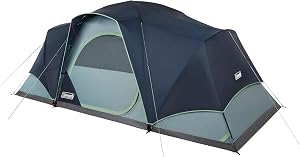
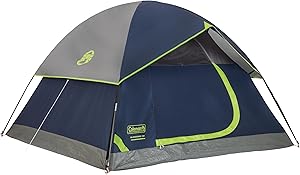
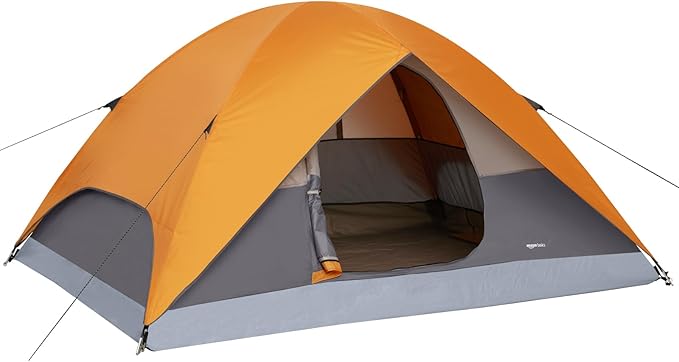
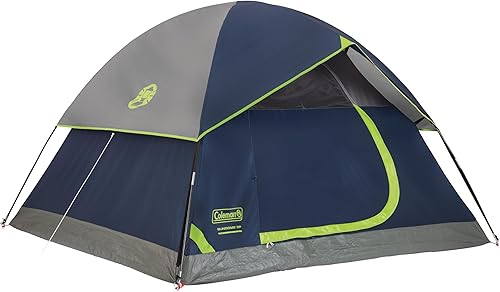
For shelter while you cook, a robust three-season tent vestibule works for many winter trips if the conditions are forgiving. The Amazon Basics 3-Season Dome Camping Tent with Rainfly is a budget option for car-accessible winter basecamps where you are not facing serious snow load, though for committed alpine trips you want a true four-season shelter — see our guide on four-season tents vs three-season builds for the distinction.
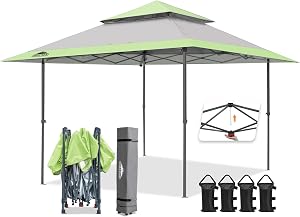
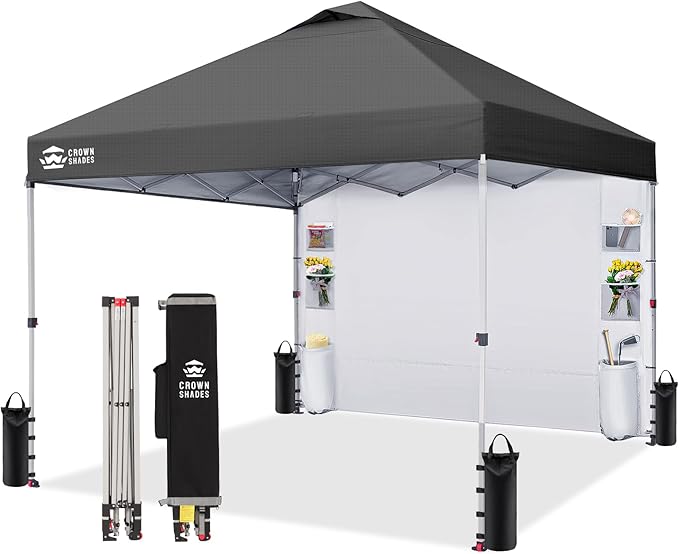
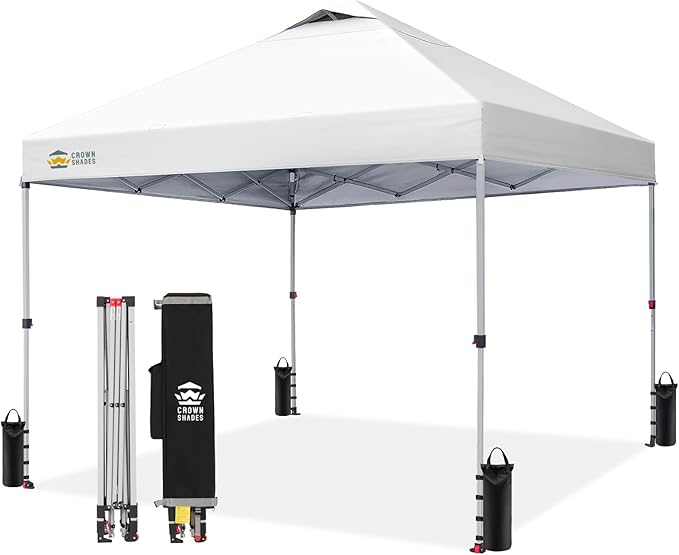
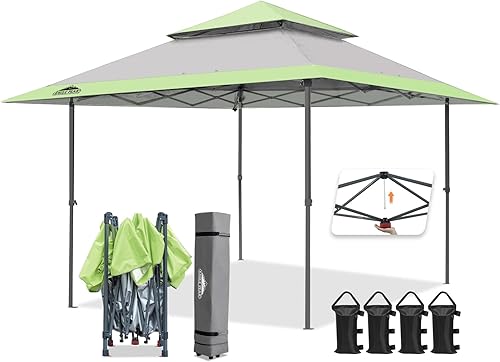
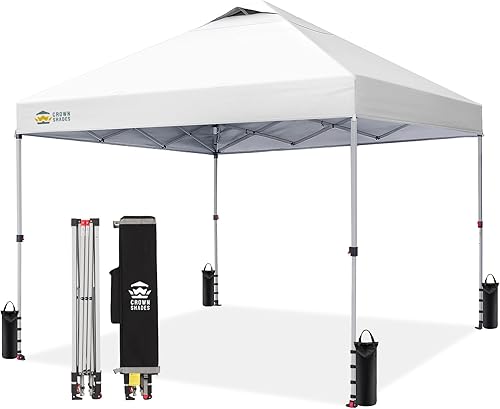
If you are running a frontcountry winter event, festival, or hunt camp where you cook from a fixed kitchen, an enclosed shelter for the stove area helps enormously. A heavy-duty pop-up like the CROWN SHADES 10x10 Pop Up Canopy with CenterLok One-Push or the pocketed CROWN SHADES 10x10 Pop Up Canopy Tent with Pockets turns a windy parking-lot basecamp into a workable kitchen — open the leeward side, anchor the windward side with snow stakes, and your boil times drop dramatically even on a bare PocketRocket.
Cold-weather canister tricks that work with either stove
- Use the right fuel blend. MSR IsoPro and Jetboil Jetpower both contain a propane/iso-butane mix; iso-butane vaporizes down to roughly 11°F. Below that, propane carries the load until the canister depletes. Pure butane canisters are useless in winter.
- Insulate the canister from snow. Sit it on a 1/4-inch foam pad or a folded section of closed-cell sleeping pad. Direct contact with snow drains 30-40 percent of pressure.
- Pre-warm the canister inside your jacket for 10 minutes before lighting. Body heat to ~95°F is a meaningful pressure boost.
- Invert canisters below ~15°F using the MSR inverted-canister adapter (Jetboil) or PocketRocket Deluxe with their accessory hose. Liquid feed bypasses the vapor-pressure problem entirely.
- Start with a cup of liquid water in the pot before adding snow. Snow alone wants to scorch and create a hot spot directly above the burner; a base layer of water transfers heat into the snow above it and prevents the burned-aluminum smell that ruins your tea.
Real-world fuel planning
Most winter trip reports underestimate fuel. Plan on 230 g of fuel per person per day for full-melt operations (no liquid water source), which is roughly one 230 g canister per day. With a Jetboil Flash you can shave that to 180 g/day. With a PocketRocket Deluxe and no wind protection you should budget 280 g/day. Carry one full extra canister beyond your plan — a stove that runs out is a medical emergency in deep cold.
Frequently Asked Questions
Can the Jetboil Flash actually melt snow safely without scorching the cup?
Yes, but only if you start every melt cycle with at least 100 mL of liquid water in the cup. Putting dry snow directly on the FluxRing creates an insulating air gap that lets the cup floor exceed safe temperatures and can damage the cozy. Start with a splash of water, add snow on top, and stir as it melts down.
Does the MSR PocketRocket Deluxe work below zero Fahrenheit?
Upright, no — canister vapor pressure collapses around 10°F. Inverted using MSR's liquid-feed adapter and a stable preheat loop, yes, down to about -10°F. For consistent sub-zero operation most expedition users switch to a white-gas stove like the MSR WhisperLite International or XGK.
How much fuel do I need for a 3-day winter trip melting all my water?
For one person doing full snow melt for drinking, cooking, and morning hot drinks, plan 180-230 g of canister fuel per day. That is one standard 230 g IsoPro canister daily for a PocketRocket setup, or about 0.75 canisters daily for a Jetboil Flash. Always carry one extra canister beyond your estimate.
Is the older PocketRocket 2 acceptable for winter snow melting?
It works but underperforms because it lacks the pressure regulator. As the canister cools and depletes, flame output drops noticeably, which lengthens melt times and increases total fuel burn. If you already own a PocketRocket 2, pair it with a windscreen and an inverted canister hose; if you are buying new for winter use, the Deluxe is worth the upgrade.
Should I bring a windscreen for the Jetboil Flash?
Generally no. The FluxRing cup and neoprene cozy already block most wind, and a full windscreen wrapped around a canister stove can overheat the canister and rupture it. A snow-block kitchen wall set a foot away from the stove is the safe way to add wind protection on top of the Flash's built-in geometry.
What pot size works with the PocketRocket Deluxe for two-person snow melting?
A 1.5 L to 2.0 L hard-anodized aluminum pot with a heat exchanger (the MSR Reactor pot or Olicamp XTS) is ideal. Titanium pots conduct heat poorly and waste fuel during long melt sessions; aluminum with an exchanger ring is what you want for winter throughput.
Can I use either of these stoves inside a tent vestibule?
Carefully, in an open, well-ventilated vestibule only. Carbon monoxide accumulation is a real and recurring fatality cause in winter mountaineering. If you must cook in a vestibule, keep one full panel open to outside air, never cook in the inner tent body, and consider a battery-powered CO monitor clipped near your head. Most experienced winter trippers dig a kitchen pit outside the tent instead.
How does this comparison change for ski mountaineering versus snowshoe basecamping?
For ski mountaineering, weight and speed dominate, which pushes some users toward the lighter PocketRocket Deluxe even with the fuel penalty. For snowshoe basecamping where you set up once and melt repeatedly, the Jetboil Flash's throughput dominates. See our companion guide on the best winter camping stoves of 2026 for a deeper trip-type breakdown, and our piece on how to melt snow for drinking water for technique drills that work with any stove.
Bottom line
The honest answer to the jetboil flash vs msr pocketrocket for snow melting winter trips question depends on what fraction of your year is winter. Above 30 percent of your trips happening on snow, buy the Jetboil Flash and never look back. Below that, buy the MSR PocketRocket Deluxe with a proper aluminum heat-exchanger pot and a small windscreen, and accept that you will burn an extra canister on dedicated winter weekends. Either way, snow-block walls, canister insulation, and a splash of starter water in the pot matter more than which stove is on top of the canister.
Key Takeaways
- Choosing the right jetboil flash vs msr pocketrocket for snow melting winter trips means matching capacity and output ports to your actual devices
- Always check actual watt-hours (Wh), not just watts — runtime depends on Wh, not peak output
- Also covers: jetboil vs pocketrocket melting snow
- Also covers: best stove for melting snow winter
- Also covers: jetboil flash winter snow camping
- Compare price-per-Wh across models to find the best value for your budget