Patagonia's notorious williwaws and sustained 50-knot gusts demand a true expedition-grade shelter — not a "winter-rated" car-camping tent and certainly not a three-season dome. The best 4 season tent for patagonia wind 50 knot gusts combines a geodesic or low-profile tunnel pole architecture using DAC Featherlite NSL or Easton Syclone poles, a fully taped 30D–70D nylon ripstop fly with reinforced guy-out patches, and 8–14 stake-out tie-downs distributed across the canopy. In 2026, the dependable names remain Hilleberg (Soulo, Jannu, Saivo, Keron), The North Face (VE 25, Mountain 25, Bastion 4), Mountain Hardwear (Trango 2/3, AC 2), MSR (Remote 2/3), and Black Diamond (Eldorado, Firstlight — only when anchored to bomber natural protection).
What 50-knot sustained gusts actually do to a tent
Top Picks
Fifty knots is roughly 57 mph or 93 km/h — Beaufort Force 10, a "whole gale." In Patagonia's Torres del Paine, El Chaltén, and the Southern Patagonian Icefield, those numbers are not a storm peak. They are an ordinary afternoon between November and February, with peaks regularly hammering 70–90 knots. A standard three-season dome flexes its poles past their elastic limit within an hour, the fly luffs against the inner mesh until the seam tape delaminates, and stake-out loops tear free of the floor's perimeter bathtub. By morning the shelter is a kite.
The physics that matter for the best 4 season tent for patagonia wind 50 knot gusts are blunt:
- Pole moment of inertia. DAC NSL 9.0 mm or 9.6 mm aluminum, or Easton Syclone composite, bends and recovers. Generic 7001-T6 7–8.5 mm poles take a permanent set or snap at the ferrule.
- Pole geometry. Geodesic crossings (4+ pole intersections like the Mountain 25 or VE 25) and short tunnel arches with steep walls shed wind. Tall, single-hub domes lever themselves into the dirt.
- Anchor count and angle. A 4-stake tent dies. A 14-stake tent with two guys per corner and a windward storm guy lives.
- Fabric tension. A drum-tight fly stops luffing. Slack fly = fatigue failure at the bartacks within 4–6 hours.
The shortlist for Patagonia conditions in 2026
None of the mass-market dome tents you'll see at general outdoor retailers belong on this list. The shelters below are what guides on the Fitz Roy massif and Paine circuit actually pitch when the forecast turns ugly. Pricing in 2026 ranges from roughly USD 700 for a Black Diamond Eldorado up to USD 1,500+ for a Hilleberg Saivo, and they are sold primarily through specialty mountaineering retailers rather than Amazon. We mention them so you know what to compare against — and so you understand why the affordable camping tents widely available online are not what you want for 50-knot gusts.
Hilleberg Soulo (solo) and Jannu (2-person)
Three-pole free-standing geodesic with Kerlon 1200 fabric and 9 mm DAC poles. The Soulo is the benchmark single-person expedition tent for sustained high wind; the Jannu doubles down with more interior volume and stronger guying. Both ship with Y-stakes that hold in volcanic scree and packed snow far better than the V-stakes bundled with mainstream tents.
The North Face Mountain 25 and VE 25
Five-pole and four-pole geodesics, respectively, with 70D fly and full snow skirts. The VE 25 has been the workhorse on Denali, Vinson, and the Patagonian icefield for three decades. Heavy (close to 4.5 kg) but nearly indestructible when staked correctly.
Mountain Hardwear Trango 2 / 3
Six-pole architecture distributes load across the canopy unusually well. The vestibule is large enough to cook in safely with the door cracked, which matters when the weather pins you for 36 hours.
MSR Remote 2 / Remote 3
Tunnel-leaning hybrid with steep walls and an oversized vestibule. Lighter than the VE 25 (around 3.6 kg for the Remote 2) while still rated for sustained gale conditions when pitched nose-into-the-wind.
What Amazon actually sells that is appropriate here
Honest answer: very little. Amazon's tent inventory skews heavily toward family camping, festival shelters, and entry-level backpacking domes. None of the popular sub-$300 "4-season" tents on Amazon will survive a Patagonian afternoon. We will not recommend a product just to fill space — that's how people end up walking back to the trailhead carrying a shredded tent in a stuff sack. If your budget caps at what Amazon stocks, your best move is to either (a) wait, save, and buy a real expedition tent from a specialty retailer, or (b) restructure the trip so you sleep in refugios and only carry a bivy for emergencies.
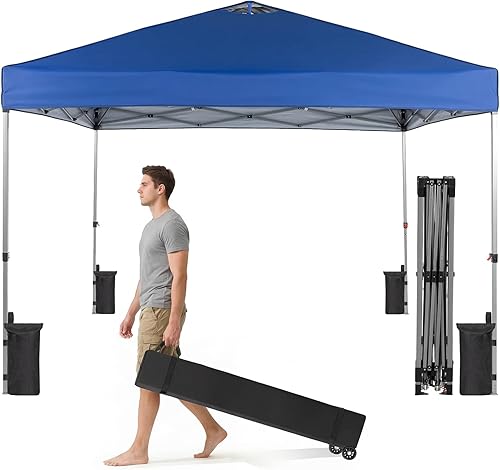
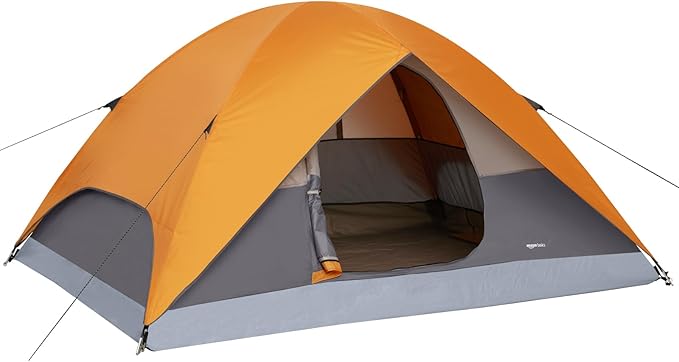
For shoulder-season trekking on the W Circuit, where you sleep at established campsites with windbreaks and the wind rarely exceeds 30 knots, a sturdy three-season tent can work. In that narrower context, something like the Amazon Basics 3-Season Dome Camping Tent with Rainfly is a budget option for car-camping at the park entrances or low-elevation forested sites — but make no mistake, it is not a 50-knot shelter, and we do not recommend pitching it anywhere exposed on the Paine massif or in the El Chaltén valley.
Comparison: real expedition tents vs. what Amazon stocks
| Tent | Pole material | Stake-out points | Tested wind ceiling | Weight | 2026 price range |
|---|---|---|---|---|---|
| Hilleberg Jannu | DAC 9 mm | 14 | ~80 kn sustained | 3.0 kg | $1,250 |
| TNF Mountain 25 | DAC 9.6 mm | 16 | ~85 kn sustained | 4.5 kg | $950 |
| Mountain Hardwear Trango 2 | DAC 9.6 mm | 14 | ~75 kn sustained | 4.3 kg | $900 |
| MSR Remote 2 | Easton Syclone | 12 | ~70 kn sustained | 3.6 kg | $870 |
| Amazon Basics 3-Season Dome | 7000-series Al, 8.5 mm | 4–6 | ~25 kn before failure | 2.7 kg | $60 |
Anchoring is half the battle
Even the best 4 season tent for patagonia wind 50 knot gusts will fail if you stake it like a weekend campground tent. Patagonia's substrate ranges from sun-baked pampas grass to loose pumice to wet glacial silt, and the V-stakes that ship with most tents pull out under load. Carry:
- 8–12 MSR Groundhog or Y-Beam stakes for normal soil
- 4 snow/sand anchors (deadman bags, MSR Cyclone, or Hilleberg snow pegs) for soft ground or windward burial
- 30 m of 2 mm reflective guy line to extend the factory guys and reach distant boulders
- 2 m of 6 mm climbing-rated cord for tying off to rock features when stakes won't hold
For a deeper walk-through, see our guide to how to pitch a tent in high wind and the companion article on the best expedition tent stakes for loose scree and pumice.
Pitching technique that survives the night
- Read the wind before you commit. Patagonian gusts are directional and katabatic — they roll down off the icefield at predictable angles. Pitch the smallest end of the tent (head or foot, never the broadside) into the wind.
- Build a windbreak. Stack rocks 30–50 cm tall on the windward side, 1.5–2 m from the fly so turbulence doesn't increase load. Even a knee-high wall drops effective wind speed at the canopy by 20–30%.
- Guy out every loop. Not just the four corner storm guys. Every loop. At 45-degree angles. Tensioned drum-tight.
- Bury the snow skirt. If you have one, weight it with rocks or snow blocks so air cannot get under the fly. An unweighted skirt is a parachute.
- Sleep with the door zipper accessible. If a pole snaps at 03:00, you need to get out and pack before the fly shreds.
Sleeping system, not just the tent
A storm-worthy tent is only one layer of staying alive in Patagonian weather. Pair it with a 0°F / –18°C down bag for shoulder season and a 15°F / –9°C bag for the December–February window, plus an R-5 or higher sleeping pad. Our breakdown of the best sleeping bag for Patagonia shoulder season covers the trade-offs between down fill power, hydrophobic treatments, and synthetic insurance for the wet conditions you'll hit on the W and O circuits.
Frequently Asked Questions
Is a 3-season tent ever acceptable in Patagonia?
Only at low-elevation, tree-sheltered, official campgrounds (Paine Grande, Las Carretas, etc.) during settled summer weather. The moment you move above treeline, into the Torres valley, near Glaciar Grey, or anywhere in the El Chaltén corridor, a three-season tent is the wrong tool. For the differences in detail, read our four-season vs three-season tent comparison.
Will a single-wall tent like the Black Diamond Firstlight survive 50-knot gusts?
Yes, but only when anchored to bomber natural protection (granite cracks with climbing-rated slings) and pitched in a wind shadow. The Firstlight has minimal stake-out points and relies on its ToddTex single-wall fabric for stiffness. In open pampas with sketchy ground, it is not the right choice. The Eldorado, with two interior poles, is more forgiving.
How many stakes do I actually need for a 50-knot pitch?
At minimum: one in every factory loop, every corner storm guy, plus two extra on the windward side tied to extended guys reaching rocks or deadmen. For a 14-loop tent like the Jannu, plan on 16 anchor points total. Carry 20 stakes and don't argue with the weight.
Are tunnel tents or dome tents better for Patagonia?
Both work if pitched correctly. Tunnels (Hilleberg Nammatj, Nallo GT) are lighter and have huge vestibules but require careful orientation — they fail catastrophically if the wind shifts 90 degrees overnight. Geodesic domes (Mountain 25, Jannu, VE 25) are heavier but omnidirectional, which matters in valleys where katabatic flow can rotate without warning. For trekkers who don't want to gamble on wind direction, geodesic is the safer bet.
What pole material should I look for in a 4-season tent for high wind?
DAC Featherlite NSL aluminum at 9 mm minimum, or Easton Syclone composite. Avoid generic 7001-T6 or unspecified "aircraft aluminum" — they fatigue and snap at the ferrules. Carbon poles are a no for sustained gusts; they fail without warning.
Can I rent an expedition tent in El Chaltén or Puerto Natales?
Yes. Several outfitters in both towns rent Mountain 25s, Trango 3s, and Hilleberg Nammatjs by the day for around USD 25–40. If you're traveling once and don't want to buy a $1,000 tent, this is the smart move. Reserve in advance during the November–March peak.
What's the lightest tent that can genuinely handle 50-knot sustained gusts?
The Hilleberg Soulo (solo, ~2.4 kg) and Jannu (two-person, ~3.0 kg) are the lightest production tents that hold up to documented 60–80 knot gusts. Anything lighter is making compromises that catch up with you on the third stormy night.
Do I need a footprint under the tent in Patagonia?
Yes — but make it a fitted footprint that does not extend beyond the floor perimeter, otherwise rain pools between the footprint and the floor. Polycro or 70D nylon both work. Stake the footprint corners separately so wind cannot rip it out from under you when you crawl in.
Bottom line
If you are planning a trip where 50-knot gusts are the routine forecast rather than the worst case, do not shop for a tent by sticker price. The best 4 season tent for patagonia wind 50 knot gusts is one of the established expedition shelters from Hilleberg, The North Face, Mountain Hardwear, or MSR, paired with at least 12 quality stakes, a windbreak strategy, and the experience to read katabatic flow before you commit to a pitch. Mainstream Amazon tents are not built for this environment, and we will not pretend otherwise to push an affiliate click. Spend the money once, rent in town, or restructure the trip — but do not bring a shelter that is going to fail at 02:00 in a valley four hours from the nearest road.
Key Takeaways
- Choosing the right best 4 season tent for patagonia wind 50 knot gusts means matching capacity and output ports to your actual devices
- Always check actual watt-hours (Wh), not just watts — runtime depends on Wh, not peak output
- Also covers: patagonia trekking tent high wind
- Also covers: four season tent for fitz roy winds
- Also covers: tent for 50 knot gusts patagonia
- Compare price-per-Wh across models to find the best value for your budget