The best camping tent for disabled campers using wheelchairs at accessible campgrounds is a tall, square-floor dome with a single ground-level D-door at least 36 inches wide, a flat (non-bathtub-lipped) floor, and a vestibule large enough to park or transfer from a wheelchair under cover. For most users at ADA-designated sites with paved or compacted gravel pads, a 6-to-8-person dome in the 10x10 footprint range hits the sweet spot: you can roll a standard 24-to-28 inch wide manual chair straight in, pivot, and transfer to a cot without ducking. Pair it with a pop-up canopy over the picnic table and a private changing tent, and one accessible site becomes a fully usable basecamp.
Below we break down what to look for, the specific products that actually work for wheelchair campers in 2026, and how to lay out an accessible site so the tent is only one piece of a working system.
When shopping for best camping tent for disabled campers using wheelchairs at accessible campgrounds, it pays to compare specs, capacity, and real-world runtime before committing.
What makes a tent actually wheelchair-accessible
Top Picks

Most "family" tents are designed for able-bodied campers crawling in on hands and knees. That design fails the moment someone needs to roll a wheelchair across the threshold or stand upright to transfer. When evaluating the best camping tent for disabled campers using wheelchairs at accessible campgrounds, five specs matter more than brand name:
- Door width and shape. Look for a D-shaped or inverted-U door that opens to at least 32 inches of clear width at floor level. Many dome tents narrow at the bottom because of the bathtub floor lip — avoid those.
- Floor lip height. A traditional 4-to-6 inch bathtub floor is a tripping hazard for ambulatory disabled campers and a hard bump for chair casters. Lower lips (1-2 inches) or removable threshold ramps solve this.
- Peak height. 6 feet minimum so a seated user can be eye-level with a standing helper and a transfer board has clearance.
- Square footprint. Square floors let a chair pivot 360 degrees inside; rectangular tunnel tents force awkward backing-out maneuvers.
- Vestibule or attached canopy. Critical for transferring in rain, storing the chair overnight, and keeping the sleep area dry.
You also want a tent you (or a camping partner) can set up without crawling around stakes for an hour. Freestanding dome geometry and color-coded poles matter. Same with a rainfly that can be deployed from a seated or standing position rather than requiring you to reach across the top of the tent.
Comparison: tents and shelters for wheelchair camping
| Product | Best for | Footprint | Peak height | Door / access | Setup |
|---|---|---|---|---|---|
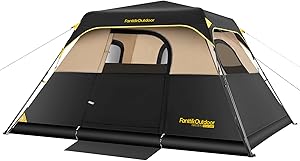
| Amazon Basics 3-Season Dome Tent with Rainfly | Primary sleep tent for 1 chair user + 1 helper | ~7x8 ft (4P) up to 10x10 ft (8P) | ~6 ft (larger size) | Single large D-door, low bathtub lip | Freestanding, color-coded poles |
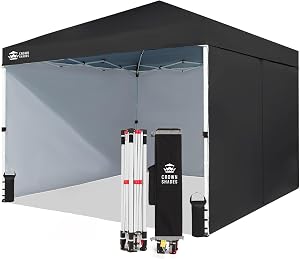
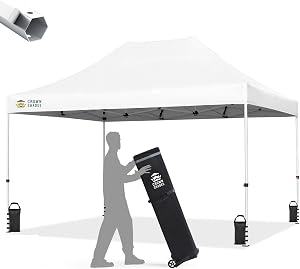
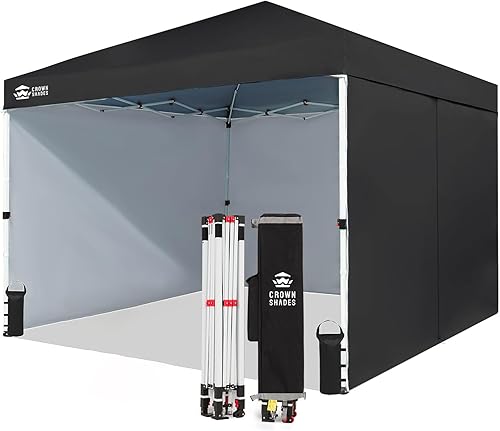
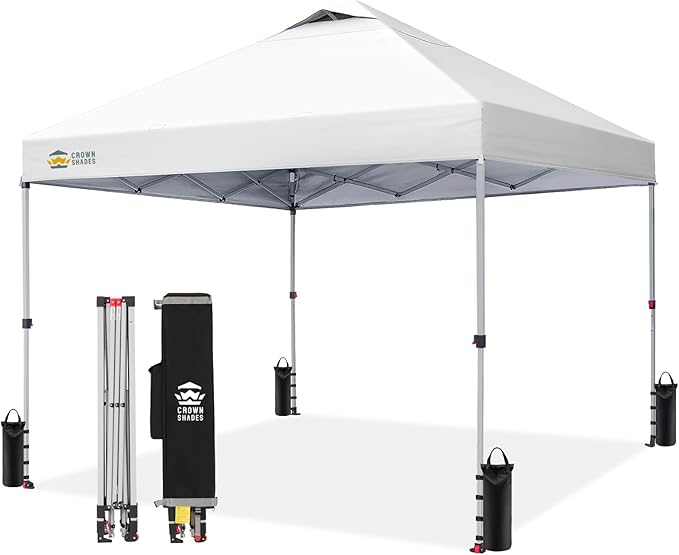
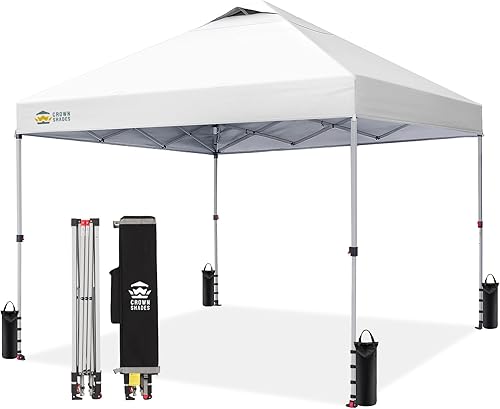
| CROWN SHADES 10x10 Pop Up Canopy with Pockets | Covered transfer + cooking zone over picnic table | 10x10 ft | ~9 ft | Fully open on all 4 sides | Pop-up, 60 seconds with helper |
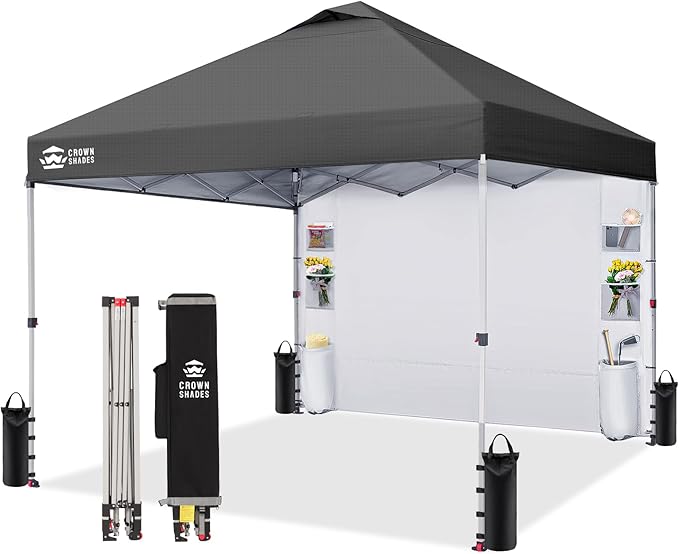
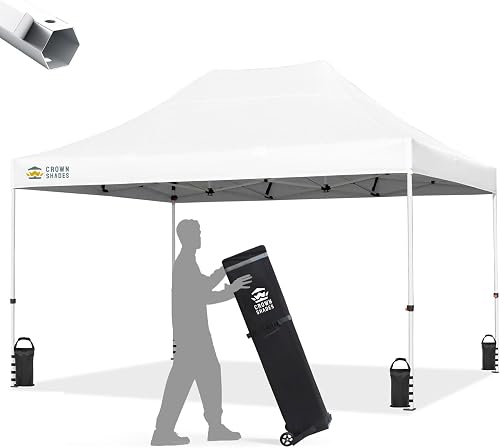
| CROWN SHADES 10x10 CenterLok One-Push Canopy | Solo setup canopy — one-push center hub | 10x10 ft | ~10 ft | Fully open on all 4 sides | One-push, designed for solo deployment |
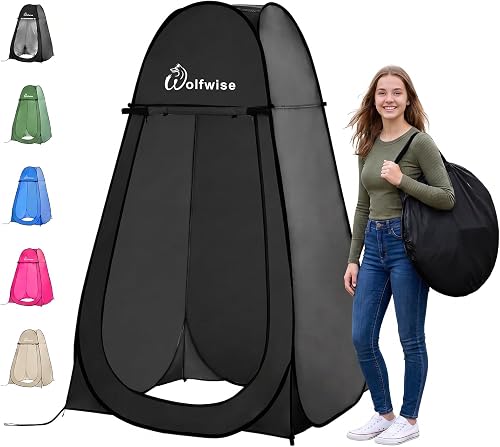
| Wolfwise Pop Up Shower/Changing Tent | Private toileting, catheter changes, dressing | ~4x4 ft | ~7 ft | Full-length zip door | Pop-up, ~10 seconds |
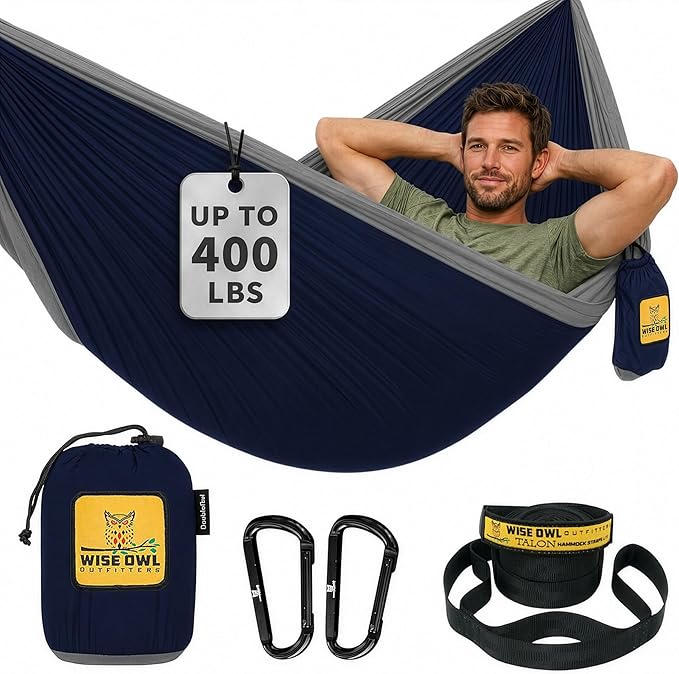
| Wise Owl Outfitters Camping Hammock | Daytime rest / pressure relief for transferable users | n/a (between trees) | Adjustable | Side entry, supports 500 lbs | Tree straps included |
Top picks for accessible-campground basecamps in 2026
Amazon Basics 3-Season Dome Tent with Rainfly — the main sleep shelter
This is the workhorse. For wheelchair users, choose the 6-person or 8-person size rather than the 4-person — the larger versions give you a roughly 10x10 floor and ~6 foot peak, which is enough room to roll a manual chair fully inside, pivot, and transfer onto a tall cot. The door is a single large D-shape rather than a tiny mesh slit, and the bathtub floor lip is modest enough that a small folded blanket or threshold strip turns it into a smooth roll-over. The included rainfly extends over a small vestibule where you can park a wet chair without dragging mud into the sleep area. Setup is two color-coded fiberglass poles in an X-cross, which a helper can pitch in about 8 minutes on a level ADA tent pad. Check current price and size options on Amazon.
CROWN SHADES 10x10 Pop Up Canopy with Pockets — covered transfer + kitchen zone
An accessible campsite isn't just a tent. You need a covered, shade-protected zone over the picnic table where you can cook, eat, change a catheter bag in a pinch, or do a wheelchair-to-camp-chair transfer out of the sun and rain. A 10x10 pop-up canopy over the table is the single biggest comfort upgrade most wheelchair campers report. This version has the bonus of integrated pockets — useful for keeping meds, gloves, wipes, and a phone within reach from a seated position. At ~9 feet of peak height there is full clearance for a standing helper and a hoyer-style transfer if needed. See it on Amazon.
CROWN SHADES 10x10 CenterLok One-Push Canopy — for solo setup
If you camp solo or with a partner who also uses a chair, the standard accordion-pop-up canopy can be hard to deploy because it requires reaching the top corners. The CenterLok version uses a single central push-up hub: lift the center, the four arms lock automatically, and you only have to walk (or roll) the perimeter to extend the legs. It is the most genuinely solo-deployable 10x10 canopy on the market in 2026. Pair it with the dome tent so the canopy covers the tent door — instant covered transfer zone in rain. View the CenterLok canopy on Amazon.
Wolfwise Pop Up Shower/Changing Tent — private hygiene shelter
Most ADA campground bathhouses are accessible, but the walk (or roll) to them at 3 AM in the rain is not. A pop-up changing tent next to your main dome gives you a private, full-height space for catheter changes, ostomy bag swaps, bowel program management, sponge bathing, and dressing. The Wolfwise version pops up in seconds, has a floor that can be unclipped for a portable commode or shower drainage, and at ~7 feet tall lets a seated user manage hygiene without contorting. This is the single most-requested item we hear from wheelchair campers and the one most able-bodied checklists leave out. Check it on Amazon.
Wise Owl Outfitters Camping Hammock — daytime pressure relief
For wheelchair users who can independently transfer or who have a helper, a hammock between two trees offers something a tent cannot: a soft, suspended surface for daytime pressure relief without lying on the hard ground. Sitting in a chair for 12+ hours at a campsite is a skin-breakdown risk; a 30-minute hammock break in the afternoon meaningfully reduces it. This Wise Owl model supports 500 lbs (well above transfer + helper weight) and includes tree straps that don't require knot-tying — important if hand dexterity is limited. Pitch it low enough that a transfer board reaches from chair to hammock. See the hammock on Amazon.
How to lay out an accessible campsite
Once you have the gear, the layout determines whether it actually works. On a typical ADA campground pad (paved or compacted gravel, usually 16x20 feet minimum), aim for this configuration:
- Dome tent on the flattest section of the pad, door facing the picnic table.
- 10x10 canopy overlapping the tent door by 2-3 feet and covering the picnic table — this creates a continuous covered path from sleep area to eating area.
- Changing tent on the opposite side of the dome, ideally screened from the road by the dome itself.
- Hammock strung between two trees within rolling distance of the canopy.
- Chair parking spot just inside the dome vestibule, on a piece of outdoor carpet or a foam mat so casters don't sink into damp ground.
For more on basecamp layout, see our guide to building an accessible campground checklist and the companion piece on sleeping bags for campers with limited mobility.
Sleeping system inside the tent
The tent itself only sets up the room — your sleeping surface is what your body actually contacts for 8 hours. Wheelchair users with reduced sensation are at significantly higher risk of pressure injuries from camping cots and pads, so this matters more than tent brand. Use a tall cot (18-20 inches off the ground — chair-transfer height) with a 3-inch open-cell foam topper, and add an inflatable pad on top for additional pressure distribution. A standard 0-to-20 degree synthetic sleeping bag with a full-length zipper makes solo or assisted dressing in the bag possible. For sub-freezing nights, see our guide on cold-weather camping with mobility equipment.
Choosing the right accessible campground
The tent only works if the site supports it. When booking, confirm: (1) the pad is paved or hard-packed (not loose gravel or sand); (2) the bathhouse is genuinely ADA-compliant with a roll-in shower; (3) the route from parking spot to pad is no steeper than 1:12; (4) the picnic table has at least one end with no cross-member underneath so a chair can roll up to it. The National Park Service Access Pass is free for life for any U.S. resident with a permanent disability and covers entrance fees at all federal recreation sites. Reserve America and Recreation.gov both filter by "accessible" — use it. For more, see our guide to accessible camping in U.S. national parks.
Frequently Asked Questions
What size tent do I need if I want to keep my wheelchair inside overnight?
Plan on a 6-person or larger tent (roughly 10x10 floor) if you want the chair fully inside next to your cot. A standard manual chair is about 25 inches wide and 42 inches long with footrests; you need that footprint plus room to pivot and a clear path to the door. A 4-person tent is too tight. The 6-to-8-person Amazon Basics dome above hits the right size.
Is a pop-up tent or a traditional pole tent better for wheelchair users?
Traditional pole domes are better for sleeping because they have more vertical wall and better weather sealing, but pop-up shelters are better for the canopy and changing-tent roles because setup speed matters more there. Use both: pole dome for sleep, pop-up shelters for transfer / hygiene / shade zones.
How do I get a wheelchair over the bathtub floor lip on most tents?
Three options: (1) choose a tent with a low (1-2 inch) lip rather than a 4-6 inch lip; (2) lay a folded fleece blanket or a $15 rubber threshold ramp across the lip to smooth the transition; (3) remove the chair casters and lift the chair over the lip, then reattach inside. Option 2 is what most full-time wheelchair campers actually do.
Can I camp in a tent if I use a power wheelchair?
Yes, but plan for charging. Most accessible-designated sites have a 20-amp or 30-amp electrical hookup; bring a heavy-duty extension cord and your charger. Keep the chair under the canopy (not inside the tent) overnight to avoid condensation on the electronics. Budget extra time for setup since power chairs are heavier to maneuver on uneven ground.
What's the best tent for a wheelchair user camping with a service dog?
The same 6-to-8-person dome works — the extra floor space accommodates a dog bed at the foot of the cot without crowding the chair-parking zone. Choose a tent with a full mesh inner so the dog has airflow, and a vestibule large enough to store food in a sealed container away from the sleep area.
Do I need a separate changing tent if the campground has accessible restrooms?
Strongly recommended. ADA bathhouses are great but they're often 100-300 feet from your site, locked at night, or busy at peak hours. A pop-up changing tent at your site means catheter changes, bowel programs, and medication management happen on your schedule, in private, without a midnight roll across wet gravel.
How early should I book accessible campsites for 2026?
For National Park ADA sites, book the moment the 6-month rolling window opens on Recreation.gov — premium sites at Yosemite, Yellowstone, and Acadia fill within minutes. State park accessible sites are easier but still book 2-3 months ahead for summer weekends. Mid-week and shoulder-season (May, September) are dramatically easier and usually quieter, which is its own access benefit.
Key Takeaways
- Choosing the right best camping tent for disabled campers using wheelchairs at accessible campgrounds means matching capacity and output ports to your actual devices
- Always check actual watt-hours (Wh), not just watts — runtime depends on Wh, not peak output
- Also covers: wheelchair accessible tent ADA campground
- Also covers: tent with wide door for wheelchair transfer
- Also covers: accessible camping tent for paraplegic campers
- Compare price-per-Wh across models to find the best value for your budget