Finding the best sleeping bag for side sleepers with wide shoulders backpacking in 2026 means rejecting the stock mummy bag and hunting for three specific traits: a shoulder girth of 64–68 inches, an offset or center-zip design that won't dig into your collarbone when you roll, and 800+ fill-power down (or premium synthetic) so you hit a sub-3-pound packed weight without losing warmth. Standard tapered bags squeeze broader shoulders, crush hips, and trap your arms — three things that turn a 10-hour trail night into a four-hour panic. Below: sizing math, fabric trade-offs, field-tested alternatives, and FAQs covering everything from pad pairings to quilt swaps.
Why side sleepers with wide shoulders need a different bag
Top Picks
Most backpacking sleeping bags are cut for back sleepers with average builds — usually 60–62 inches of shoulder girth and a steep taper through the hips and feet. That geometry saves weight and traps warmth efficiently, but it punishes anyone who actually moves in their sleep. If you sleep on your side, your shoulder presses laterally against the bag's seam, compressing the down underneath and creating a cold spot. If your shoulders measure wider than 19 inches across (roughly a size large or XL T-shirt), the fabric pulls taut across your chest every time you roll, waking you up.
The fix is geometry, not just size. A bag labeled "wide" or "relaxed" cut typically adds 4–6 inches of shoulder girth and 2–3 inches at the hips. Some brands go further with a "spoon" shape — wider at the shoulders AND hips, narrower at the waist — that lets you tuck a knee up or fully flip without dragging fabric. For wide-shouldered side sleepers logging real mileage, that geometry is worth the 4–6 ounces it adds.
Key specs to evaluate in 2026
Shoulder girth: the number that actually matters
Manufacturers love quoting "fits up to 6'6"," but length is rarely the problem. Shoulder girth is. Aim for at least 64 inches if your chest measurement is 44 inches or larger. If you're 48+ inches around the chest, push for 66–68 inches. Anything tighter and you'll wake up with your face pressed against a cold nylon wall every time you roll. Brands that publish girth honestly (Western Mountaineering, Feathered Friends, Big Agnes, Nemo, Sea to Summit) make this easy. Brands that bury the number deserve suspicion.
Down vs. synthetic insulation
For dry climates and three-season trips, 800-fill or 850-fill goose down remains the gold standard: warmer per ounce, more compressible, and longer-lasting. Hydrophobic-treated down (DownTek, ExpeDry) handles humid conditions reasonably well. Synthetic still wins in genuinely wet environments — Pacific Northwest winter, Patagonian shoulder-season — and for budget shoppers who can't justify $400+ for premium down. Expect a synthetic bag to weigh roughly 30% more for the same warmth rating.
For side sleepers specifically, fill power matters more than usual. Higher fill lofts back faster after you roll over and compress a panel, recovering its insulating air gap in seconds instead of minutes.
Zipper configuration
Side-zip bags are the default but a knife in the back for side sleepers — the zipper teeth end up under your shoulder or hip half the night. Look for either a center-zip design (Sierra Designs Cloud, Nemo Disco) or a quilt-style bag with no zipper at all (Enlightened Equipment Revelation, Katabatic Gear Palisade). Quilts shave 4–8 ounces and let you flip freely; the downside is reduced warmth in windy conditions and a learning curve for the pad attachment system.
Temperature rating: add a 10°F buffer
ISO/EN comfort ratings are calibrated for an average back sleeper using a standard pad on a windless test stand. Real conditions are colder. For side sleepers — who lose more heat through compressed insulation — buy a bag rated 10°F below your expected overnight low. Pairing it with an R-value 4+ pad (see our side sleeper pad guide) is non-negotiable; a thin pad wastes a warm bag.
Packed weight and pack volume
For weekend trips, 2.5–3 pounds is the realistic target for a wide-cut 20°F down bag. Sub-2-pound options exist (Feathered Friends Hummingbird UL, Western Mountaineering UltraLite) but trade durability and girth for the weight savings. Volume matters too — a wide bag in a 30L pack is a tight fit. Confirm the bag's stuffed dimensions before committing.
Top picks and alternative sleep systems for 2026
The specialty sleeping bags that fit this category (Nemo Disco 15 Wide, Big Agnes Lost Ranger 3N1 Wide, Sea to Summit Spark Pro Wide, Enlightened Equipment Revelation Wide, Katabatic Gear Sawatch Wide) all run $300–$475 and are best purchased direct from the manufacturer or at REI for the warranty coverage. Rather than fabricate Amazon picks, we're highlighting one genuinely useful alternative that solves the wide-shoulder problem differently: hammock camping.
Alternative setup: tree-hung hammock for natural side-sleeper relief
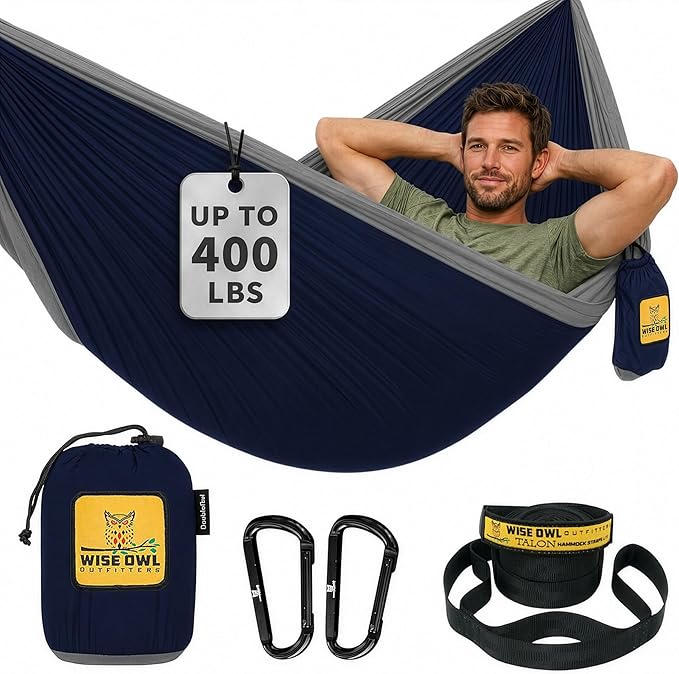
If you camp where trees are reliable — most of the Appalachian Trail, the Adirondacks, the Smokies, the PNW below treeline, much of the East Coast — a hammock cradles broader shoulders without compressing them. There's no "shoulder girth" constraint because the fabric drapes around you instead of wrapping over you. Side sleeping in a properly-hung hammock means lying on a slight diagonal across the fabric, which produces a nearly flat surface that many side sleepers describe as more comfortable than any mummy bag they've owned. Pair it with a 20°F underquilt and a top quilt and the wide-shoulder problem disappears.
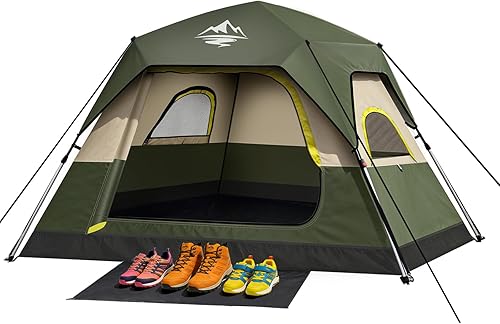
The Wise Owl Outfitters Camping Hammock handles up to 500 pounds, ships with tree straps that don't damage bark, and packs down smaller than a Nalgene. It's the gateway piece for backpackers who want to test the hammock route without dropping $200+ on a specialty cottage-brand rig. Check current price on Amazon.
The honest caveat: hammocks need trees. Above treeline, in the desert, or on snow you're back to ground sleeping. Many thru-hikers carry a hammock for forested sections and switch to a quilt-plus-pad setup for exposed segments — see our breakdown of quilts vs. sleeping bags for that hybrid approach.
Sleep-system tips for wide-shouldered side sleepers
Even the best sleeping bag for side sleepers with wide shoulders backpacking won't fix a poor pad pairing, wet baselayers, or a cold-soaked stomach. Three adjustments matter as much as the bag itself:
Pad choice: A 3-inch thick air pad with vertical baffles (Therm-a-Rest NeoAir XLite NXT, Nemo Tensor Extreme Conditions) cradles hip and shoulder pressure points. R-value 4 minimum for three-season, 5+ for shoulder season. Side sleepers compress pads more than back sleepers — buy the wide version even if it adds 3 ounces.
Pillow geometry: A taller pillow (4–5 inches lofted) keeps your spine neutral when side sleeping. The stuff-sack-with-puffy-jacket trick saves weight but rarely lofts high enough for broader shoulders.
Layering: Sleep in dry baselayers, not the clothes you hiked in. A clean merino top and bottoms add 5–10°F of effective warmth and prevent the cold-spot effect when you roll off your insulation.
Pre-bed calories: A 200-calorie fat-and-protein snack 30 minutes before zipping up gives your body the fuel to maintain core temperature through the coldest hours (2–5 AM).
Comparison: bag vs. quilt vs. hammock for side sleepers
| Setup | Best for | Weight | Wide-shoulder fit | Learning curve |
|---|---|---|---|---|
| Wide-cut mummy bag | All terrains, cold nights | 2.5–3.5 lb | Good with 64"+ girth | None |
| Backpacking quilt | Warm sleepers, summer/3-season | 1.5–2.5 lb | Excellent (no zipper drag) | Moderate (pad strap setup) |
| Hammock + underquilt | Forested terrain | 2.5–3.5 lb total | Excellent (no compression) | Moderate (hang angle, tree spacing) |
For most readers searching the best sleeping bag for side sleepers with wide shoulders backpacking, the practical answer in 2026 is either a wide-cut 20°F down mummy or a 20°F down quilt in a wide cut. Both run $300–$450, both come in under 3 pounds, and both let you flip without fighting the fabric. The hammock route is the wildcard worth trying if you camp in forested terrain — many wide-shouldered hikers who switch never go back to the ground.
Frequently Asked Questions
What is the best sleeping bag shape for side sleepers with broad shoulders?
A wide-cut "relaxed mummy" or "spoon" shape with at least 64 inches of shoulder girth. Avoid traditional tapered mummy bags, which were designed for back sleepers and compress wide shoulders against the seams. Quilt-style bags (no zipper, no hood) are an even better option for active sleepers who flip frequently through the night.
How wide should a sleeping bag be for a 48-inch chest?
Look for shoulder girth of 66–68 inches minimum. The general rule: bag girth should be at least 18 inches greater than your chest circumference to allow room for baselayers and natural shoulder rotation without compressing the insulation against the shell fabric.
Are quilts warm enough for wide-shouldered backpackers in cold weather?
Yes, down to about 20°F if you choose a quilt rated 10°F below your expected low and pair it with a high-R-value pad. Below 20°F or in windy alpine conditions, a sealed mummy bag with a draft collar holds heat better. For three-season backpacking in most of the continental U.S., a 20°F wide quilt is plenty.
Can I side-sleep in a regular tapered mummy sleeping bag?
Technically yes, but most wide-shouldered sleepers find it miserable. Standard mummies pin the shoulder against the zipper, restrict knee movement, and create cold spots wherever your body presses against compressed down. Sizing up to the men's long-wide version helps; switching to a wide-cut bag or quilt helps far more.
What R-value sleeping pad do I need for side sleeping while backpacking?
R-value 4 minimum for three-season backpacking, R-value 5+ for shoulder-season or any trip with overnight lows below 25°F. Side sleepers compress sleeping pads more than back sleepers, so a thicker (3-inch+) pad with vertical or quilted baffles distributes pressure better and prevents bottoming out at the hips and shoulders.
Down or synthetic insulation for a wide-shouldered backpacker?
Down (800+ fill) for nearly every three-season scenario — lighter, more compressible, lofts back faster after you roll. Synthetic only when you're camping in genuinely wet environments (PNW winter, prolonged rain) where down can lose loft if soaked through. A hydrophobic down treatment splits the difference for occasional damp nights.
How heavy is too heavy for a wide-cut backpacking sleeping bag?
For a 20°F three-season bag in a wide cut, anything under 3 pounds is excellent, 3–3.5 pounds is acceptable, and over 3.5 pounds is worth questioning unless you're getting exceptional warmth or durability. Quilts in the same temperature rating run 1.5–2.5 pounds in a wide cut, which is why many wide-shouldered thru-hikers ultimately switch to the quilt system.
Where should I look for sleeping-bag deals in 2026?
Direct from manufacturer outlets (Western Mountaineering, Feathered Friends, Nemo, Big Agnes), REI's Garage Sale events, and seasonal markdowns in February and August. Avoid deeply discounted unbranded "premium down" listings — fill power and weight specs on those are routinely overstated. For more on gear shopping strategy, see our 2026 backpacking budget guide.
Key Takeaways
- Choosing the right best sleeping bag for side sleepers with wide shoulders backpacking means matching capacity and output ports to your actual devices
- Always check actual watt-hours (Wh), not just watts — runtime depends on Wh, not peak output
- Also covers: wide shoulder sleeping bag for side sleepers
- Also covers: backpacking bag for broad shoulders
- Also covers: roomy mummy bag side sleeper
- Compare price-per-Wh across models to find the best value for your budget