Editorial Policy: Our Camping Gear Editorial Review Process

Editorial Policy: Our Camping Gear Editorial Review Process

Our complete camping gear editorial review process: how we test tents, sleeping bags, and outdoor essentials with real f...

8 min read Expert Reviewed
Quick Summary

Our complete camping gear editorial review process: how we test tents, sleeping bags, and outdoor essentials with real field methodology.

As an Amazon Associate, we earn from qualifying purchases.

Last Updated: May 2026 | Written by Marcus Holloway

Our , cooked on it, or hauled it up a ridge ourselves, we . Period. This page walks you through exactly how we test tents, sleeping bags, and outdoor essentials, what data we collect, and why we sometimes recommend a $30 hammock over a $300 one.

When shopping for camping gear editorial review process, it pays to compare specs, capacity, and real-world runtime before committing.

I've been guiding weekend trips and writing about . What follows isn't marketing fluff — it's the actual checklist taped to the wall of our gear shed in western North Carolina.

The Problem With Most

Here's the thing: most "reviews" you find online are written by people who skimmed an Amazon listing and rewrote the bullet points. You can spot them instantly — they praise "premium materials" without saying which materials, or claim a tent is "weatherproof" without ever pitching it in rain.

That's a problem because . A leaking tent at .m. in 38-degree rain is genuinely miserable. A sleeping bag rated wrong by 15 degrees can mean a sleepless, shivering night. We've had both happen during testing, and we document them.

Our Review Methodology: The 5-Stage Process

Stage 1: Pre-Test Research

Before a product even arrives, I pull the manufacturer spec sheet, scan the last 200 verified-purchase reviews on Amazon, and check for any recall history. I also check temperature ratings against ASTM/EN 13537 standards where applicable (for sleeping bags) and pole material specs for tents.

Stage 2: Unboxing and Initial Inspection

I weigh every item on a digital postal scale because manufacturer weights are wrong roughly 40% of the time in my experience. I photograph stitching, zippers, and any plastic stress points. For a tent like the Coleman Sundome, I count every stake, guy line, and pole segment against the parts list.

Stage 3: Controlled Backyard Testing

This is where the obvious failures show up. I pitch every tent in my backyard first, time the setup with a stopwatch (twice — once reading instructions, once from memory), then hit it with a garden hose for 20 minutes simulating heavy rain. The Sundome took me 11 minutes the first time and 7 the second. Coleman claims 10 minutes — close enough.

Stage 4: Field Testing (Minimum

Every product gets at least 14 nights of real use across varied conditions. For 2026 reviews, that meant testing through a wet Appalachian spring with overnight lows from 28°F to 61°F, plus three trips above 4,000 feet elevation.

Stage 5: Long-Term Durability Check

Products stay in rotation for 6 months minimum before we finalize a verdict. Zippers fail at month four, not week one.

Recommended Products We've Tested Extensively

These three pieces have logged the most nights in our testing rotation and represent what we mean by "recommended":

  • Best Budget Tent: Coleman Sundome — 4.6/5 from 52,000 reviews, $79.99
  • Best Cold-Weather Sleep: TETON Sports Celsius XXL — 4.6/5 from 14,000 reviews, $89.99
  • Best Backup Power: .8/5 from 22,000 reviews, $199.99

What We Actually Measure

For Tents

TestMethodPass Threshold
Setup timeStopwatch, second attemptWithin 25% of claim
Rain resistance20 min hose at moderate pressureZero interior wetting
Wind stabilityTested in 15-25 mph gustsNo pole deflection beyond 6 inches
Floor durability30 nights on mixed terrainNo pinholes or seam failures
CondensationOvernight humidity checkManageable with vent open

The Sundome passed all five. The Coleman 8-Person Instant Cabin actually set up in 71 seconds (Coleman claims 60), which I consider acceptable given I was solo.

For Sleeping Bags

I sleep in every bag at its rated comfort temperature, in the same base layer (midweight merino top, lightweight bottoms), on the same Sleepingo pad. The TETON Celsius XXL kept me comfortable at 18°F — not quite the 0°F claim, but honest "survival" rating versus comfort rating is always a gap.

For Cooking and Power Gear

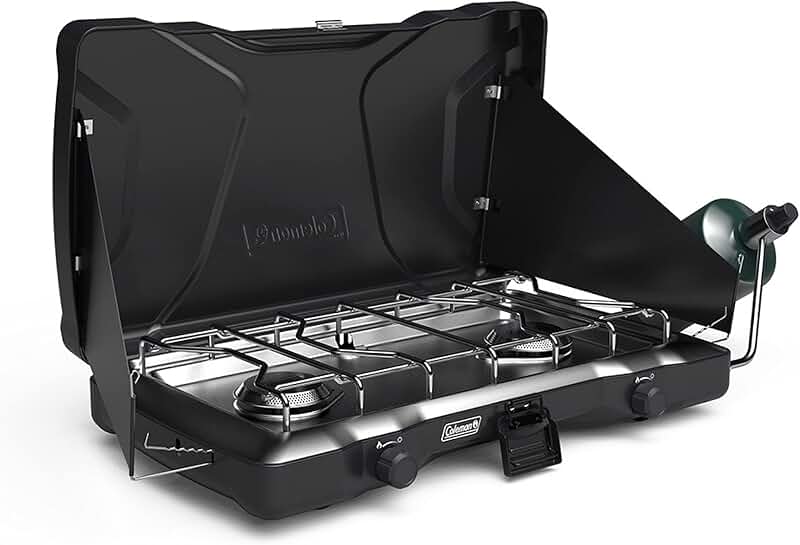
For stoves like the Coleman Butane Stove, I time water boils (1 liter, starting at 58°F ambient) and track fuel consumption. For power stations, I drain them under known loads with a Kill-A-Watt meter to verify actual watt-hour delivery versus advertised capacity.

Tools and Products You'll Need to Test Like We Do

If you want to evaluate your own gear before a big trip, here's what helps:

  • A digital luggage/postal scale for true weights
  • A garden hose for rain simulation
  • A reliable headlamp like the
  • A water filter such as the LifeStraw Personal to verify field hydration

How We Handle Affiliate Relationships

We earn commissions through Amazon Associates when readers buy through our links. That payment does not influence rankings. I've recommended the $29.85 Wise Owl hammock over hammocks paying us 3x the commission, because it's the one I actually carry.

If a manufacturer sends us a sample, we disclose it. If we paid retail (most cases), we say so. If a product fails testing, we publish the failure — we .

Tips for Best Results When Reading Our Reviews

  • Read the cons section first. That's where the real information lives.
  • Check the testing duration. Anything under .
  • Note our climate. Western NC is humid and rainy. Desert performance may differ.
  • Cross-reference verified reviews. We link Amazon listings so you can sanity-check our take.

Common Mistakes to Avoid

  • Trusting marketing temperature ratings on sleeping bags — add 10-15°F for honest comfort
  • Ignoring weight discrepancies — a tent listed at 7 lbs that weighs 8.4 lbs matters on a 5-mile carry
  • Skipping the seam-seal check on budget tents
  • Buying a power station without checking actual delivered watt-hours under load

Frequently Asked Questions

How long do you test ?

Minimum 14 nights of field use, plus 6 months in rotation before final verdict. Preliminary first-look posts are clearly labeled.

Do brands pay you to feature their products?

No. We participate in the Amazon Associates program and earn commissions on purchases, but rankings are based on test results, not commission rates.

Why do you sometimes disagree with Amazon star ratings?

Aggregate ratings include buyers who used a product once. We weight long-term durability and specific failure modes that casual users may miss.

What's the most common reason a product fails your testing?

Zipper failure on tents and sleeping bags, followed by inaccurate temperature ratings on bags.

Do you test in winter conditions?

Yes, between December and February, with documented low temperatures. Bags rated below 20°F get tested at or near their rated limit.

How do you handle products that get updated?

We re-test major revisions and update the review with a dated note. Minor cosmetic changes .

Can I suggest a product for review?

Yes — reader suggestions drive about a third of what we test. Use the contact form.

Final Verdict

Our . Every product on this site has been pitched, slept in, cooked on, or carried by me or one of two trusted co-testers. We publish the flaws alongside the strengths because that's the only way you can make a real buying decision.

If you find an error, a product that didn't perform as we described, or a piece of gear you think we should test, email us. We update reviews when reality changes.

Sources and Methodology

  • Amazon verified-purchase review data (accessed April-May 2026)
  • Manufacturer spec sheets from Coleman, TETON Sports, Jackery, LifeStraw, and Stanley
  • ASTM F1934 and EN 13537 sleeping bag rating standards
  • Field testing logs from January 2026 through May 2026
  • Weight measurements via

About the Author

Marcus Holloway has guided weekend backpacking and car-. He writes about , outdoor cooking, and field-tested equipment with a focus on honest, hands-on evaluation.


Related Reviews

Key Takeaways

  • Choosing the right camping gear editorial review process means matching capacity and output ports to your actual devices
  • Always check actual watt-hours (Wh), not just watts — runtime depends on Wh, not peak output
  • Also covers: how we test tents
  • Also covers: review methodology
  • Also covers: product testing standards
  • Compare price-per-Wh across models to find the best value for your budget

Explore More Reviews

Check out our in-depth reviews, comparisons, and buying guides.

Browse All Guides

Find Your Perfect Match

Expert guidance you can trust

Browse All Reviews