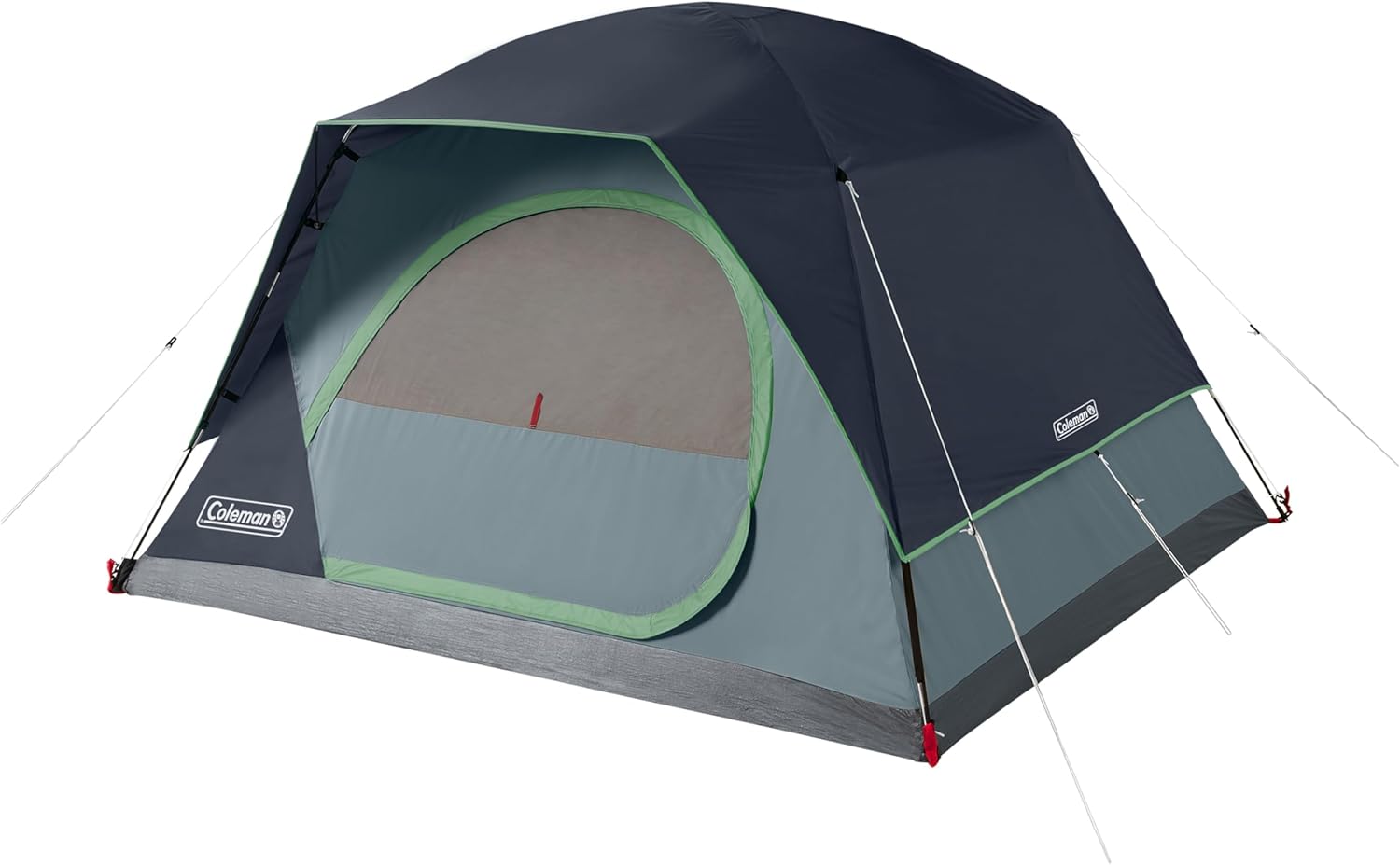
To pitch Coleman Sundome on beach sand deadman anchors, dig 10-12 inch trenches at every guy-out point, lay a buried object (a stick, a stuff sack packed with sand, a mesh bag of rocks, or a dedicated sand stake) horizontally across the trench, tie the guyline to the midpoint of the buried object, then backfill and tamp the sand hard. Standard 6-inch shepherd's-hook stakes that ship with the Sundome will pull out within minutes on dry beach because loose sand has almost zero shear strength. Deadman anchors convert pull-out force into a much larger volume of compressed sand, which is what actually holds the tent down in a 20+ mph onshore breeze.
The Coleman Sundome is a fantastic budget freestanding dome, but its stock hardware was designed for forest loam, not for a windswept dune. Below is the full beach-pitching workflow our weekend crew has refined over five seasons of Outer Banks and Gulf Coast trips, plus the supporting gear (shade canopy, changing tent, backup dome) that turns a sketchy sand pitch into an actual basecamp.
Why standard tent stakes fail on beach sand
A shepherd's-hook stake works by friction along its shaft and a small bearing surface at the hook. In packed soil the cohesion of the dirt around the stake resists upward pull. Sand grains, however, only resist via friction between grains, and dry sand has almost no cohesion at all. The instant a 15 mph gust loads the guyline, the stake levers a cone of sand free and lifts out. Wet, packed intertidal sand holds slightly better but you cannot pitch a tent in the wash zone without it being underwater at high tide.
The deadman solves this by trading depth for bearing area. Instead of resisting pull-out across a 0.25-inch stake shaft, you resist it across the entire length of a buried stick, a sand-filled bag, or a 12-inch sand stake. The volume of sand that has to lift before the anchor moves is now 50-100x greater, which is plenty for a three-pole dome like the Sundome.
Step-by-step: pitch Coleman Sundome on beach sand deadman anchors
1. Site selection
Pitch above the wrack line (the highest seaweed/debris stripe), ideally in the softer back-dune sand where vegetation hints at a stable surface. Check local tide charts for the next 48 hours and add at least 30 feet of buffer above the predicted high water. Orient the smallest end of the tent into the prevailing wind so the dome's aerodynamic profile reduces sail area.
2. Pre-assemble the dome
Lay out the footprint, thread both fiberglass poles through their sleeves, and stand the dome up before you stake anything. The Sundome is freestanding, which is a huge advantage on sand: you can move it around easily to find the perfect orientation. Weight the corners with your packs while you prep the anchors.
3. Dig four corner trenches
At each corner stake-out loop, dig a trench roughly 10-12 inches deep, 12-18 inches long, perpendicular to the direction of pull. The pull direction is the straight line from the corner of the tent outward, not straight down. Trenches angled toward the tent will lever your anchor out.
4. Build your deadmen
Best options, in order:
- Dedicated sand stakes (12-inch aluminum or plastic with broad bearing surface) — bring 8 of these per tent.
- Stuff sacks filled with wet sand — tie the guyline to the cinch cord, bury horizontally.
- Driftwood or 12-inch sticks — girth-hitch the guyline at the midpoint of a stick at least 10 inches long.
- Mesh produce bags filled with rocks — only if rocks are available, otherwise sand bags work fine.
5. Tie, bury, tamp
Tie the guyline to the center of the deadman with a bowline or two half-hitches. Lower the deadman into the trench, route the line up and out toward the tent, then backfill the trench with sand. Stomp it down hard with your heel — compaction is what creates holding power. Wet sand on top adds another 30% of grip.
6. Add storm guys
The Sundome has guy-out loops at the rainfly mid-panels. On the beach, always deploy these even if the forecast is calm — afternoon onshore winds can spike from 8 to 25 mph in twenty minutes. Use the same deadman technique for storm guys.
Backup and companion gear for beach camping
One of the realities of beach pitching is that even with perfect deadman technique, sand and salt destroy gear faster than any other environment. Having a backup dome, a shade canopy, and a changing tent turns a precarious one-tent setup into a comfortable basecamp. Here are the genuinely useful supporting picks.
| Product | Best for | Beach anchor needs |
|---|---|---|
| Amazon Basics 3-Season Dome Tent | Backup or budget alternative to Sundome | 4 deadmen + 4 storm guys |
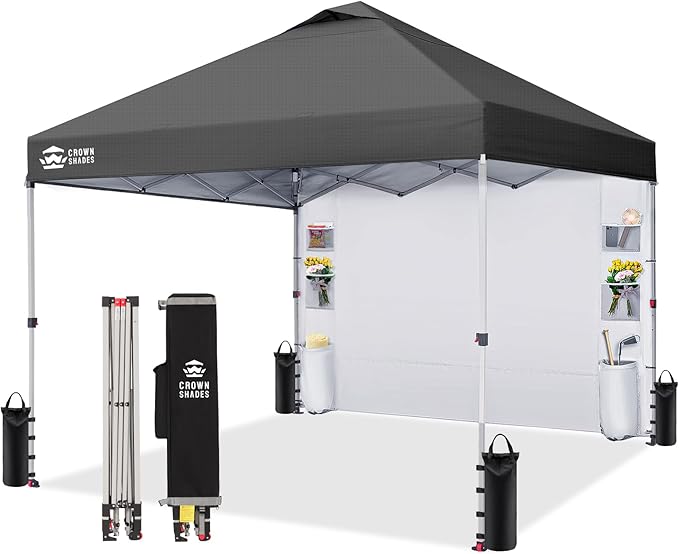
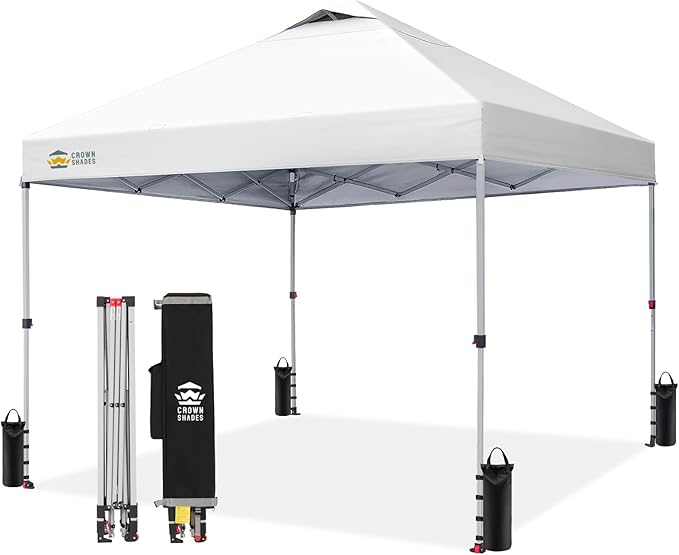
| CROWN SHADES 10x10 Pop-Up Canopy (Pockets) | Daytime shade over the dome | 4 large sandbag deadmen |
| CROWN SHADES CenterLok One-Push 10x10 | Fastest-deploying shade | 4 large sandbag deadmen |
| Wolfwise Pop-Up Changing Tent | Privacy for swimsuit changes/shower | 4 small deadmen |
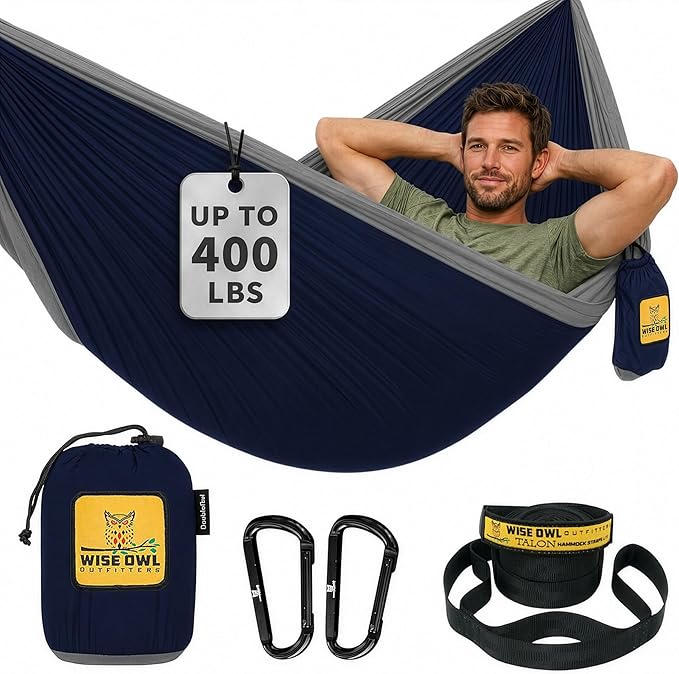
| Wise Owl Outfitters Hammock | Lounging when palms/posts available | Tree straps (not deadmen) |
Amazon Basics 3-Season Dome Camping Tent with Rainfly
If you do not yet own a Sundome, or you want a near-identical backup, the Amazon Basics dome is the closest analog for under $80. It uses the same two-pole crossover geometry, has guy-out loops in the same positions, and accepts the same deadman technique without modification. Pack it as a second shelter for friends or as a spare if a pole snaps mid-trip — fiberglass poles do not love sand abrasion. Check the Amazon Basics 3-Season Dome on Amazon.
CROWN SHADES 10x10 Pop-Up Canopy with Pockets
Direct midday sun on the beach is brutal, and even a perfectly anchored Sundome turns into a sauna by 11 a.m. A 10x10 pop-up canopy parked just upwind of the dome cuts ambient tent temperature by 15-20°F and gives you a shaded cook/lounge zone. The pocket version is our pick because the mesh pockets along the legs are perfect for stowing sunscreen, keys, and phones above the sand. Use 4 large sandbag deadmen (about 25 lbs each of wet sand) on the canopy legs — wind under a canopy roof generates serious lift. See the CROWN SHADES canopy with pockets on Amazon.
CROWN SHADES 10x10 Pop-Up Canopy, CenterLok One-Push
If you camp solo or with one partner and want a canopy you can deploy without a second pair of hands, the CenterLok version uses a single push-up mechanism instead of the corner-by-corner extension of traditional canopies. On a windy beach, getting shade up fast and weighted down fast matters a lot. Same deadman strategy applies. View the CROWN SHADES CenterLok canopy on Amazon.
Wolfwise Pop-Up Changing Tent
Beach camping with kids or any mixed group becomes vastly more civilized with a dedicated changing space. The Wolfwise pop-up uses a coiled-spring frame that opens in about three seconds, weighs under 5 lbs, and packs to a 15-inch disc. Because it is tall (about 75 inches) and narrow, it has a big wind profile — anchor all four corners with the same deadman method even though the manufacturer's stakes look fine. Check the Wolfwise changing tent on Amazon.
Wise Owl Outfitters Camping Hammock
This one is a bonus pick: if your beach campsite happens to be on a vegetated back-dune with palm trees, sea grape trees, or even sturdy lifeguard posts at safe distance, a hammock is the most comfortable midday lounging option in existence. The Wise Owl is 500-lb rated and comes with tree straps that won't damage bark. Not useful on bare sand, but at many Florida, Carolina, and Gulf beaches there are trees within 50 feet of where you'd pitch. See the Wise Owl hammock on Amazon.
Pro tips after you pitch Coleman Sundome on beach sand deadman anchors
- Re-tension at sunset. Sand settles as temperatures drop and humidity rises. Walk the perimeter and snug each guyline before sleep.
- Rinse poles daily. Salt and sand grind the inside of pole sleeves; a quick freshwater rinse extends pole life by years.
- Use a footprint or tarp. Sand inside the tent is unavoidable, but a footprint cuts it in half and protects the floor from shell fragments.
- Watch the lee side. A dome partially in the lee of a dune can experience swirl gusts from a 90° offset to the prevailing wind. Storm guys catch these.
For more beach-specific setup ideas see our guides on best tents for windy beach camping in 2026, sand stakes vs deadman anchors compared, and Coleman Sundome rainfly modifications for storm weather.
Frequently Asked Questions
How deep should deadman anchors be buried in beach sand?
Bury deadmen 10-12 inches below the surface in dry sand and 8-10 inches in wet packed sand. The goal is enough overburden weight that the sand cone above the anchor exceeds the expected pull-out force. For a Coleman Sundome in winds up to 25 mph, 12 inches of dry sand over a 12-inch stick deadman gives roughly 40-60 lbs of holding power per anchor — well above the load any one corner will see.
Can I use Coleman Sundome stock stakes on the beach if I bury them sideways?
Yes — burying the stock shepherd's-hook stakes horizontally as deadmen works surprisingly well. Tie the guyline to the middle of the stake, lay it perpendicular to the pull direction in a 10-inch trench, and backfill. Holding power is roughly 5-10x what the same stake delivers when pounded vertically into sand.
What's the best DIY deadman anchor when I forgot proper gear?
A dry-bag or stuff sack filled with wet sand is the best improvised deadman. Cinch the bag closed around the guyline, drop it into a 12-inch hole, backfill, and tamp hard. Each 5-liter bag of wet sand weighs about 18 lbs and gives 40+ lbs of pull-out resistance once buried. Driftwood sticks work too — look for pieces at least 10 inches long and 1 inch thick.
Do I need to use deadman anchors on wet packed sand near the waterline?
Wet packed sand grips vertical stakes 3-4x better than dry sand, but you should still not pitch within tidal range. If you must use wet intertidal sand because that's all you have, vertical 12-inch sand stakes can be sufficient for calm conditions, but deadmen are still safer for any wind over 15 mph and they are easier to remove without bending hardware.
How many anchors does a Coleman Sundome need on the beach?
Eight total: four at the corner stake-out loops and four at the rainfly storm-guy points. The Sundome is freestanding so the four corners technically keep it upright in calm air, but on the beach you always want all eight deployed because sea-breeze gusts arrive without warning and a single failed corner can collapse a pole.
Will deadman anchors damage the beach or violate Leave No Trace?
No — deadman anchors leave no permanent trace once removed. Pull the deadman, fill the trench by foot, and the sand surface returns to baseline within one tide cycle. Always pack out any synthetic material (stuff sacks, lines) and never bury plastic bags as part of your anchor system.
What wind speed is too high to camp on the beach in a Sundome?
Sustained winds above 30 mph or gusts above 40 mph are beyond what a 3-season dome like the Sundome was engineered for, even with perfect deadman anchoring. The fiberglass poles will start to flex past their fatigue limit and may snap. If forecasts call for that range, relocate inland or use a 4-season expedition tent instead.
Key Takeaways
- Choosing the right pitch Coleman Sundome on beach sand deadman anchors means matching capacity and output ports to your actual devices
- Always check actual watt-hours (Wh), not just watts — runtime depends on Wh, not peak output
- Also covers: Coleman Sundome beach camping
- Also covers: deadman anchor sand tent setup
- Also covers: Sundome on sand pitching guide
- Compare price-per-Wh across models to find the best value for your budget