For polar hauling, the best 4 season tent for greenland icecap traverse with pulk sled loading is a true expedition-grade geodesic or reinforced tunnel shelter with five or more pole crossings, a full snow valance, double-wall silicone-coated nylon construction, and a packed footprint that fits flush against a 60 to 75 liter dry bag on the pulk. Anything less — three-season meshy domes, single-wall ultralights with marginal guy points, or pop-up shelters — will be shredded in the first katabatic event off the Greenland plateau. This guide breaks down what to look for, how to size for two haulers and gear, and how the tent rides on the sled.
What "4 Season" Actually Means on the Greenland Icecap
Top Picks
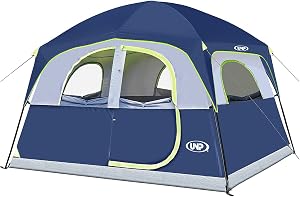
The phrase "4 season tent" is wildly abused in marketing. On the Greenland icecap — where a traverse from Kangerlussuaq to Isortoq, or DYE-2 to Tasiilaq, can pin you down for two to four days in 60+ knot katabatic winds at -25°C — "4 season" needs to mean polar expedition, not "can survive a Colorado snowstorm." A real expedition tent for the icecap has: a continuous snow flap (valance) that you can shovel snow onto for a wind seal, no exposed mesh anywhere on the inner, a fly that pitches all the way to the snow on every panel, and minimum nine guy-out points reinforced with bartacked webbing.
When shopping for best 4 season tent for greenland icecap traverse with pulk sled loading, it pays to compare specs, capacity, and real-world runtime before committing.
The best 4 season tent for greenland icecap traverse with pulk sled loading also has to survive being lashed to a sled and dragged 600+ kilometers without abrading the floor or stuffing the poles into a shape that won't repitch. That rules out tents with delicate aluminum hubs or proprietary sleeves that fail when bent.
Geodesic vs Tunnel: The Real Tradeoff
Two tent geometries dominate serious icecap travel: the geodesic (multi-pole crossing dome, like the Mountain Hardwear Trango or the North Face VE 25) and the reinforced tunnel (Hilleberg Keron GT, Nallo GT, Nammatj GT). Both work. They fail differently.
Geodesics are freestanding — you can pitch on bare blue ice where stakes won't bite, weight them with packs, and they hold. They handle wind from any direction without re-orientation. The cost is weight: a true 3-person geodesic with full snow flaps runs 5.5 to 7.0 kg. They also have less usable vestibule volume per kilogram.
Tunnels are lighter for the same liveable space and have enormous vestibules — critical for stove use, boot drying, and storing the pulk haul harness out of the wind. The catch: they must be pitched with the back to the prevailing wind, and they require functional stakes or deadman anchors. On Greenland that means snow stakes, ice screws on glare ice, or buried-ski deadmen. Most experienced traversers (Mike Horn, the Greenland Ice Expedition crews, Borge Ousland's parties) run tunnels because the vestibule volume is non-negotiable for two-person teams sharing gear duties.
| Geometry | Freestanding | Wind direction | Vestibule volume | Typical weight (3p, w/ snow flaps) | Best for |
|---|---|---|---|---|---|
| Geodesic dome | Yes | Any | Medium | 5.5 - 7.0 kg | Mixed terrain, blue ice, variable wind |
| Reinforced tunnel | No (needs anchors) | One direction | Very large | 4.2 - 5.5 kg | Open icecap, predictable katabatics, weight-critical hauls |
| Single-wall pyramid | No | Any | None | 1.5 - 2.5 kg | Fast-and-light, not full traverses |
Pulk Sled Loading Geometry — Why Tent Shape Matters Before Pitching
The pulk is the foundation of any icecap traverse, and the tent's packed shape determines whether it rides well or fights you for 600 km. A pulk loaded for a Greenland east-west crossing typically carries 80 to 120 kg per person split across two bags: a primary 100L dry bag forward, a secondary 60L aft, with the tent strapped on top under the haul lines or in a dedicated tent pocket some pulks (Acapulka, Snowsled, Fjellpulken Expedition) include.
A short, fat tent bag (typical of geodesics) sits higher and shifts the center of mass up — bad for sastrugi crossings where the pulk pendulums. A long, narrow tent bag (typical of tunnels with poles in a separate sleeve bag) lies flat along the spine of the pulk and rides like part of the load. This is one of the underrated reasons the Hilleberg GT-series dominates Nordic and Greenland traverses: the packed shape is a 60 x 18 cm cylinder that rides flush.
Pack the tent with the door-end accessible — you may need to deploy it in a whiteout with the pulk still rigged. Inside the dry bag, separate the inner from the fly only if you've practiced pitching them as an integrated unit (Hilleberg, Helsport) since trying to split-pitch in 40+ knot wind ends with the inner becoming a flag. See our guide on pulk sled packing order for polar expeditions for the full load diagram.
Floor Area and Vestibule Math for Two Haulers
A two-person Greenland traverse needs a nominal 3-person tent. Here's why: each hauler has a 2.5 kg expedition sleeping bag, a 6 cm inflatable pad plus closed-cell pad, a 25L personal duffel of dry layers, boot liners drying overnight, a thermos, satellite comms, navigation, and the shared MSR XGK or Primus OmniFuel stove operating in the vestibule. Two people in a tight 2-person shelter cannot keep moisture, gear, and stove operations separated, and frost falls from condensation become punishing by day five.
Target dimensions: inner floor area 3.6 to 4.5 m², vestibule 2.0 to 2.8 m², peak height 105 to 120 cm so you can sit fully upright to manage the stove. The vestibule must be deep enough to cook in with the door zipped to a 30 cm gap — this is non-negotiable for fuel safety and snow management.
Materials That Actually Survive Icecap Conditions
Fly fabric: silicone-coated 30D ripstop nylon (Kerlon 1200 / 1800, or equivalent Helsport / Fjall Raven materials) tears in a controlled way and doesn't go brittle below -30°C. Polyurethane-coated polyester turns crunchy and flakes at extreme cold — fine for Patagonia, marginal for Greenland in March or April.
Floor: 70D minimum, ideally a separate footprint or built-in heavy floor (Hilleberg uses a 70D PU-coated nylon at 5000mm hydrostatic head). The icecap surface is alternately sastrugi (sharp), wind-pack (abrasive), and meltwater pools by late season.
Poles: DAC Featherlite NSL 9.0 or 9.6 mm minimum for geodesics, 10 mm for tunnels carrying snow load. Carry one full spare pole segment and a pole repair sleeve per tent, taped to the pole bag.
Zippers: YKK #8 or #10 reinforced. #5 zippers freeze, ice up, and fail; you will be cursing them at hour 14 of a storm. Check that storm flaps cover every zipper run.
Pole Architecture and Pitch Time
On the icecap you'll pitch in conditions where bare-handing metal poles is a 60-second injury window. The tent must pitch in under 12 minutes by two people in heavy mittens, and ideally under 6 minutes by one experienced person in a calm camp. This rules out designs requiring threading inner-then-fly separately (US-market three-season norm) and favors single-pitch systems where the inner hangs from the fly and both go up together as one unit. Hilleberg, Helsport Svalbard, and Mountain Hardwear EV series use this approach.
Snow Anchoring on the Icecap
Bring three anchor types: 30 cm aluminum snow stakes (8 minimum), bamboo wands cut to 50 cm that you can bury as deadmen (12 minimum, double as route markers), and 4 lengths of 4 mm cord to rig ski deadmen when snow is too soft for stakes. On glare ice patches, two 13 cm ice screws per tent become the primary anchors. Guy out every available point, including the secondary mid-panel tabs — Greenland storms are not the place to economize on anchoring time.
Stove Operation and Vestibule Discipline
You will run a liquid-fuel stove (MSR XGK EX, Primus OmniFuel, or Optimus Polaris) in the vestibule because melting snow for 8L of water per day at altitude is the rate-limiting step of every camp. The tent must therefore have: a vestibule with a ground-level vent that won't drift shut, a fly material that won't ignite from a fuel flare-up (silicone-coated nylon self-extinguishes; PU polyester does not), and zipper geometry that lets you crack the door without losing all warmth.
Read our companion piece on liquid-fuel stove setup for polar vestibule cooking for the full operating procedure including CO monitoring.
What About the Listed "Tents" on Amazon?
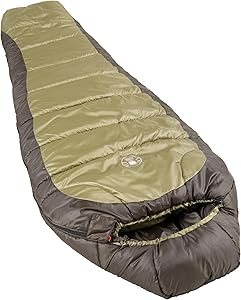
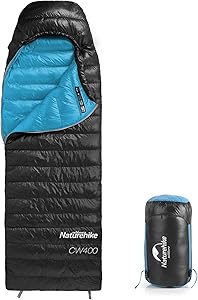
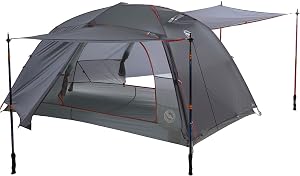
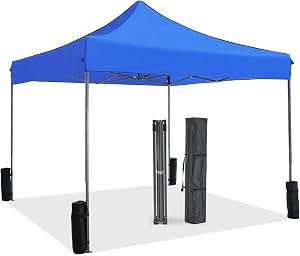
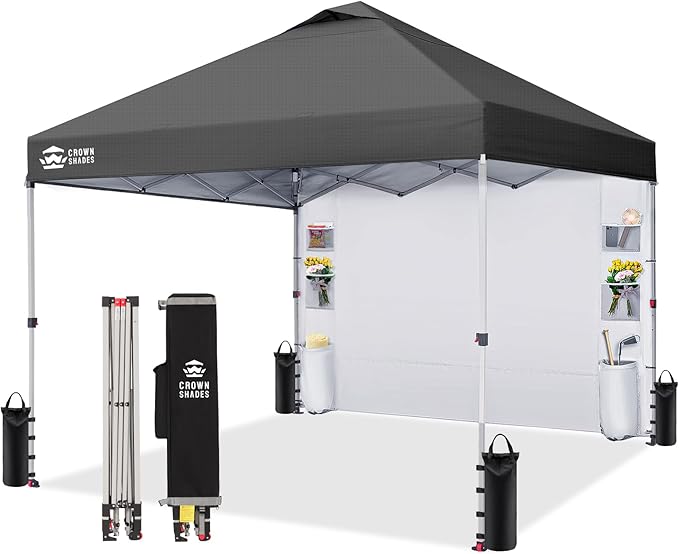
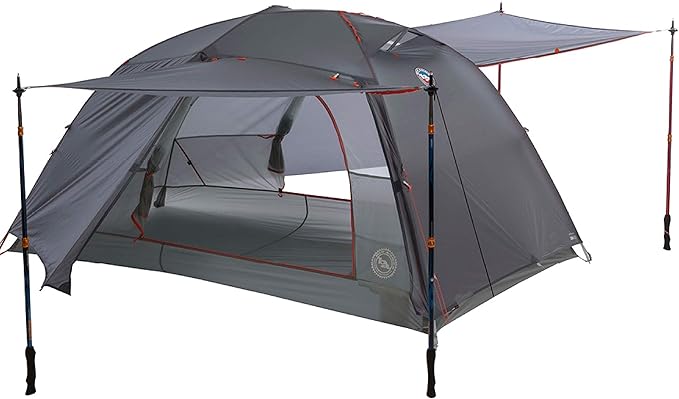
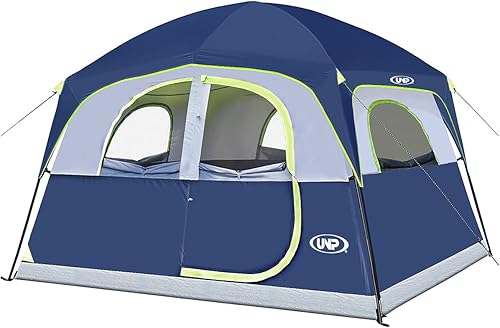
For full transparency: 3-season dome tents, pop-up canopies, portable shower tents, and camping hammocks — common results in budget tent searches — have zero applicability to a Greenland traverse. Bringing any of them onto the icecap is a rescue call waiting to happen. The real options live in the Hilleberg, Helsport, Mountain Hardwear EV/Trango, North Face VE-series, and Nemo Chogori catalogs, and they cost $1,200 to $2,400. There is no $200 polar expedition tent. Anyone advertising one is selling you a coffin.
If you're building toward an icecap traverse on a budget, the path is: rent or buy used from European expedition outfitters (Norrona, Fjellsport, Spitsbergen Travel rental fleets cycle Hillebergs annually), or do a shorter shoulder-season trip first with a high-quality 4-season mountaineering tent and progress from there. See our used expedition tent buying guide for what to inspect.
Frequently Asked Questions
How heavy can a tent be before it ruins pulk hauling on the Greenland icecap?
A 3-person expedition tent at 5.5 kg is the practical upper limit per two-person team. Above that, you've burned weight that could have been food (each day of food is ~1 kg per person). Below 4.0 kg, you're almost certainly in a tent that lacks the snow flaps and pole strength for sustained storms. Most successful traverses run a 4.5 to 5.5 kg tent split across two pulks.
Do I need a vestibule on both ends of a tunnel tent for a Greenland crossing?
Yes for any traverse over two weeks. Hilleberg's GT designation (Keron 3 GT, Nallo 3 GT, Nammatj 2 GT) specifically extends the front vestibule by ~80 cm. The rear vestibule serves as gear storage and a secondary exit if drift loading buries the front door overnight — which it will, repeatedly. Single-vestibule tents force you to choose between cooking space and gear storage.
What pole diameter survives April katabatic winds on the icecap?
DAC NSL 9.6 mm is the minimum for a tunnel design, 10.25 mm preferred. For geodesics, 9.0 mm DAC NSL is acceptable because the pole crossings distribute load. Carry one spare full-length pole segment and one repair sleeve per tent. Carbon fiber poles are not recommended for polar use — they fail catastrophically at low temperatures rather than bending.
Can I use a single-wall mountaineering tent like the Black Diamond Firstlight for a Greenland traverse?
No. Single-wall tents work for alpine climbs measured in days, not multi-week traverses where interior condensation accumulates as frost, falls, and soaks your sleeping system. The Firstlight, Eldorado, Bibler series, and similar are designed for completely different use cases. You need double-wall construction with a separate inner that traps vapor before it hits the cold fly.
How do I keep the tent floor from freezing to the snow surface on the Greenland icecap?
Place a thin footprint or piece of Tyvek under the tent, stamp out a level platform with skis (15 minutes minimum — slope creates pooling and slide), and accept that minor freeze-down is normal. To break a frozen floor in the morning, walk the perimeter from inside before striking. Never rip a frozen floor free with the haul lines — that's how floors tear.
What's the right tent color for an icecap expedition?
Bright red, orange, or yellow. Search-and-rescue visibility matters when conditions go sideways and a Twin Otter from Air Greenland needs to find your camp. Hilleberg's red and Helsport's orange are deliberate choices. Green and tan "stealth" tents are stupid in polar terrain — there's nothing to be stealthy from, and you may need to be found.
How long does an expedition tent last on the Greenland icecap with daily pitching?
A well-maintained Hilleberg Keron or Mountain Hardwear Trango will run 200+ field nights before fly fabric UV degradation, zipper fatigue, or pole-sleeve abrasion forces retirement. The most common failure point is the floor (abrasion from sastrugi and ice crystals), followed by main zipper sliders. Replace zipper sliders every 80-100 nights; re-seal seams annually. Treat the tent like a piece of safety equipment, not a consumable — it is the single object keeping you alive when the storm comes.
Key Takeaways
- Choosing the right best 4 season tent for greenland icecap traverse with pulk sled loading means matching capacity and output ports to your actual devices
- Always check actual watt-hours (Wh), not just watts — runtime depends on Wh, not peak output
- Also covers: greenland traverse expedition tent
- Also covers: pulk sled compatible 4 season tent
- Also covers: arctic icecap polar tent
- Compare price-per-Wh across models to find the best value for your budget