Short answer for backpackers heading into the high country in 2026: when comparing the Jetboil Flash vs Trangia Spirit fire ban California Sierra rules, the Jetboil Flash (a sealed isobutane canister stove with a positive shut-off valve) is almost always permitted on a current California Campfire Permit during Stage 1 restrictions, while the Trangia Spirit burner (an open denatured-alcohol stove with no shut-off) is frequently prohibited the moment Inyo, Sierra, Stanislaus, or Sequoia National Forest moves to Stage 1 or higher. Carry a Jetboil for Sierra summer trips, and save the Trangia for shoulder-season trips, sanctioned developed campgrounds, or out-of-state travel.
This guide walks through exactly why that is, what the 2026 fire-ban language says about each stove, and the shelter, shade, and sleep gear that pairs with each cooking system once you settle into camp in places like Mammoth Lakes, the John Muir Wilderness, or the Tuolumne backcountry.
How California Sierra fire bans treat each stove in 2026
California's National Forests and the National Park Service classify backcountry stoves into three categories on every Campfire Permit: (1) wood/charcoal fires, (2) gas/propane/butane devices with a shut-off valve, and (3) liquid-fuel devices, which are split between pressurized white gas and unpressurized alcohol. The Jetboil Flash vs Trangia Spirit fire ban California Sierra question hinges entirely on category three.
- Jetboil Flash (isobutane canister): Falls under category 2. Legal under Stage 1 restrictions in nearly every Sierra forest because the regulator lets you cut fuel instantly. Some Stage 2 closures still allow it provided you cook on bare mineral soil cleared three feet around.
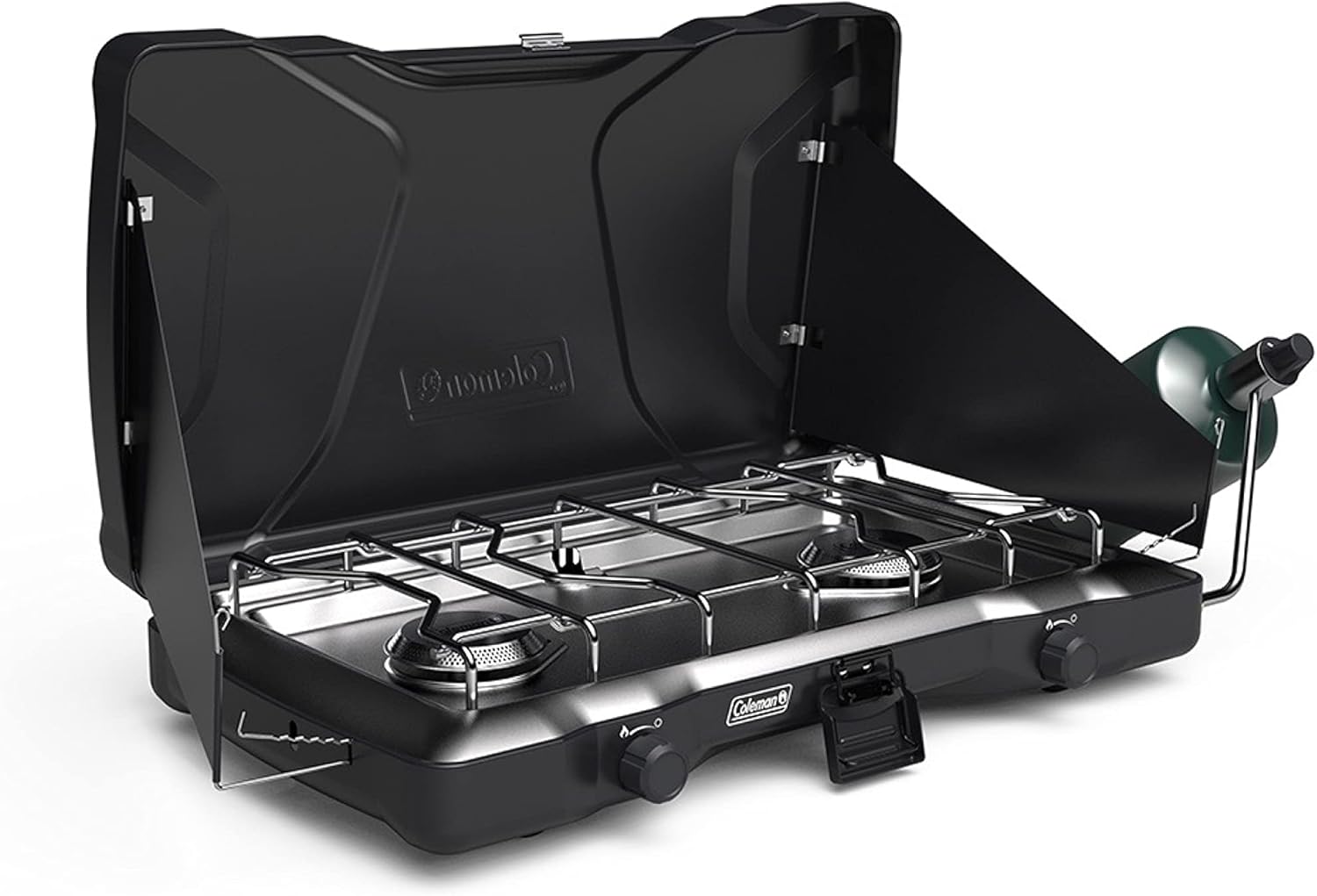
- Trangia Spirit (denatured alcohol): Falls under the open-flame liquid fuel category. Because the brass burner has no valve and can only be extinguished by smothering with the simmer ring (which takes 10–20 seconds), rangers in Inyo NF and Sequoia/Kings Canyon routinely include alcohol stoves in seasonal prohibitions, even when canister stoves remain legal.
If you only read one paragraph from this comparison: call the wilderness district office the week of your trip. A 2025 Inyo NF order specifically named "alcohol-burning stoves without a positive shut-off" as banned above 5,000 ft. between June 15 and October 15 unless a permit holder was at a designated campground. The Jetboil Flash was explicitly exempted.
Head-to-head comparison table
| Spec | Jetboil Flash | Trangia Spirit Burner |
|---|---|---|
| Fuel | Isobutane/propane canister | Denatured alcohol/HEET |
| Boil time (0.5 L) | ~100 seconds | ~7–10 minutes |
| Shut-off valve | Yes (regulator) | No (smother only) |
| Stage 1 fire ban legal? | Usually yes | Usually no above 5,000 ft. |
| Stage 2 fire ban legal? | Sometimes (case by case) | Effectively never in Sierra NFs |
| Weight | 13.1 oz (stove + cup) | 3.9 oz (burner only) |
| Wind performance above 9,000 ft. | Excellent (FluxRing) | Poor without windscreen |
| Cold weather (below 35°F) | Struggles, invert canister | Slow but consistent |
When the Jetboil Flash is the right call
For roughly 80% of Sierra trips between Memorial Day and the first October storm, the Jetboil Flash is the safer regulatory bet. It boils a half-liter in about 100 seconds, which is critical when you're rationing fuel for a five-day loop around Rae Lakes or the Tuolumne high country. The piezo igniter is the fastest way to get hot water for freeze-dried meals at altitude, and the integrated FluxRing cup means you can cook in a tent vestibule—though the National Park Service still asks you not to.
The Flash's biggest weakness is cold weather. Above 10,000 ft. in early June or late September, isobutane pressure drops and boil times double. Bring a small canister stand and consider sleeping with the canister inside your bag overnight.
When the Trangia Spirit still earns its place
The Trangia Spirit burner is the lightest, simplest, most reliable open-flame stove ever built. It has no moving parts, no electronics, no o-rings, no jets to clog. It will outlast your hiking career. If you're doing a desert trip in Joshua Tree before fire season begins (typically before mid-April in 2026), shoulder-season car camping in a developed campground with a fire ring, or international travel where canisters are hard to source, the Trangia is unbeatable.
It is also the stove of choice for snow camping above the Sierra Nevada crest in January and February, when canister stoves choke and ban orders have been lifted because everything is wet. Just check that your specific permit allows alcohol stoves—some winter use areas still prohibit them.
Shelter that pairs with each cooking setup
The stove is only half the camp. Where you cook, sleep, and shade yourself between meals matters as much as which burner you're carrying. Below are the shelters we actually pack for Sierra trips where fire bans are in effect and cooking has to happen on dirt instead of in a fire ring.
Amazon Basics 3-Season Dome Tent (best budget freestanding option)
If you're driving up to a Forest Service campground at Tuolumne Meadows or Convict Lake and you need a freestanding shelter that survives an afternoon thunderstorm, the Amazon Basics dome with rainfly is the most-tent-for-your-dollar option in 2026. It pitches in under five minutes, and the bathtub floor keeps morning dew out of your sleeping bag. Pair it with the Jetboil for fast morning coffee before the wind picks up. Check the Amazon Basics 3-Season Dome on Amazon.
Wise Owl Outfitters Hammock (best for hot Sierra foothill nights)
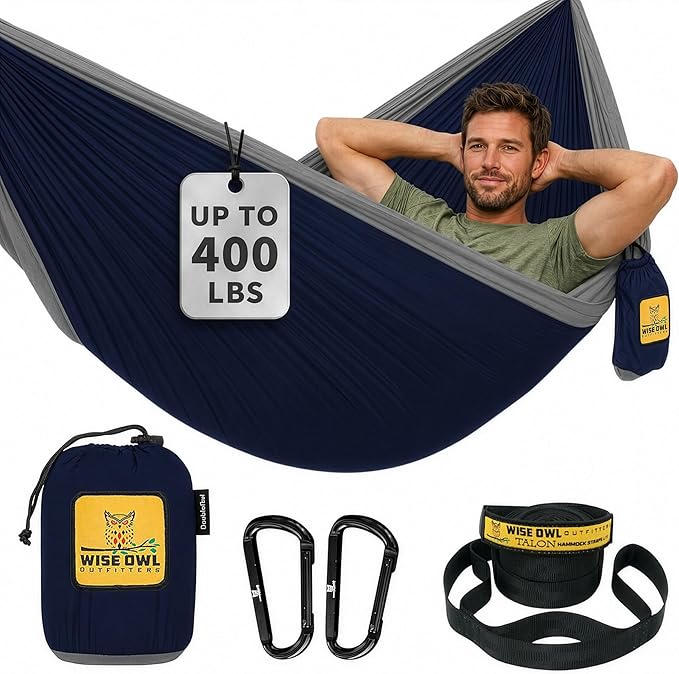
Below the snow line, in the western Sierra foothills near Bass Lake or the Stanislaus River corridor, summer overnight lows stay in the 60s. A hammock is cooler, lighter, and leaves zero ground impact—which matters during fire restrictions because the Forest Service is also tightening dispersed camping rules. The 500 lb. rating handles two people lounging, and the included tree straps are LNT-compliant. See the Wise Owl Outfitters Hammock on Amazon.
CROWN SHADES 10x10 Pop Up Canopy with Pockets (best car-camp shade)
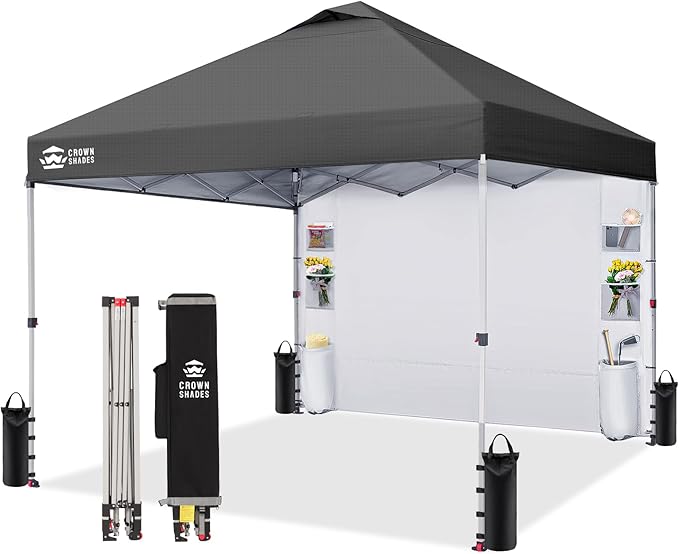
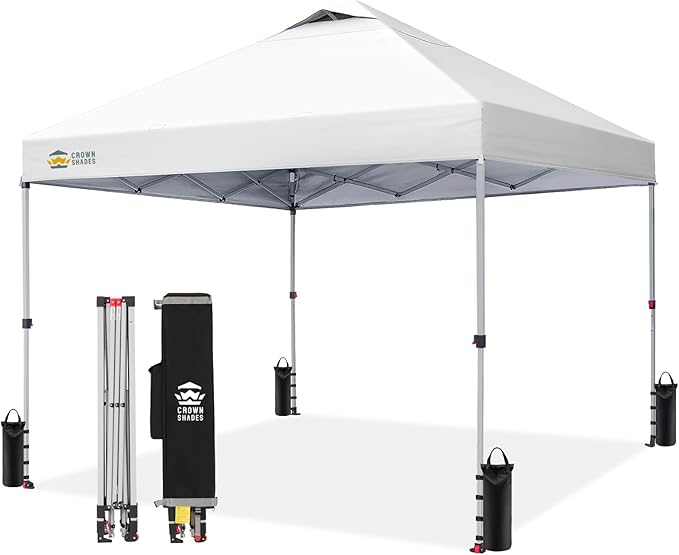
When the Sierra sun is direct and you can't run a campfire to gather around in the evening, a 10x10 canopy becomes the social hub of camp. The version with mesh pockets keeps your stove fuel canisters, lighters, and pot lifters organized off the picnic table. Set it up over your cook station so the Jetboil isn't in direct sun heating the canister unevenly. View the CROWN SHADES Canopy with Pockets on Amazon.
CROWN SHADES CenterLok One-Push Canopy (best for solo setup)
If you camp alone or arrive at the trailhead after dark, the CenterLok one-push mechanism lets one person erect the canopy in under three minutes. We've used it as the kitchen tarp at South Lake trailhead before a JMT section hike. It also doubles as a wind shield for the Trangia when you're car-camping below the fire-ban elevation. Browse the CROWN SHADES CenterLok Canopy on Amazon.
Wolfwise Pop Up Shower/Changing Tent (underrated Sierra essential)
Forest Service rules during fire restrictions often prohibit washing dishes within 200 ft. of water. A pop-up changing tent gives you a place to use a solar shower and contain greywater away from streams—and it's where you change out of sweaty layers before bed. Check the Wolfwise Pop Up Shower Tent on Amazon.
Practical fire-ban cooking rules every Sierra camper should memorize
Whichever side of the Jetboil Flash vs Trangia Spirit fire ban California Sierra debate you land on, the actual operational rules during a Stage 1 or Stage 2 restriction are pretty simple. Print these and stash them with your permit:
- Clear a three-foot radius down to mineral soil before lighting any stove.
- Keep one liter of water and a small trowel within arm's reach.
- Never cook inside or within five feet of a tent (vestibules count).
- Carry your Campfire Permit—a free document that's required even for canister stoves on Forest Service land.
- Pack out empty canisters; do not bury or burn them.
What about other Sierra-popular stoves?
Quick triage for the stoves that come up in the same conversation: MSR PocketRocket Deluxe is treated identically to the Jetboil Flash because both are canister-valved. The MSR WhisperLite International (white gas) is a gray area—it has a shut-off valve but uses pressurized liquid fuel; most 2025 Sierra orders allowed it under Stage 1. The Esbit solid-fuel tab is treated like an open flame and is usually banned alongside the Trangia. Wood-burning stoves like the Solo Stove Lite are banned whenever any wood-fire ban is in effect, no exceptions.
Related reading
For deeper dives into Sierra-specific gear setups, see our guides on choosing a bear canister that meets Sierra permit requirements, sleeping bag temperature ratings for shoulder-season Sierra trips, and the 2026 dispersed-camping rules around Mammoth Lakes.
Frequently Asked Questions
Is the Jetboil Flash legal under a Stage 2 fire restriction in Inyo National Forest?
In most 2025 Stage 2 orders the Jetboil Flash remained legal because of its positive shut-off regulator, but Inyo NF retained discretion to ban all stoves during Red Flag warnings. Call the White Mountain Ranger Station the morning you enter the wilderness; if a Red Flag is active, even canister stoves may be temporarily prohibited.
Can I use a Trangia alcohol stove during a California Campfire Permit Stage 1 ban?
Usually no above 5,000 ft. in National Forest land. Stage 1 language since 2023 has consistently grouped alcohol stoves with open fires because they cannot be shut off instantly. Below the elevation threshold, in a designated campground with a maintained fire ring, alcohol stoves are sometimes still allowed—read your specific forest's order.
Does the Jetboil Flash work above 11,000 ft. in the Sierra?
Yes, but boil times slow noticeably above 10,000 ft. when daytime temperatures drop below 40°F. Use a 4-season blend isobutane canister, keep the canister warm in your jacket between uses, and budget about 30% more fuel than the manufacturer's chart suggests for trips around Mount Whitney or Forester Pass.
What fuel does the Trangia Spirit burner accept if I can't find denatured alcohol in 2026?
The Trangia accepts denatured alcohol, methanol-based HEET (yellow bottle), 90%+ isopropyl alcohol, and Everclear in a pinch. Yellow HEET is widely available at Sierra-region gas stations and is the most reliable backup. Never use gasoline or kerosene—the burner is not designed for pressurized or sooty fuels.
Do I need a California Campfire Permit just to run a Jetboil at a trailhead?
Yes. The free permit (renewed annually online with a short safety video) is required for any stove use on Forest Service, BLM, or state-responsibility lands. National Park Service lands do not require it, but they have their own backcountry permit that covers stove use. Rangers do check.
Is a hammock setup safer than a tent during a fire ban?
From a fire-risk standpoint they're equivalent—the rules apply to your cooking source, not your shelter. From a Leave No Trace standpoint, a hammock with proper tree straps causes less ground disturbance, which matters more during drought years when soils are fragile. Just verify your destination allows hammocks; some heavily impacted Sierra zones have started restricting them.
What's the lightest fire-ban-legal stove for a 2026 JMT thru-hike?
The Soto Windmaster (3.0 oz) edges out the Jetboil Flash on weight and matches it on shut-off compliance, but the Jetboil Flash is easier for first-timers because the cup and stove integrate. For the John Muir Trail specifically, where canister resupply is feasible at Muir Trail Ranch and Vermilion Valley Resort, a canister-valved stove like the Jetboil Flash remains the most practical fire-ban-legal choice.
Key Takeaways
- Choosing the right Jetboil Flash vs Trangia Spirit fire ban California Sierra means matching capacity and output ports to your actual devices
- Always check actual watt-hours (Wh), not just watts — runtime depends on Wh, not peak output
- Also covers: jetboil vs trangia california fire restrictions
- Also covers: sierra fire ban stove comparison
- Also covers: alcohol vs canister stove fire ban sierra
- Compare price-per-Wh across models to find the best value for your budget